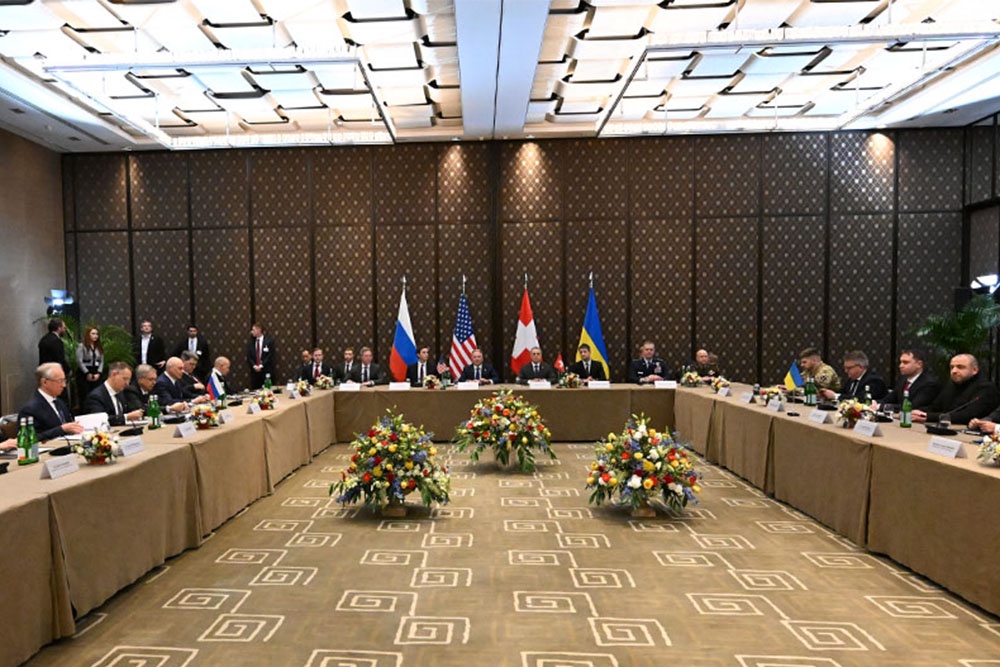
For those watching the long, grinding trajectory of the conflict in Ukraine, the prospect of a diplomatic breakthrough often feels like a distant horizon. Yet, as October 2026 draws to a close, a specific, tangible movement has emerged. Diplomatic channels between Moscow and Washington are currently humming with the technical, often tedious, but essential work of calendar coordination. The objective is a trilateral meeting—a summit that would bring together representatives from Russia, Ukraine, and the United States in the neutral, high-stakes setting of Abu Dhabi.

On October 30, 2026, the process moved from the realm of speculation into active administration. Russian Deputy Foreign Minister Yury Ushakov confirmed that the two global powers have officially begun the work of aligning their schedules. This is not merely a matter of checking diaries; it is the first step in formalizing a framework for discussing the future of the Ukrainian conflict. As Ushakov noted, while the intention to meet has been clear, the specific logistical alignment only began in earnest as the month concluded.
For months, the possibility of such a meeting remained abstract. Ushakov’s recent statements highlight a shift in momentum. "We have started working on coordinating the date of the Russia-US-Ukraine trilateral talks in Abu Dhabi," he explained. "These talks will take place in November. Now we are coordinating the dates." This transition from silence to active negotiation marks a significant departure from the previous lack of progress. The Russian side has already transmitted specific considerations to their American counterparts, and the wait for a formal response is now the primary variable in the equation.
The goal is not merely a ceasefire, but a broader conversation about security issues.
While the exact day remains a moving target, the window for these discussions is narrow and defined. The talks are set to occur in November, specifically positioned to take place after November 4th. There is a sense of urgency in the air, with expectations that the precise dates could be finalized as early as this week.
Why Abu Dhabi? The choice of a neutral venue is a classic diplomatic maneuver, designed to strip away the immediate pressures of the front lines and provide a space where the three parties—Russia, Ukraine, and the United States—can engage in a structured dialogue. The goal is not merely a ceasefire, but a broader conversation about security issues. This is a complex, three-way dynamic where the United States acts as a critical interlocutor, balancing the immediate needs of Ukraine with the necessity of engaging Russia in a dialogue that could eventually lead to a lasting settlement.
As the negotiations proceed, the atmosphere remains one of cautious, neutral pragmatism. Ushakov’s commentary reflects a process that is still in its infancy: "The Americans were given some of our considerations. They will give us an answer. Before this, there was no coordination on dates; now the discussion has begun." This is the reality of modern diplomacy—a slow, incremental climb toward a table that has, until now, remained empty. The fact that the parties are now debating the 'when' suggests that the 'what' and the 'how' are at least theoretically on the table.
As we look toward the coming weeks, the focus remains on the confirmation of the Abu Dhabi schedule. The world waits to see if this logistical coordination will translate into a substantive breakthrough. For now, the process is defined by the exchange of proposals and the quiet, persistent work of diplomats trying to find a common date in a calendar that has been defined by conflict for far too long. The start of this coordination is, in itself, a notable development in a story that has long lacked a clear path toward a negotiated resolution.