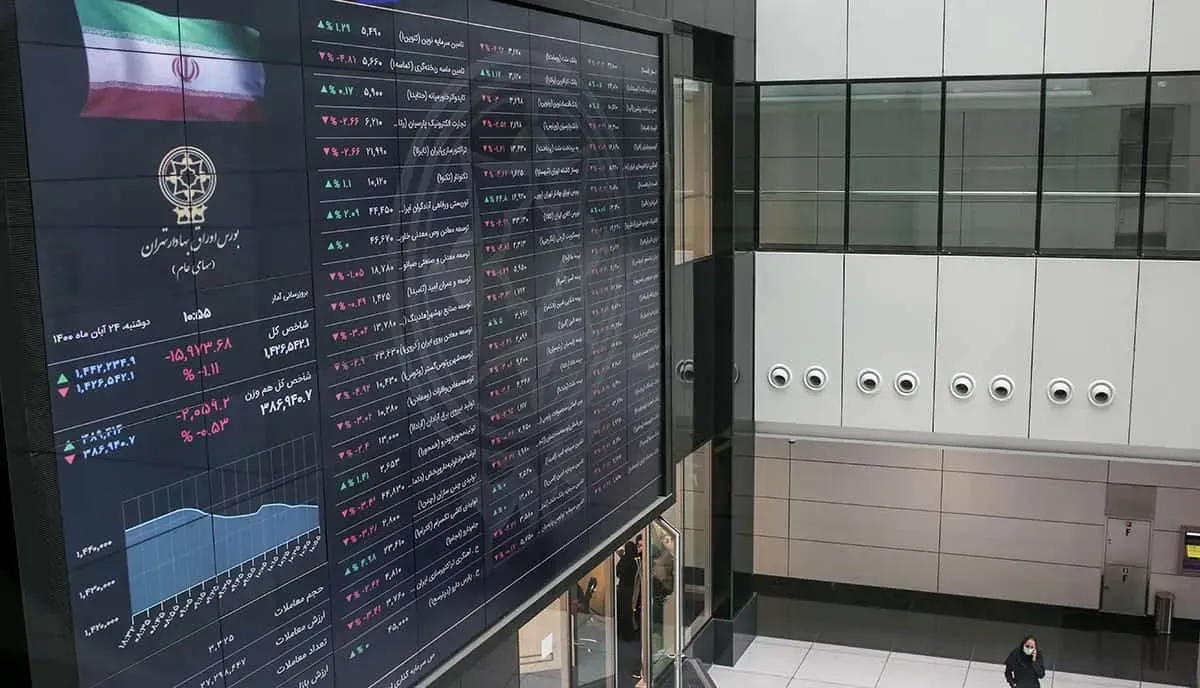
For anyone watching the tickers on a given trading day, financial markets can sometimes feel like living organisms, reacting instantly to hidden pressures and systemic shifts. On the trading session concluded, the Tehran Stock Exchange experienced a notable downward turn, painting the boards with unmistakable indicators of a broad decline.

The centerpiece of this movement was the general index of the Tehran Stock Exchange. As the trading session concluded, the index reached 8,160,960 units. When parsed against the previous value, this figure represented a steep downward shift of 111,483 units. For market participants and analysts alike, such a magnitude of drop signals widespread contraction in asset valuations across the board and sets a somber tone for the day's financial ledger.
To understand the true scale of what transpired, one must look beyond a single index number and examine the sheer mass of capital flowing through the institution. The market valuation of the Tehran Stock Exchange was officially reported at over 236 billion units. Within a marketplace of this size, a six-figure drop in the primary index ripples through institutional and retail portfolios alike.
Digging deeper reveals a structured financial environment with distinct tiers.
Activity on the floor remained substantial despite the downward pressure. The trading value for the session was recorded at 205.308 billion units, while the trading volume reached 44.177 billion units. These figures capture a market that was far from dormant; rather, it was deeply active even as prices adjusted downward, reflecting intense repositioning among market actors reacting to shifting economic currents.
While the Tehran Stock Exchange wrestled with its red-tinted session, the broader financial ecosystem presented a stark contrast. In a different corner of the market, the general index of FRB Iran moved in the exact opposite direction, offering resilience amidst the losses seen elsewhere in the domestic financial architecture.
The general index of FRB Iran climbed by 2,211 units, successfully pushing its benchmark up to 67,190 units. This movement marked a clearly positive trend for the entity, showcasing resilience and upward momentum that stood out sharply against the broader losses observed elsewhere.
Digging deeper reveals a structured financial environment with distinct tiers. The market value of the first and second tier of FRB Iran was recorded at around 36.758 billion units, while its base market value sat at approximately 8.729 billion units. These foundational layers provide structural support for ongoing market activities.
Trading engagement within this sphere matched the positive sentiment. The trading value for FRB Iran reached 88.931 billion units, accompanied by a trading volume of 7.654 billion units. This healthy level of transactional activity underscores that capital was actively finding alternative avenues where momentum remained favorable.
Financial journalism teaches us that markets have long memories, and historical context helps contextualize present-day movements. Records indicate that on 29 Mehr 1405, the Tehran Stock Exchange's index similarly experienced a sharp downward adjustment, falling by 111,483 units. Meanwhile, the Foreign Stock Exchange demonstrated a steady positive movement on that front, registering a 0.37% increase, mirroring the resilient dynamics observed in parallel indices.