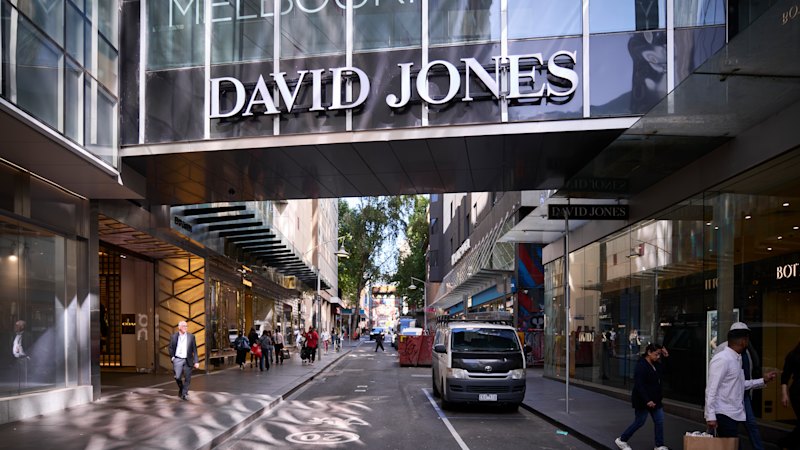
For 188 years, the name David Jones has served as a cornerstone of the retail landscape, a symbol of prestige that has weathered generations of shifting consumer tastes. It is a brand built on the promise of luxury, a destination where the high-end experience was as much a part of the purchase as the goods themselves. But today, that storied legacy is facing a reckoning that feels both sudden and inevitable in a world transformed by the digital age.

On November 6, 2026, the cracks in the foundation became a chasm. The company failed to file its financial accounts for the 2026 period on time, a procedural lapse that signaled deeper, more systemic distress. This administrative failure was quickly followed by a more immediate and pressing crisis: the company failed to pay rent to Scentre Group. When a retailer of this scale misses rent payments, it is rarely a mere oversight; it is a signal of a liquidity crisis that threatens the very ground upon which the business stands.

Sorry but if you think David Jones failed because of the current government you’re either clueless or a partisan hack, maybe both. David Jones sold for $100m to private equity in 2023 having previously been sold for $2.1 billion in 2014! A 95% devaluation. It was already dead
By that same day, November 6, 2026, the reality of the situation was formalized. David Jones entered administration. In the world of corporate finance, administration is a heavy word. It marks the moment when a company can no longer meet its financial obligations and a voluntary administrator is appointed to manage the business, protect assets, and attempt to resolve the mounting debts. It is a state of limbo, a period where the survival of the institution hangs in the balance while experts navigate the wreckage of the balance sheet.
The once-manicured displays of designer goods have given way to a more hollowed-out aesthetic, leaving many shelves empty.
The impact of this financial instability is not just felt in boardrooms and legal filings, but in the very aisles that once defined the store's identity. The transition from a thriving luxury hub to a struggling entity is visible to anyone walking through the doors. As the financial situation worsened, luxury brands—the lifeblood of the David Jones experience—began to desert their concession stores. These concessions, where high-end labels operate within the larger department store framework, are essential for maintaining the brand's premium status.
Without these partners, the physical reality of the stores has changed. The once-manicured displays of designer goods have given way to a more hollowed-out aesthetic, leaving many shelves empty. This exodus of brands creates a self-reinforcing cycle: as the luxury offerings vanish, the store loses the foot traffic that sustains it, further straining the ability to meet the very obligations that triggered the crisis.

The collapse of David Jones has even reached the UK’s BBC. So albos efforts are being seen worldwide??
While the immediate triggers were rent defaults and filing delays, the underlying cause is a struggle as old as the internet itself. David Jones has been caught in the relentless tide of competition from online retailers. The traditional department store model, predicated on physical presence and curated in-person experiences, has been fundamentally challenged by a digital landscape that offers convenience and variety at the click of a button. For a legacy brand, pivoting to meet this digital demand while maintaining the high overhead of physical luxury real estate is a monumental task.
As the administrators take the helm, the focus shifts to what remains of the company's value. Despite the grim visual of empty shelves and the weight of unpaid rent, there is a glimmer of financial order being sought within the chaos. Current projections suggest that the company is likely to pay its debts in full, including the obligations for items already sold. This suggests that while the operational model is in crisis, the underlying assets and sales transactions may still hold enough value to satisfy creditors.

For now, David Jones remains a company in transition, caught between a storied past and an uncertain future. The administration process will determine whether the 188-year-old institution can reinvent itself for a digital era, or if it will become another casualty of the changing retail tide.

David Jones closing: Gift cards still accepted despite voluntary administration, retailer exodus https://t.co/pup2wpaElb