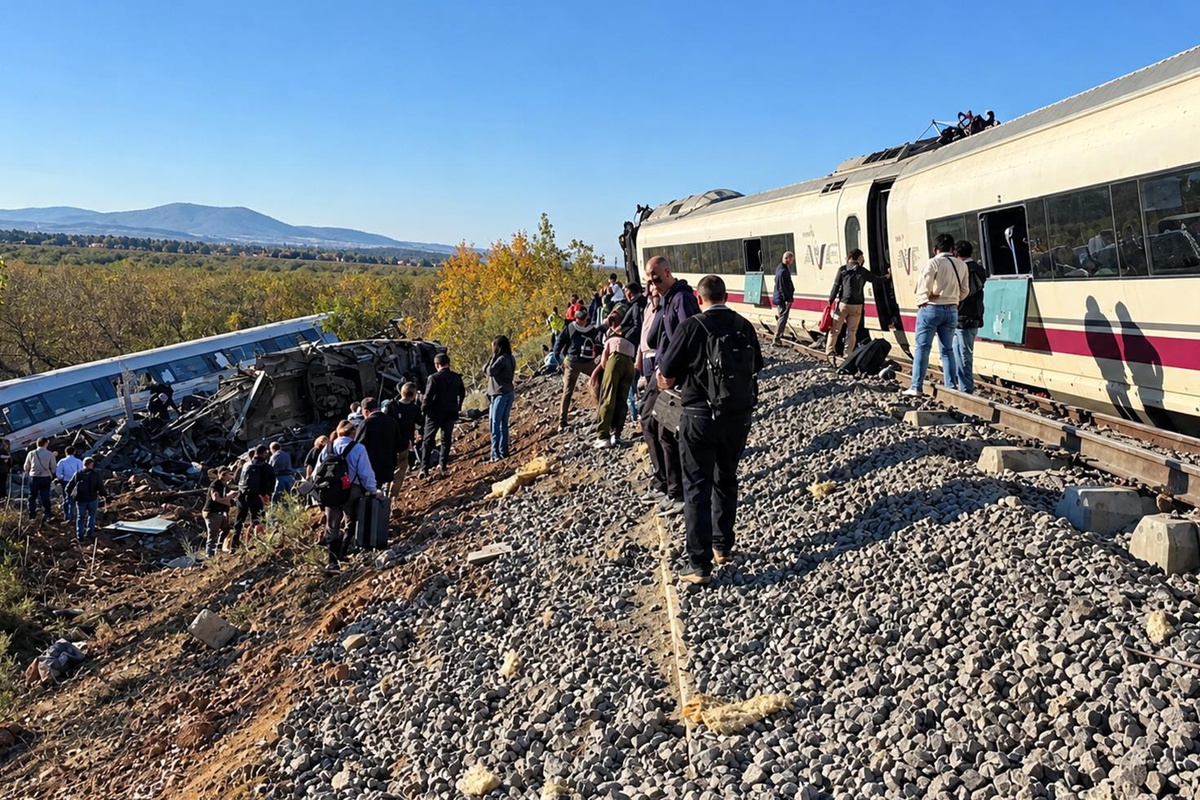
On October 28, 2026, a tragic train collision occurred in central Spain, resulting in at least 68 fatalities. The Spanish Transport Minister, Óscar Puente, attributed the accident to an 'unexplainable' and 'wrong' decision by the railway control center. This devastating incident has sent shockwaves throughout the country, with the government and railway workers' union calling for immediate safety improvements.

The accident involved two high-speed trains that collided near the city of Toledo. According to reports, the automatic train protection system was out of service due to a computer failure, but one train was given the green light to continue despite a red signal. This decision has been widely criticized, with many questioning how such a catastrophic mistake could have been made. As Óscar Puente explained, 'Il est alors décidé d’autoriser le train à reprendre normalement sa route. Un signal rouge interdisait la reprise de la circulation, mais, malgré cela, l’autorisation de repartir lui a été accordée.'

Death toll rises to at least 30 after a collision between two trains in Spain's Toledo province. It's the third rail disaster in the country this year. Follow live updates. https://t.co/00lAVd3FIW https://t.co/KwXvn8Ow1N
The Spanish government has declared a 3-day national mourning period in response to the tragedy. Prime Minister Pedro Sanchez expressed his condolences to the families of the victims and announced an investigation into the accident. In a statement, Sanchez said, 'I am in constant contact with the Minister of Transportation and the premier of Castilla-La Mancha. Emergency services are working on the ground to assist those affected and ensure their safety, in coordination with all the relevant authorities.'
As Óscar Puente noted, 'The accident was due to an 'unexplained' and 'wrong' decision by the dispatch center.
The railway workers' union has called for a strike to demand safety improvements, citing the need for better training and equipment to prevent such accidents in the future. The union's criticism of the government and railway authorities has been echoed by many, who argue that more needs to be done to ensure the safety of passengers and staff.

Spain’s Military Emergency Unit searched the wreckage of a high-speed train collision in Toledo, Spain, on October 28, in which dozens of people were killed or injured. The crash occurred at around 8:54 am and involved a Renfe AVE train and an Iryo train traveling on the Madrid-Seville route, according to Spanish news agency EFE. Spanish Prime Minister Pedro Sanchez said: “Emergency services are working on the ground to assist those affected and ensure their safety, in coordination with all the authorities involved.” The death toll stood at 68 at the time of writing, with 15 people very seriously injured, according to local media.
An investigation into the accident is currently underway, with officials working to determine the exact cause of the collision. While the exact circumstances surrounding the accident are still unclear, the decision by the dispatch center has been highlighted as a critical factor. As Óscar Puente noted, 'The accident was due to an 'unexplained' and 'wrong' decision by the dispatch center.'
The accident has triggered memories of a similar incident in January that claimed 46 lives. The recurrence of such tragedies has raised concerns about the safety of Spain's rail network and the need for urgent reforms. With the country still reeling from the shock of the accident, many are calling for swift action to prevent similar tragedies from occurring in the future.

🇪🇸 The death toll from Spain's high-speed train collision has risen to 68, according to the government of Castilla-La Mancha. Prime Minister Pedro Sánchez declared that all of Spain is in mourning. “Behind every person who died today are broken lives and shattered families,” Sánchez said, as the country confronts one of its deadliest rail disasters. https://t.co/MocmZY5146
The accident has resulted in a significant human cost, with 68 people losing their lives and many more injured. The Renfe train was carrying 397 passengers, while the Iryo train had 150 passengers on board. The injured have been taken to nearby hospitals, where they are receiving medical attention. The accident has also had a profound impact on the families of the victims, who are struggling to come to terms with their loss.

As the investigation into the accident continues, there is a growing sense of urgency about the need for safety improvements. The government and railway authorities must take immediate action to address the concerns of the railway workers' union and the public, and work towards preventing such tragedies from occurring in the future. With the country still mourning the loss of life, it is clear that something needs to be done to ensure that such an accident never happens again.
The train collision in central Spain is a tragic reminder of the importance of safety in the rail industry. As the country moves forward, it is essential that lessons are learned from this accident, and that urgent reforms are implemented to prevent similar tragedies from occurring in the future. With the government and railway workers' union calling for action, it is clear that this accident will have a lasting impact on the country's rail network, and will serve as a catalyst for change.