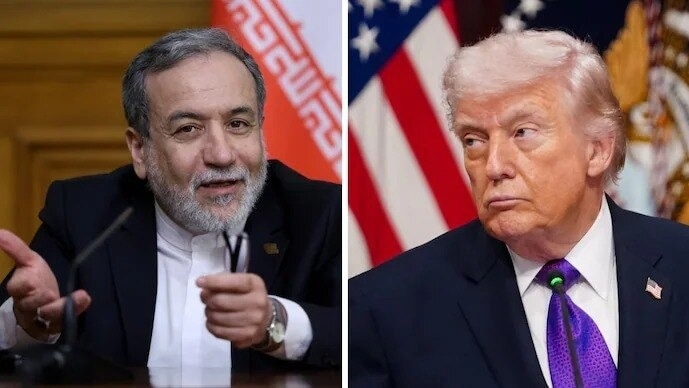
On 2026-10-19, President Donald Trump issued a direct warning to Iran, urging the country to change its course or face United States action. Trump’s words set the stage for a rapid response from Tehran.

Later the same day, Iran’s foreign minister, Abbas Araghchi, replied to Trump’s warning. Araghchi, who serves as the top diplomat for the Islamic Republic, challenged the United States and drew a comparison to a previous confrontation. His reply was delivered ahead of Israel’s parliamentary elections and amid Trump’s expressed support for Israeli Prime Minister Benjamin Netanyahu.

Gulf Calls on #Russia to Play Role in Stopping Attacks by #Iran, Starting Dialogue with it https://t.co/cqloFnpFkO
The quote, translated, reads: "Do you want to test your luck again? Come on, let’s see. But be careful, we also have some unfinished work." This phrasing echoes a earlier Hindi statement attributed to him: "The last time you tried to ‘finish the job,’ Iran emerged stronger. Do you want to test your luck again?" Both versions convey a warning that any renewed military effort would be met with resistance.
Araghchi’s reply explicitly compared the current situation to a prior episode in which the United States had attempted to "finish the job" against Iran.
In his own statement on 2026-10-19, Trump said, "I support Netanyahu, despite the tensions between the two countries." This support comes despite existing strains between the United States and Israel. The remark was made while Trump was simultaneously warning Iran, indicating a parallel diplomatic track.

During a recent U.N. address, Trump threatened to "annihilate" Iran while predicting a post-midterm peace deal. Is this aggressive rhetoric an effective diplomatic strategy? 🇮🇷🎤 🟢 Yes 🔴 No #UnitedNations #Iran #ForeignPolicy #Geopolitics #USPolitics
Araghchi’s reply explicitly compared the current situation to a prior episode in which the United States had attempted to "finish the job" against Iran. According to the minister’s Hindi quote, that earlier effort resulted in Iran emerging stronger. By invoking this comparison, Araghchi sought to frame any new confrontation as a repeat of a past outcome unfavorable to the United States.
The exchange highlights a pattern of reciprocal threats: Washington warning Tehran to alter its behavior, Tehran warning Washington not to test its luck again, and each side referencing the other’s regional alliances. Araghchi also accused Israeli Prime Minister Benjamin Netanyahu of trying to draw the United States into a war to protect himself, a claim that appears in the source summaries. These accusations add a layer of regional politics to the bilateral dispute.
All of the quoted statements and warnings occurred on the same calendar date, 2026-10-19. The core facts remain the date, the officials involved, the nature of the warnings, and the specific Hindi and English quotations exchanged.