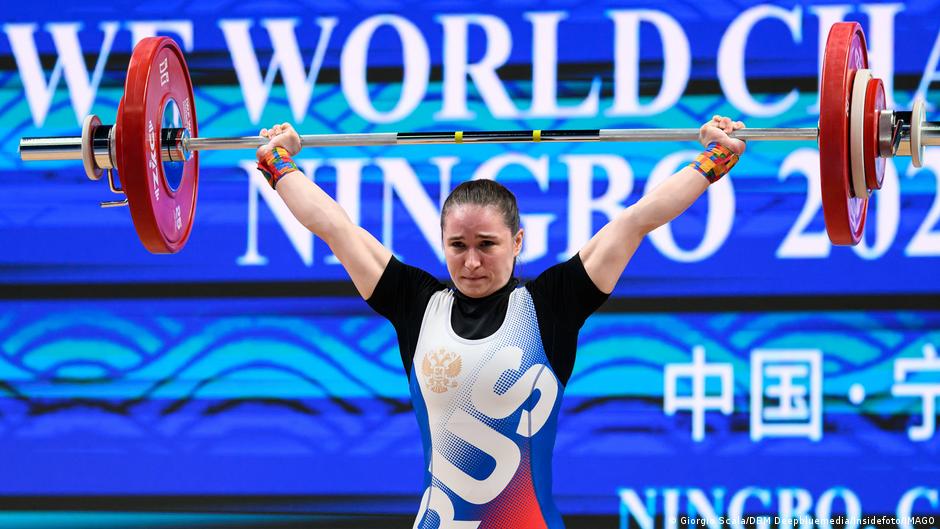
When the doors of the world championships swung open for a contingent of sixteen Russian weightlifters, the atmosphere was charged with more than the usual pre‑competition buzz. After years of high‑profile doping scandals that saw Russia barred from international sport, the athletes’ re‑entry was meant to signal a clean slate. Yet, behind the scenes, the process that should guarantee that slate—out‑of‑competition drug testing—has become a point of contention, exposing a gap between official statements and on‑the‑ground realities.

The International Testing Agency (ITA), the body tasked with overseeing anti‑doping measures across sports, publicly asserted that it had tested all sixteen Russian weightlifters “ahead of their participation in the event.” This declaration, repeated in its communications, paints a picture of comprehensive oversight: every athlete subjected to rigorous screening before stepping onto the platform, ostensibly leaving no room for doubt about their eligibility.
Contrasting sharply with the ITA’s blanket claim, investigative reporting by DW uncovered a stark discrepancy. According to the report, only four of the sixteen Russian weightlifters actually underwent out‑of‑competition testing by the ITA. The remaining twelve entered the championships without having been sampled in the crucial period leading up to the competition. This gap is not a trivial statistical footnote; it directly challenges the agency’s narrative of universal pre‑event testing.
The International Testing Agency has maintained a neutral tone in its public statements, emphasizing that its protocols are applied uniformly across all nations.
Out‑of‑competition testing is the backbone of anti‑doping, as veteran anti‑doping analyst Rob Koehler emphasizes. Unlike tests administered during competitions—when athletes are already under the spotlight—out‑of‑competition sampling occurs at random, often in the athletes’ homes or training facilities, catching prohibited substances that might be cycled off before a major event. The principle is simple: if a system only tests athletes when they are about to compete, it creates a loophole that can be exploited. For a nation whose past doping violations have been well‑documented, the robustness of this testing phase becomes even more critical.
Rob Koehler, who has closely followed the doping saga, does not mince words. “You simply can’t treat Russia like any other country,” he asserts, underscoring a sentiment that the standard testing protocol may be insufficient for a nation with a history of systematic violations. His criticism is rooted in the belief that the integrity of sport demands heightened vigilance where the risk of abuse has been proven, not a one‑size‑fits‑all approach.
The International Testing Agency has maintained a neutral tone in its public statements, emphasizing that its protocols are applied uniformly across all nations. By framing its actions as consistent, the ITA seeks to defuse accusations of bias while reinforcing its role as an impartial overseer. Yet, neutrality in rhetoric does not automatically translate to parity in practice, especially when the data points to uneven application.
The DW investigation also highlighted that the ITA tested thirteen members of the North Korean team. While the focus of this piece is on Russia, the inclusion of North Korea’s testing numbers offers a comparative lens. It suggests that the agency is capable of conducting extensive out‑of‑competition testing for other nations, raising the question of why the Russian weightlifting squad did not receive the same level of scrutiny.
The divergence between the ITA’s claim of universal testing and the reality that only a quarter of Russian weightlifters were actually sampled out‑of‑competition leaves the sport’s governing bodies with a dilemma. On one hand, the desire to reintegrate Russian athletes reflects a broader push for inclusivity and redemption. On the other, the specter of insufficient testing threatens to erode confidence in the fairness of competition.
As the championships progress, the spotlight will not only be on the athletes’ lifts but also on the mechanisms that certify their eligibility. The ongoing debate underscores a fundamental tension in international sport: balancing the hope of a clean return with the imperative of rigorous, transparent anti‑doping enforcement. Until the testing gap is bridged, the question of who is truly policing Russia’s athletes will linger, casting a shadow over every podium finish.