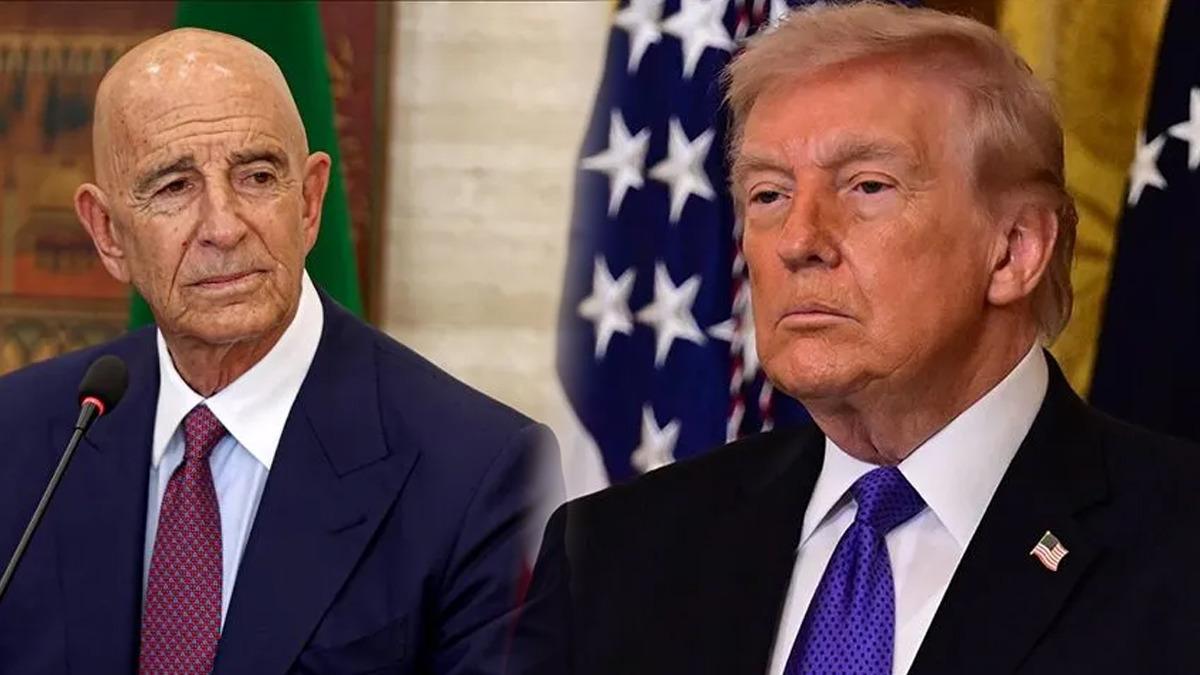
When Tom Barrack, the United States’ senior envoy to Syria and Iraq, stepped onto a televised briefing, he did more than reiterate a familiar policy line. He placed the prospect of a U.S. attack on Iran squarely on the upcoming weekend’s calendar. In a statement that reverberated through diplomatic circles, Barrack said, "We could hit Iran this weekend," a phrase that instantly shifted the tenor of an already volatile regional standoff.
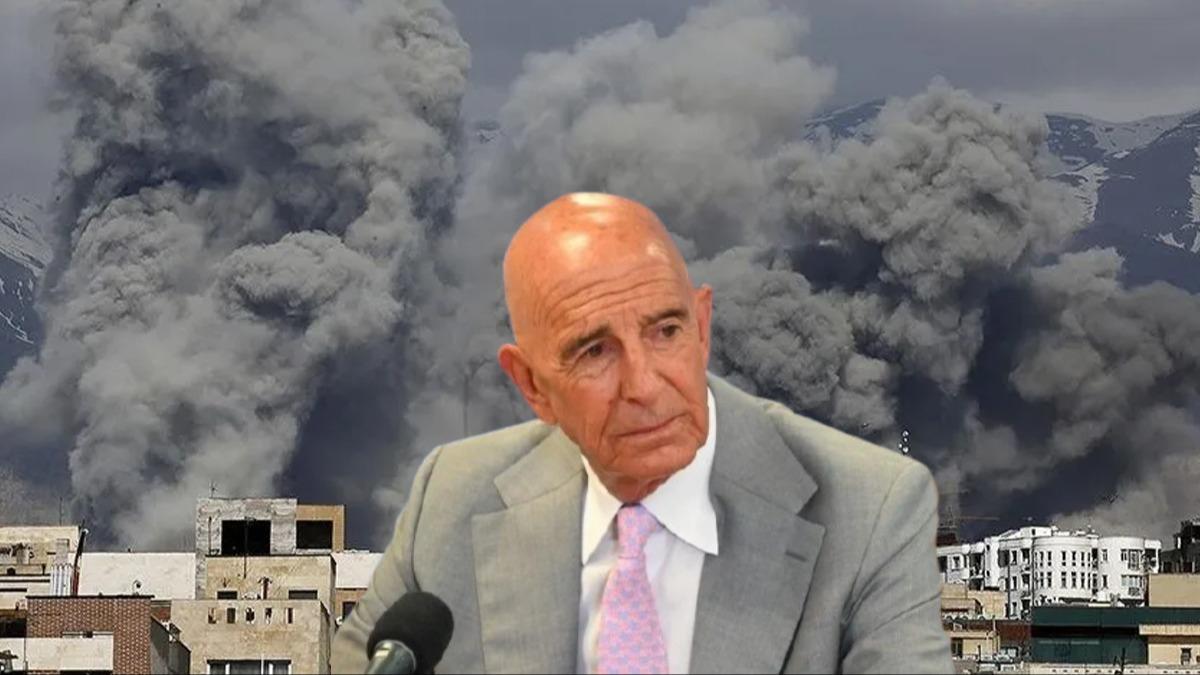
Barrack’s role is that of a senior diplomatic figure tasked with managing the U.S. presence in the Middle East. His remit includes overseeing negotiations with local actors, monitoring non-proliferation efforts, and conveying the United States’ strategic intentions. By invoking a concrete timeframe—this weekend—he moved beyond abstract deterrence and into the realm of operational possibility.
The most striking element of Barrack’s warning was not the threat itself but the absence of a direct endorsement from President Donald J. Trump. Trump publicly denied any knowledge of Barrack’s remarks, maintaining a neutral stance on the issue. This diplomatic disconnect raised eyebrows. When an envoy signals a potential strike, the president’s silence can be read as either a deliberate strategic ambiguity or an internal disagreement over policy. In either case, the lack of confirmation left allies and adversaries scrambling to interpret the United States’ next move.
Iranian officials allegedly plotted to interfere with banking networks and cloud-based services, aiming to sow chaos in the United States’ financial infrastructure.

Trump on the possibility of attacking Iran this weekend: I don’t know anything about it A reporter asked US President Donald Trump about the possibility of the US ambassador to Turkey saying that an attack on Iran this weekend was “absolutely” possible. Trump replied: “He’s a powerful man, I think. I don’t know anything about it.”
Iran, far from being a passive observer, reportedly began preparing its own response the moment Barrack’s words entered the public sphere. According to intelligence briefings, Iranian planners set their sights on the undersea internet cables that thread the Persian Gulf. These fiber-optic arteries carry a substantial share of global data traffic; disrupting them would cripple not only regional communications but also the broader digital economy.
In addition to the cyber-physical sabotage of cables, Tehran’s strategy extended to the financial realm. Iranian officials allegedly plotted to interfere with banking networks and cloud-based services, aiming to sow chaos in the United States’ financial infrastructure. Such asymmetric tactics reflect a broader trend in modern statecraft: leveraging non-kinetic tools to impose costs on a militarily superior opponent.
The immediate market reaction was palpable. Within hours of the announcement, Brent crude futures climbed to $116.20 a barrel, while the U.S. benchmark West Texas Intermediate (WTI) rose to $102.50. Oil prices are notoriously sensitive to geopolitical risk. A potential U.S. strike on Iran, coupled with Iranian threats to disrupt undersea cables and financial systems, injected a fresh dose of uncertainty into an already jittery market.
For investors, the price spikes signaled a recalibration of risk premiums. Traders priced in the possibility of supply disruptions and the broader economic fallout that could follow a cyber-financial assault. While the numbers themselves are straightforward—$116.20 for Brent, $102.50 for WTI—they encapsulate a complex web of strategic calculations.

Former US diplomat Joey Hood urged President Donald Trump and other world leaders to form a coalition to constrain Iran “once and for all,” warning they could no longer stand by. Speaking to Iran International’s Kambiz Tavana, Hood said Iran was likely to widen its attacks on shipping and regional states, targeting Saudi Arabia as “the big prize” and potentially extending its campaign to chokepoints such as the Suez Canal. He said disruption in the Strait of Hormuz had lost its impact on markets over time, prompting Tehran to broaden its targets after already pressuring the UAE, Kuwait and Bahrain.
Barrack’s statements also underscored the delicate balance the United States must maintain in its Middle East policy. On one hand, the envoy highlighted ongoing negotiations aimed at curbing Iran’s nuclear ambitions, a cornerstone of U.S. non-proliferation strategy. On the other, he warned that a failure to reach an agreement could precipitate "regime change."
The notion of regime change is not new in American foreign policy, but its invocation in the context of Iran signals a willingness to consider the most extreme outcomes. For regional partners, the prospect of a U.S. strike—especially one hinted at by a senior envoy—forces a reassessment of their own security postures and diplomatic calculations.