For travelers moving through King Faisal International Airport in Saudi Arabia’s Eastern Province, the morning of October 21, 2026, transformed in an instant from routine transit to acute peril. Near the waters of the Persian Gulf, the facility in Dammam was struck in an assault that pierced the perimeter of civilian aviation. One Saudi citizen was killed, and eight other people sustained injuries as shrapnel and blast shock tore through airport property.
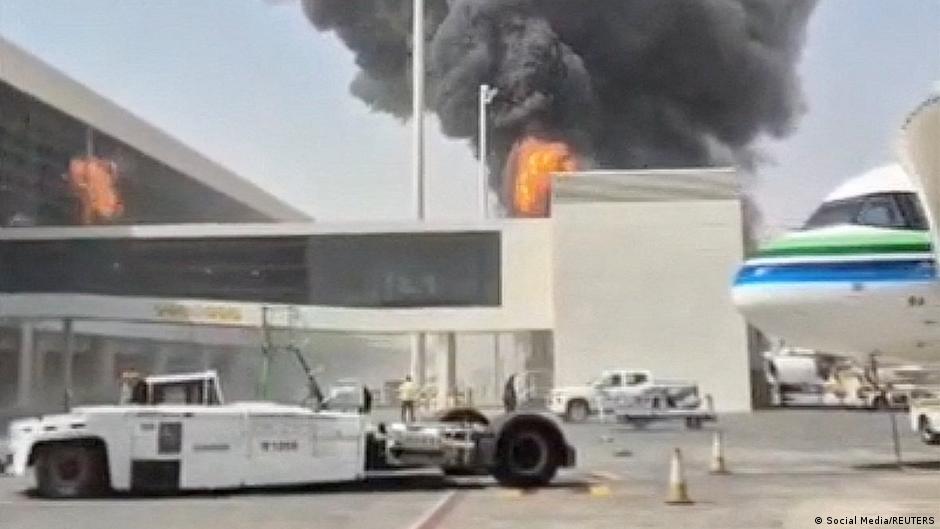
The Saudi General Authority of Civil Aviation quickly confirmed physical damage to the terminal grounds and advised that further details would follow. Outside the gates, flight routes were abruptly altered as controllers scrambled to divert incoming traffic away from the contested airspace. For the kingdom, the attack was not merely an operational disruption; it was a brazen demonstration that civilian transit hubs, long assumed to be insulated from direct combat, had become active targets.
The devastation at Dammam was not an isolated incident. That same Thursday, the Saudi Energy Ministry disclosed another deadly strike when a drone was brought down over a south-eastern oil field area. Two people were killed and two others injured in the incident, compounding the day’s human toll and directly menacing the lifeblood of the Saudi economy.
Air defenses that once seemed formidable were being tested by swarms of loitering munitions and unmanned aerial vehicles designed to exploit gaps in radar coverage.
Across the kingdom’s territorial defenses, military systems were pushed to their limits, with Saudi Arabia intercepting at least seven drones during the onslaught. The strikes marked the culmination of a steady series of drone attacks aimed at critical Saudi energy infrastructure over recent months, underscoring an expanding theater of conflict that threatens both regional transport and global energy stability.

🇺🇸🇸🇦 US Orders Some Diplomats Out of Saudi Arabia Amid Houthi Attacks - Bloomberg https://t.co/IZf26HC5FG
In Washington, the response to the strikes was swift and unmistakably cautious. The U.S. Department of State issued an ordered departure instructing non-emergency government personnel and their family members to leave Saudi missions, including the U.S. embassy in Riyadh. In the lexicon of international diplomacy, an ordered departure is among the most serious steps short of a total evacuation, signaling that the host nation's airspace and domestic perimeter can no longer guarantee the safety of foreign diplomats.
State Department spokesman Tommy Pigott made clear the rationale behind the directive. Iranian-supported Houthis, operating out of Yemen, have intensified cross-border actions against Saudi targets, deliberately expanding their range to encompass commercial centers. Pigott explained that the department had ordered the departure of “non-emergency US government employees and their family members in Saudi Arabia only”, citing attacks by Iran-aligned Houthi forces in Yemen on civilian targets.
He further underscored the broader peril driving the policy: "Iranian-supported Houthis have increasingly engaged in hostilities against Saudi Arabia, including attacks on civilian airports and other critical infrastructure resulting in civilian casualties and severe travel disruptions."
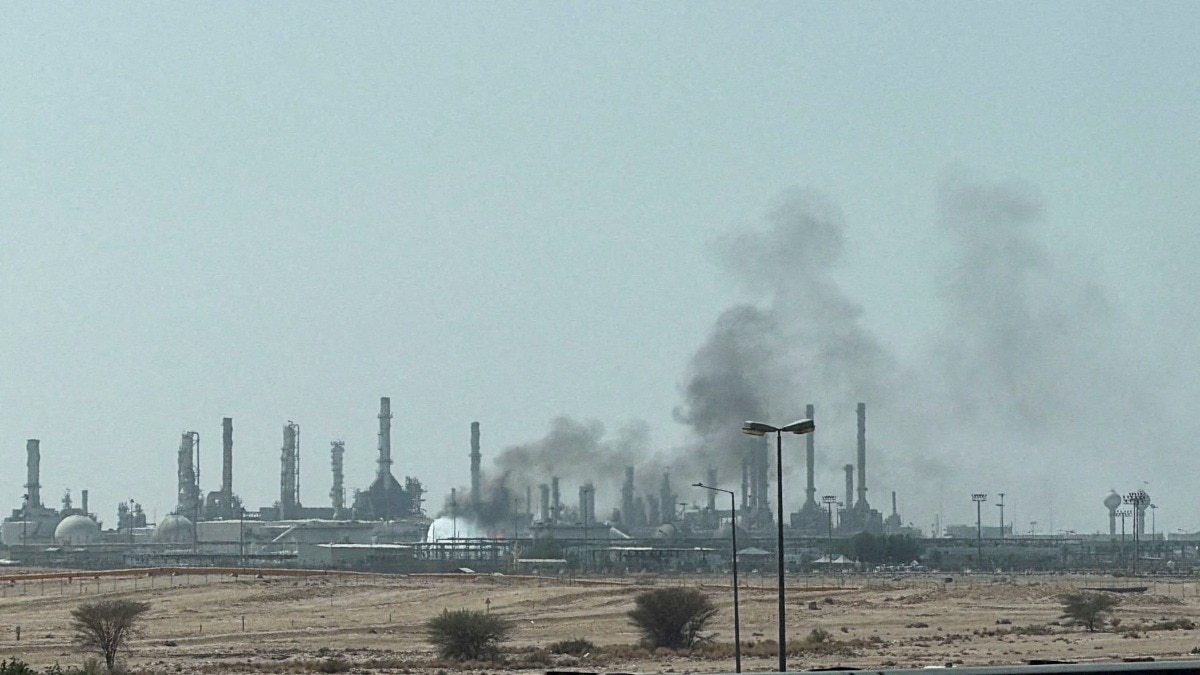
As the damage mounted on October 21, the Saudi government turned to its partners abroad, seeking additional military support to shore up its protective umbrella. Air defenses that once seemed formidable were being tested by swarms of loitering munitions and unmanned aerial vehicles designed to exploit gaps in radar coverage.
The clamor for enhanced anti-air systems echoed through the highest corridors of American politics. Speaking on the strategic bind facing Western allies, Marco Rubio captured the global crunch for air-defense hardware. "I also talked to Saudi Arabia today; they'd like interceptors. Israel would like interceptors. We would like interceptors. Every country in the world would like interceptors," Rubio noted, pointing to an international inventory stretched thin by widening battlefronts.
The pressure on interceptor stockpiles highlights the core asymmetry of modern drone warfare: relatively inexpensive unmanned craft, fielded in volume by Houthi forces, demand high-end, multimillion-dollar munitions to neutralize before they strike passenger terminals or fuel depots.

BIG BREAKING 🚨 US orders immediate evacuation of embassy staff and families from Saudi Arabia, and diplomats’ families from the UAE, Jordan, Qatar and Bahrain as per AFP report.
While the American evacuation order was officially confined to the kingdom, the announcement sent immediate shockwaves through neighboring Gulf capitals. Diplomatic sources reported that similar instructions to draw down non-essential embassy personnel were being weighed or issued for posts across the United Arab Emirates, Jordan, Qatar, and Bahrain.
The State Department, however, pushed back firmly against suggestions of a region-wide pullout. Pigott emphasized that the formal directive was strictly tailored: "The U.S. Department of State issued an ordered departure for non-emergency U.S. government employees and their family members in Saudi Arabia only." The clarification did little to fully dampen private anxieties, as regional observers watched the trajectory of Houthi salvos arc closer to commercial crossroads throughout the Middle East.
By October 22, the reality of the evacuation had set in. Suitcases were packed at diplomatic compounds in Riyadh, and civil aviation authorities continued to adjust commercial flight corridors across the Gulf. The strikes on King Faisal International Airport and the south-eastern energy facilities, which resulted in one death and eight injuries, underscored the growing threat to civilian infrastructure and the broader security concerns in the region.

US orders diplomats to depart Saudi Arabia amid Houthi strikes, 1 dead in airport attack https://t.co/taGl4s1oeY