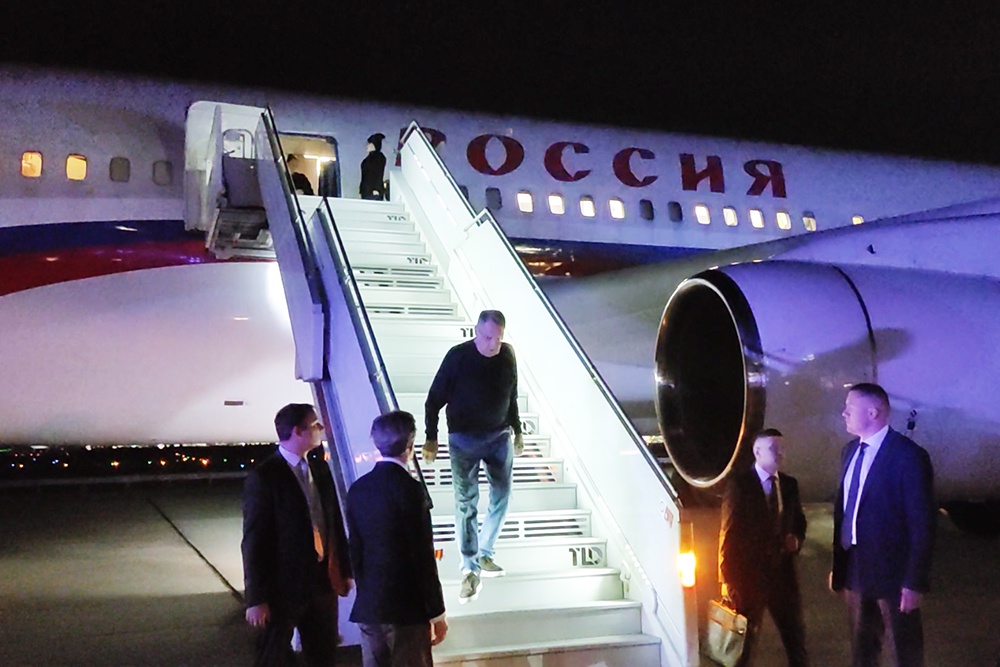
The arrival of Sergei Lavrov in Atlanta was never merely a transit stop; it was a statement of intent in a diplomatic landscape that has been fractured for years. As the Russian foreign minister stepped off the plane, he entered a space that has become one of the few remaining arenas where the two largest powers maintain a channel of communication. For Lavrov, whose career has been defined by rigid posturing, the journey across the Atlantic is a logistical necessity that masks a strategic imperative: Russia cannot afford to be entirely absent from the global economic stage. The United States, hosting the G20 cycle for 2026, has orchestrated a series of meetings in various cities, creating a structured framework that pulls world leaders into a shared room. By attending this specific preparatory meeting, Lavrov signals that while the geopolitical relationship is strained, the Russian government still views the international platform as a vital vehicle for its interests.

The central theme of the discussion in Atlanta is not, initially, the immediate hot-button issues of war or direct military confrontation. Instead, the agenda focuses on global economic issues and an analysis of today's destructive geopolitical trends. This choice of framing is deliberate. By placing the economy at the forefront, the meeting provides a layer of technicality that allows diplomats to engage without the immediate pressure of resolving security disputes. Lavrov is prepared to present Russia’s vision on international tensions, arguing that the forum should be depoliticized. In practical terms, this means Russia is advocating for a G20 that functions as a true economic bloc, where trade and financial stability are discussed without the constant overlay of political sanctions or ideological disputes. For a newcomer to this diplomatic theater, it is crucial to understand that the G20 is primarily an economic club, and Russia’s push to 'depoliticize' it is an effort to protect its own economic lifelines while engaging with the West.

BREAKING Russian Foreign Minister Sergey Lavrov arrives in the United States to attend G20 foreign ministers meeting in Atlanta, state-owned TASS news agency reports. Moscow says Lavrov will use his speech there to argue against international sanctions https://t.co/RGcV02OeVs
The two-day meeting in Atlanta, scheduled for October 30 and 31, is not the end goal. It is a preparatory step for the final G20 summit, which will take place in Miami later that year. The chronology of these events is critical: the ministerial-level discussions in Atlanta are designed to resolve technical details, align positions, and smooth out the wrinkles of the agenda so that the heads of state can focus on high-level policy. Without this preparatory phase, the summit would likely devolve into a series of disjointed speeches. By engaging at the ministerial level now, Lavrov is attempting to shape the narrative that will be presented to the final summit. This stage of the process is where the most concrete groundwork is laid, and it is where the US and Russia can test the waters of mutual compromise before the leaders arrive.
This ambiguity is the defining feature of the current diplomatic moment.
Perhaps the most significant aspect of this diplomatic movement is the status of Russian President Vladimir Putin. The United States has formally invited Putin to the 'big twenty' summit in Miami, but his participation remains unconfirmed. This ambiguity is the defining feature of the current diplomatic moment. The invitation exists on paper, signaling a desire for inclusion, but the lack of confirmation reflects the deep trust deficit between the two sides. For Lavrov, the mission in Atlanta is partly to determine if that invitation is a genuine pathway to engagement or merely a diplomatic placeholder. The attendance of the foreign minister acts as a proxy for the president; if the ministers can build a framework of discussion, it may pave the way for higher-level participation. Until Putin's status is resolved, Lavrov carries the weight of representing a decision that has not yet been made.

🤡 Lavrov spent more than 20 hours flying to the US for a G20 meeting — forced to avoid flying over "unfriendly" countries The Kremlin official stepped off the plane wearing jeans and a sweater. In Atlanta, Lavrov will attend a gathering of foreign ministers from the Group of Twenty (G20). The talks will serve as preparation for the G20 summit, scheduled to take place in Miami on December 14–15. The Russian delegation is expected to hold a series of bilateral talks in the coming hours, including with US Secretary of State Marco Rubio.
In Moscow, the Kremlin's communication team is managing a delicate balance of expectation. Figures such as Dmitry Peskov and Maria Zakharova have maintained a neutral and measured tone regarding the upcoming events, avoiding the hyperbolic language that typically characterizes Russian state media in times of high tension. This restraint is noteworthy. Mark Rubio, a senior American figure, is part of the broader diplomatic apparatus engaging with these issues, representing the American side's perspective on how to manage the global forum. The presence of multiple officials on both sides indicates that this is not a singular decision by Lavrov alone, but a coordinated effort by the Russian government. The neutral stance of these spokespeople suggests that both sides are cautious, aware that any misstep in Atlanta could derail the broader process leading to Miami.
As Lavrov spends his time in Atlanta, the world watches to see if the diplomatic machinery can still turn. The G20 was created to ensure that emerging and developing economies have a seat at the table, but today it serves as the last major multilateral platform where the US and Russia can interact without the immediate shadow of direct conflict. The meeting focuses on strategic stability and global trends, aiming to find common ground on economic realities that transcend political differences. The outcome of these two days will not solve the geopolitical rift, but it will determine whether the Miami summit is a genuine convergence of global leaders or a hollow ceremony. For Lavrov, the journey to the United States is a final push to keep Russia's economic interests visible and influential on the global stage, regardless of the political weather.

NEW!! Who’s attending the G20 Foreign Ministers’ Meeting in Atlanta tomorrow? FULL LIST 👇 🇺🇸 Marco Rubio 🌍 Edouard Bizimana 🇦🇷 Pablo Quirno Magrane 🇦🇺 Penny Wong 🇧🇷 Mauro Vieira 🇨🇦 Anita Anand 🇨🇳 Ma Zhaoxu 🇪🇺 Kaja Kallas 🇫🇷 Jean-Noël Barrot 🇩🇪 Johann Wadephul 🇮🇳 Subrahmanyan Jaishankar 🇮🇩 Arramantha Christiawan Nasir 🇵🇱 Radosław Sikorski 🇸🇦 Prince Faisal bin Farhan 🇹🇷 Hakan Fidan 🇬🇧 Ed Miliband 🇮🇹 Maria Tripodi 🇯🇵 Toshimitsu Motegi 🇰🇷 Hyun Cho 🇲🇽 Roberto Velasco 🇷🇺 Sergey Lavrov