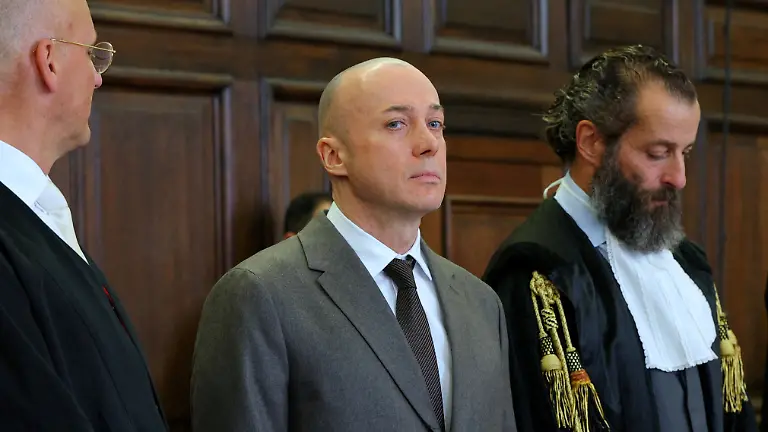
In the quiet halls of the Hamburg Higher Regional Court, the ghosts of the Nord Stream pipeline explosions have returned to center stage. On October 27, 2026, the legal proceedings against Sergiy Kuznetsov, a former Ukrainian military officer, officially commenced. The case is a rare intersection of high-stakes international diplomacy and the granular, often rigid requirements of criminal law. At the heart of the matter is the destruction of the Nord Stream gas pipelines, an incident that remains one of the most sensitive geopolitical puzzles of the modern era. As the trial unfolds, it brings to the surface the immense complexities of prosecuting an individual whose past service in the military now acts as a potential barrier to the transparency required by a German courtroom.

From the outset, the defense team for Kuznetsov sought to bring the proceedings to a halt. Their argument was rooted in a fundamental tension: the defendant’s status as an ex-serviceman. According to his attorney, a fair trial is an impossibility under the current circumstances. The core of their motion for dismissal was the claim that Kuznetsov is bound by strict military confidentiality rules—regulations that effectively prevent him from speaking freely about his actions or his background. In the view of the defense, these state-imposed secrets create a legal trap, where the defendant is unable to provide a full account of his activities without violating his oath or facing potential repercussions from his former military superiors.

August Hanning was head of Germany’s foreign intelligence service under Gerhard Schröder during the period in which Berlin got hooked on Russian energy, with Hanning backing Nord Stream 1. Days after Russia launched its full scale invasion of Ukraine, Hanning publicly argued Western arms deliveries wouldn’t make much difference and said he hoped “normal relations” with Russia could be restored soon. After the Nord Stream explosion, he quickly and baselessly made accusations about Polish and Ukrainian responsibility, and suggested Germany should seek compensation from Poland and Ukraine. Hanning has also previously smeared Latvia. He joined the supervisory council of Norvik Banka, later PNB Banka, which subsequently collapsed. Its insolvency administrator later brought a €32 million damages claim against former board and supervisory council members, including Hanning. During the process, Hanning publicly made sweeping allegations of corruption about Latvian officials and institutions. In later arbitration proceedings, an international tribunal said he made unsubstantiated claims. He has today been arrested on suspicion of espionage, attempted treason and obtaining state secrets.
Presiding Judge Anne Meier-Göring, however, was unmoved by the defense’s plea for suspension. In a clear and decisive rejection of the request on October 27, 2026, the court signaled that it would not be deterred by the complexities of military secrecy. Judge Meier-Göring emphasized that the proceedings are designed to uphold the integrity of the law, noting that the defendant’s rights to a fair trial have not been violated. For the court, the priority remains the pursuit of truth within the framework of German jurisprudence, regardless of the external pressures or the classified nature of the defendant’s past life.
In a clear and decisive rejection of the request on October 27, 2026, the court signaled that it would not be deterred by the complexities of military secrecy.
This ruling underscores a significant point of contention in the trial: the delicate balance between the state's need for security and the individual's right to defend themselves against serious allegations. The court’s decision to move forward suggests a commitment to the principle that the judicial process must remain independent, even when it brushes against the edges of state secrets. By refusing to halt the trial, the Hamburg court is asserting its authority to navigate these murky waters, insisting that the legal process itself provides the necessary protections for the accused to mount a defense, even if that defense is complicated by the defendant's former professional obligations.

Trial for Ukrainian officer in Nord Stream gas pipeline explosion begins https://t.co/VtXjQlZ0nS
With the motion to suspend the proceedings denied, the focus of the court has now shifted to the substantive aspects of the case. The trial is scheduled to resume in January, a timeline that suggests the court is prepared for a lengthy and rigorous examination of the evidence. As the process moves into this next phase, the eyes of those following the Nord Stream investigation will remain fixed on Hamburg. The case of Sergiy Kuznetsov is not merely about the guilt or innocence of one man; it is a test of how the German legal system handles the intersection of international conflict and the rule of law, ensuring that even in the most sensitive cases, the machinery of justice continues to turn.