
In the early hours of October 23, 2026, a classified intelligence memo was sent to US Secretary of State Marco Rubio. The memo, a single page in length, revealed that Iran had significantly stepped up its efforts to target American diplomats and officials abroad.
The next day, on October 24, 2026, US intelligence began issuing warnings to the public and diplomatic circles. The State Department, under the guidance of Secretary Marco Rubio, ordered non-emergency government employees and their family members to leave Saudi Arabia. The move was a cautious and strategic response to the growing threat, aimed at protecting American personnel and their dependents.
However, the order to evacuate did not stop there. Reports emerged that the State Department was advising non-essential staff to leave other countries in the region, including the United Arab Emirates, Lebanon, Qatar, and Jordan. These reports, however, were quickly denied by US State Department spokesperson Tommy Pigott, who stated, 'The order to leave is only for non-essential US government personnel and their families in Saudi Arabia.'
In response to these escalating security threats, the US Department of State took the unprecedented step of advising non-essential personnel to leave Saudi Arabia.
Despite the official denials, the situation in the Middle East was far from stable. The US intelligence community was on high alert, and the State Department was under pressure to provide clear and consistent information. Tommy Pigott, in a press conference, clarified the situation, saying, 'This is inaccurate. The U.S. Department of State issued an ordered departure for non-emergency U.S. government employees and their family members in Saudi Arabia only.'
The intelligence memo also highlighted the potential for Iranian-backed Houthi rebels in Yemen to expand their attacks beyond Saudi Arabia. The US intelligence community was concerned that these groups might target other regional countries, posing a broader threat to American interests and personnel.
In response to these escalating security threats, the US Department of State took the unprecedented step of advising non-essential personnel to leave Saudi Arabia. The move was a clear indication of the seriousness of the situation and the need for heightened security measures.
BREAKING: U.S. intelligence finds Iran has “substantially increased” efforts to target American diplomats and officials in the Middle East and beyond, with lethal plots reaching “advanced stages.” https://t.co/fAsPzE3xYp
The US government's response was not limited to the State Department. President Donald Trump, in a statement, warned Iran of potential military action if it did not reach a diplomatic agreement. The President's office issued a stern message, emphasizing the gravity of the situation and the readiness of the US military to act if necessary.
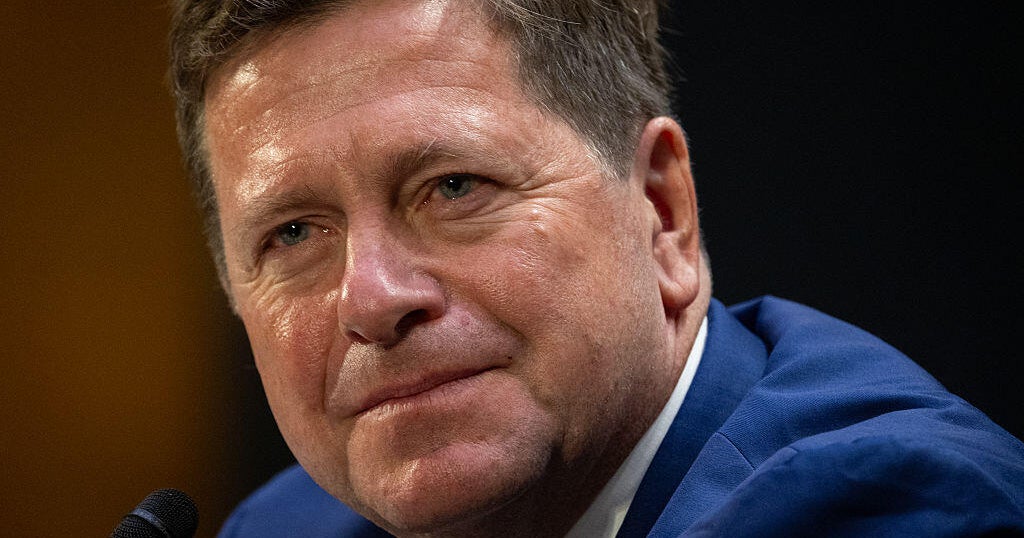
In a press conference, Jay Clayton, the Director of National Intelligence, urged expanding the distribution of intelligence regarding these plots to more authorized personnel. Clayton's statement underscored the need for a coordinated and informed response to the evolving threat.
The threat of Iranian-backed attacks extended beyond Saudi Arabia, raising concerns about the safety of American personnel in other Middle Eastern countries. The US intelligence community was actively monitoring the situation, and the State Department was working to ensure the safety of American citizens and officials in the region.
The order to evacuate non-essential personnel from Saudi Arabia was a significant step, but it was part of a broader effort to protect American interests in the Middle East. The US government was taking proactive measures to address the growing threat, and the intelligence community was working tirelessly to gather and disseminate critical information.

Trump did not strike Iran for Israel. Anyone making that claim is either ignorant or malicious. Trump struck Iran because: 1979–1981: U.S. Embassy hostage crisis. After the Islamic Revolution, militants seized the American embassy in Tehran on November 4, 1979, 52 Americans were held hostage for 444 days, until January 20, 1981. 1983: Beirut U.S. Embassy and Marine barracks attacks. Shiite militants linked to Iran attacked American targets in Lebanon. The October Marine barracks bombing killed 241 U.S. servicemen. The State Department says the Reagan administration believed the attacks were carried out by Shiite militants linked to Iran, and later U.S. statements attributed the barracks bombing to Hezbollah. 1980s onward: Hezbollah. Iran became Hezbollah’s principal state patron, giving Tehran a way to attack American and allied interests indirectly rather than through conventional Iranian forces. 1996: Khobar Towers. A truck bomb struck housing used by U.S. Air Force personnel in Saudi Arabia, killing 19 American airmen and injuring hundreds. U.S. authorities later attributed the plot to Saudi Hezbollah and tied it to Iranian support. 2003–2011: Killing Americans in Iraq. Iran’s Quds Force supplied and supported Shiite militias fighting American forces, including with highly lethal explosively formed penetrators, or EFPs, specifically capable of punching through U.S. armored vehicles. The U.S. government has attributed at least 603 American military deaths in Iraq to Iranian-backed forces. 2019–2020: escalating militia attacks. Iran-backed Iraqi militias repeatedly attacked U.S. facilities. A December 2019 rocket attack killed an American contractor and wounded four U.S. service members. This escalation was part of the immediate context for the January 2020 U.S. strike that killed Quds Force commander Qasem Soleimani. 2021–2022: attempted assassination of John Bolton. DOJ charged an IRGC member with attempting to pay $300,000 to have former National Security Adviser John Bolton murdered in Washington or Maryland, reportedly as retaliation for Soleimani’s killing. 2022: American Stephen Troell murdered in Baghdad. DOJ later charged an IRGC officer with helping orchestrate the murder of U.S. citizen Stephen Troell in Iraq. 2024: further assassination plots inside the United States. DOJ charged individuals in an alleged IRGC-linked murder-for-hire operation and separately prosecuted Asif Merchant over a plot to assassinate U.S. political figures, including Trump himself. In March 2026, Merchant was convicted; DOJ said he admitted the IRGC had sent him to the United States in 2024 to arrange political assassinations. When Trump left the IRGC was sanctioned, broke and weak. Joe Biden changed all that. By the time Trump returned to office in January 2025, this was no longer a small technical violation. The IAEA reported in March 2025 that Iran had 275 kilograms of uranium enriched to 60% U-235, up sharply from 182 kilograms in the previous reporting period. Sixty percent is far beyond ordinary civilian reactor fuel and much closer technically to weapons-grade enrichment. Trump then restored “maximum pressure” on February 4, 2025, while also leaving open the possibility of a negotiated settlement. His stated position was that Iran could not obtain a nuclear weapon SINCE the 1980s. Negotiations proceeded while Iran continued insisting that it had a right to enrich uranium. As late as February 25, 2026, Secretary of State Marco Rubio was publicly discussing the central unresolved issue: Iran was saying it would not build a bomb but still reserved the right to enrich. Meanwhile, the nuclear problem did not disappear. Before the 2025 strikes, the IAEA confirmed that Iran was producing uranium enriched to 60% at Fordow and had unresolved safeguards issues involving uranium particles discovered at undeclared locations. President Trump gave them every opportunity. They said no. Stop it.
As the situation in the Middle East remained tense, the US government continued to monitor the threat and take necessary precautions. The intelligence memo, the evacuation orders, and the warnings from the White House all underscored the seriousness of the situation and the need for a comprehensive and coordinated response. The threat of Iranian-backed attacks on American diplomats and officials was not just a regional issue; it was a global concern that required immediate attention and action.