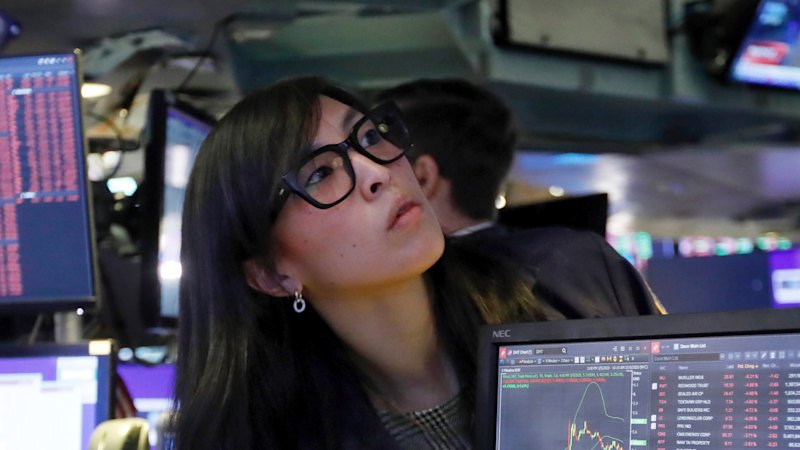
On a day of contrasting fortunes across the globe, Wall Street demonstrated the peculiar resilience of technology stocks even as broader market indicators painted a mixed picture. This unusual performance highlighted the outsized influence that major technology companies now wield over market movements, capable of steering entire indices despite widespread volatility.

While the S&P eked out gains, the Dow Jones Industrial Average told a different story, declining marginally. This divergence between the two major indices reflected the complex dynamics at play in the current market environment, where different sectors are experiencing varying levels of investor confidence and performance expectations.
Technology and AI-related stocks experienced their own rollercoaster of volatility, with some of the biggest names posting significant gains while others faced notable losses. Nvidia, Broadcom, and AMD emerged as leaders, posting substantial gains that helped counterbalance some of the day's broader market weakness. These companies' performance underscored the continued investor enthusiasm for artificial intelligence and related technologies, even as questions remained about the sustainability of such rapid growth.
The backdrop to these market movements included the approaching US midterm elections, which financial analysts noted as a potential factor in market instability.
Among the notable decliners was Apple Inc., which saw its stock drop 2 percent. This performance underscored the challenges even the most established tech giants face as they invest heavily in emerging technologies. Apple's performance served as a reminder that the tech sector's growth isn't without its costs and complications.

Crazy!! A senior official at a leading beverage company in India, one of the nearly 30 affected investors, told Moneycontrol that 10 of his major US stock holdings — including Apple, Tesla, Amazon, Alphabet, Nvidia and AMD — were liquidated without his authorisation for a total of $335,768. The entire sale proceeds were then redirected into a single unauthorised order to buy 300,000 shares of Chinese stock Zhibao Technology Inc. (ZBAO). The purchase was executed at an average price of $1.05 per share. Over the following days, ZBAO's stock price fell nearly 60%, closing at $0.42 on October 23. Important break by Priyansh and @shwwetapunj
As Wall Street navigated these mixed signals, Australia's sharemarket appeared poised for a more straightforward downturn, with futures indicating a fall of 28 points, or 0.3 percent at the open. This anticipated decline reflected the global nature of market sentiment and how developments in major economies like the United States can ripple across international financial markets.
Amid the broader market movements, Palantir Technologies reported a surge in US commercial revenue. This shift in revenue sources represented an important evolution for Palantir, demonstrating its growing commercial success beyond its traditional government contracts.
The backdrop to these market movements included the approaching US midterm elections, which financial analysts noted as a potential factor in market instability. Elections often introduce uncertainty into financial markets as investors anticipate policy changes and their potential impacts on various sectors and the broader economy. This political uncertainty added another layer of complexity to an already volatile trading environment.

The market's behavior also occurred against the backdrop of monetary policy decisions. Such rate hikes can influence market sentiment.
The Nasdaq composite demonstrated stronger performance, rising 1 percent. This outperformance further emphasized the bifurcation within the market, with technology-focused indices generally faring better than their more traditional counterparts. The Nasdaq's gains suggested continued investor confidence in the long-term prospects of technology companies despite short-term volatility.
The divergent performances of US and Australian markets highlighted the increasingly interconnected nature of global financial systems. As major economies navigate their own unique challenges and opportunities, their markets inevitably influence one another through trade relationships, investment flows, and shared economic concerns. This interconnection means that developments in one part of the world can quickly impact markets thousands of miles away, creating both challenges and opportunities for international investors.