
The controversy began when the Congress party and its ally, the CJP, lodged a petition alleging that Chief Election Commissioner Gyanesh Kumar was running the poll body as a "one‑man show," taking unilateral decisions on the Special Intensive Revision (SIR) of electoral rolls. The petition, filed in the Supreme Court, sought to restrain the CEC from functioning and questioned the legality of three SIR orders issued in June 2025, October 2025 and May 2026.
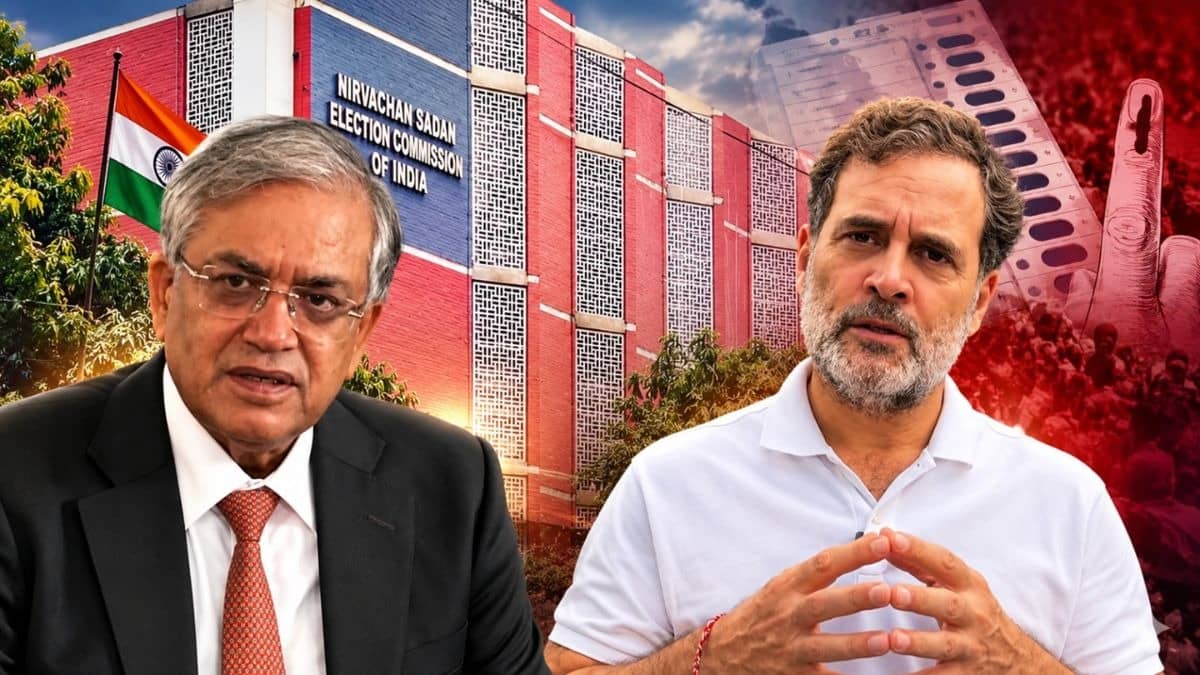
The SIR mechanism is a statutory tool that allows the Election Commission to correct anomalies in voter lists. According to the Election Commission of India (ECI), the process follows a strict internal workflow: a file first moves to one Election Commissioner, then to the other, and finally to the CEC. In urgent cases, approval can be taken electronically, with a paper trail recorded later. The commission emphasized that no name is added or deleted from the rolls except by order of the Electoral Registration Officer (ERO), and that Form 6 – the master register – has not been amended. Only the Centre holds the power to amend Form 6, a point the ECI repeatedly highlighted.

ECI rejects unilateral action charge against CEC Gyanesh Kumar, tells Supreme Court all three SIR orders were unanimous https://t.co/CFUq9lpWpc
Central to the ECI’s defense is the claim that all three SIR orders were unanimous decisions of the full Commission, which includes the CEC and the two Election Commissioners. The commission filed a joint counter‑affidavit on 26 October 2025, asserting that the affidavit itself was approved unanimously by all three members. A more detailed 15‑point counter‑affidavit was lodged on 26 October 2026, reiterating that the narrative of unilateral action rested on a single unverified media report.
The ECI, however, maintained that these reports mischaracterized internal discussions and that no amendment to Form 6 had taken place.
The ECI also warned that internal files are confidential. Any attempt to leak or misinterpret them would constitute a serious breach, the commission said. This stance underscores the tension between transparency demanded by the petitioners and the commission’s duty to protect the integrity of its internal deliberations.

ECI rejects unilateral action charge against CEC Gyanesh Kumar, tells Supreme Court all three SIR orders were unanimous https://t.co/KQzXPb0Id6
Another pillar of the commission’s argument is the legal safeguard surrounding the removal of the CEC. The ECI asserted that the CEC can be removed only in the same manner and on the same grounds as a Supreme Court judge, a high threshold that reinforces the commission’s institutional independence.
The Supreme Court’s docket reflected the rapid escalation of the dispute. On 26 October 2026, the court received the petition challenging the CEC’s functioning, and on the same day it heard a plea filed by Rupnarayan Ekka. While Ekka’s filing was recorded as neutral, the hearing provided the ECI an opportunity to defend its decisions and functioning before the apex court.

ECI Tells Supreme Court All Three SIR Orders Were Unanimous The Election Commission of India has filed an affidavit before the Supreme Court stating that its SIR orders issued in June 2025, October 2025 and May 2026 were unanimous decisions. The Commission also said its counter-affidavit in response to petitions questioning the Chief Election Commissioner's functioning was unanimously approved by the CEC and both Election Commissioners. #ElectionCommissionOfIndia #ECI #SupremeCourt #SIR @ECISVEEP
The Congress and the CJP’s allegations hinged on reports that two Election Commissioners had objected to changes in the SIR process. The ECI, however, maintained that these reports mischaracterized internal discussions and that no amendment to Form 6 had taken place. By framing the controversy as stemming from a single unverified media report, the commission sought to undercut the credibility of the petitioners’ claims.
The commission’s procedural note about electronic approvals in urgent cases adds a layer of nuance to the debate. While the traditional paper trail moves sequentially through the two Election Commissioners before reaching the CEC, the electronic shortcut is recorded later, preserving the formal record while expediting decision‑making. This detail counters the narrative that the CEC bypassed established checks.
As of the latest filings, the ECI continues to defend its actions, emphasizing unanimity, procedural regularity, and statutory limits on its authority. The Supreme Court has yet to render a decision on the petition, leaving the question of the CEC’s alleged unilateralism unresolved. What is clear, however, is that the commission’s insistence on unanimity and confidentiality frames the ongoing legal contest as a clash between institutional safeguards and political scrutiny.
The outcome of the Supreme Court’s deliberations will shape not only the immediate fate of the three SIR orders but also the broader perception of the Election Commission’s independence. If the court upholds the commission’s claims, it will reinforce the current checks and balances governing electoral roll revisions. Conversely, a ruling that finds merit in the petitioners’ allegations could prompt a re‑examination of internal procedures and the very mechanisms that ensure the integrity of India’s electoral rolls.
Beyond the legal wrangling, the episode highlights the delicate equilibrium between democratic oversight and the autonomy of constitutional bodies. The Election Commission’s defense rests on procedural minutiae—file movement, electronic approvals, and the sanctity of Form 6—yet the political stakes are high. As India’s electorate continues to expand, the credibility of the roll‑maintenance process remains a cornerstone of democratic legitimacy.
For newcomers to India’s electoral architecture, the saga offers a window into how a seemingly technical process—updating voter lists—can become a flashpoint for broader debates about power, transparency, and institutional resilience. Whether the Supreme Court’s eventual verdict will settle the dispute or merely add another chapter to the ongoing dialogue about electoral integrity remains to be seen.