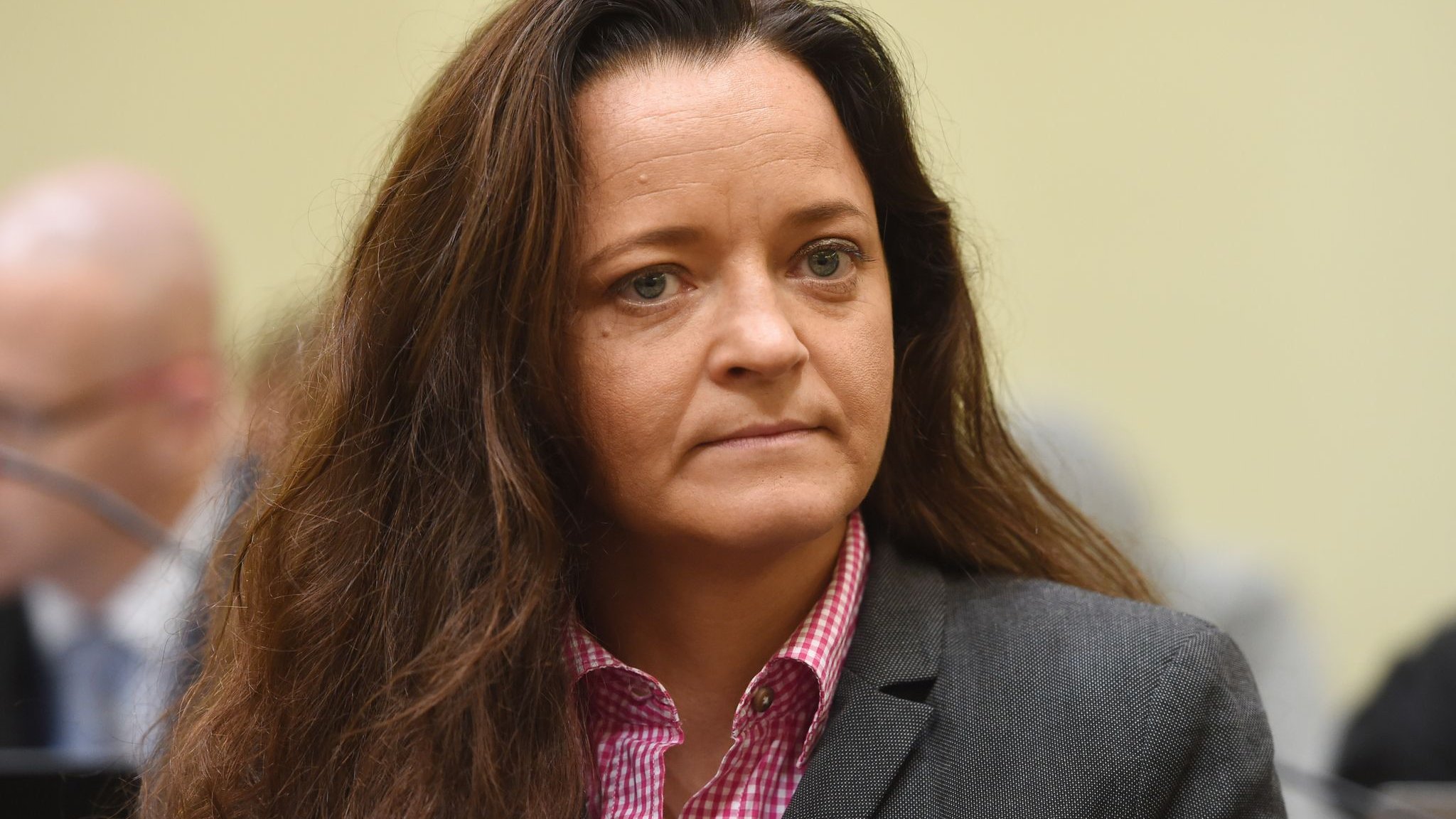
In the quiet, formal halls of the Oberlandesgericht Munich, a decision has been reached that seeks to balance the scales of a decade defined by terror. Beate Zschäpe, a central figure in the National Socialist Underground (NSU) terror cell, has been sentenced to a minimum of 24 years in prison. It is a sentence that carries a heavy temporal weight: for Zschäpe, the possibility of freedom is a distant horizon, unlikely to arrive before the year 2035.

The NSU was not merely a fringe group; it was a cell responsible for a campaign of violence that left a scar across Germany. The group was linked to ten murders committed throughout the country, including in Bavaria, and two separate bomb attacks in Cologne. These acts of targeted violence were part of a broader pattern of right-wing extremism that sought to destabilize the social fabric through fear. For years, the names of the victims and the mechanics of the attacks have haunted the German judicial system, waiting for a legal resolution that matched the scale of the crimes.
As the legal proceedings unfolded, the nature of Zschäpe's involvement became a focal point of the court's deliberation. Though she was convicted as a secondary perpetrator, the admission of her role was significant. Zschäpe admitted to having prior knowledge of the NSU attacks, acknowledging that she was aware of the violence being perpetrated by the cell. This admission stripped away the veneer of ignorance that often characterizes defendants in complex conspiracy cases.
The judges cited the sheer severity of the crimes—the ten murders and the bombings—as the primary reason for maintaining a strict sentence.
During the proceedings, Zschäpe expressed remorse for her actions and signaled a distancing from the extremist ideology that fueled the cell's violence. In the eyes of the law, these expressions of regret and the shift in her ideological stance were noted, yet they did not serve to diminish the fundamental reality of her participation in a terrorist organization. The court had to weigh her current stance against the historical reality of the blood spilled in the name of the NSU.
The Oberlandesgericht Munich arrived at a specific figure for her incarceration: a minimum period of 24 years. This calculation is not an arbitrary number; it is a structured legal determination that accounts for the time Zschäpe has already spent in pre-trial detention. In the German judicial system, time served is a critical component of a final sentence, ensuring that the total duration of punishment reflects the court's judgment while acknowledging the period the defendant has already been deprived of liberty.
By setting the minimum duration at 24 years, the court established a rigid timeline for her potential reintegration into society. This "minimum period of incarceration" acts as a legal floor, a baseline of punishment that must be met before the judicial system even considers the possibility of parole or early release. It is a mechanism designed to ensure that the punishment fits the severity of the crimes committed.
Throughout the trial, there were efforts to mitigate the severity of the sentence, including requests for early release. However, the court remained unmoved by these petitions. The judges cited the sheer severity of the crimes—the ten murders and the bombings—as the primary reason for maintaining a strict sentence. The gravity of the NSU's campaign of terror necessitated a response that prioritized the scale of the harm done to the victims and the public order.

To grant early release would have been to minimize the impact of the decade of violence the NSU orchestrated. The court's decision to deny these requests underscores a judicial philosophy that views the punishment for terrorism not just as a matter of individual culpability, but as a necessary societal response to organized, ideological violence. The sentence is a statement that the crimes of the NSU cannot be easily or quickly moved past.
For Zschäpe, the implications of this ruling are deeply personal and long-lasting. The court's decision means that her release is unlikely to occur before she reaches the age of 60. This biological milestone serves as a grim marker for the duration of her sentence, framing her imprisonment in terms of decades rather than years.
The year 2035 stands as the earliest possible threshold for her return to society. It is a date that exists in the distant future, a period during which the legal and social consequences of the NSU's actions will continue to be processed by the nation. The sentence ensures that the perpetrator of these crimes remains under state supervision for a significant portion of her remaining life.
As the sentencing concludes, the immediate legal chapter regarding Beate Zschäpe's role in the NSU reaches a definitive point. The Oberlandesgericht Munich has spoken, setting a minimum of 24 years that accounts for her previous detention and the magnitude of the murders and bombings. While the cell members themselves committed suicide in 2011, leading to her arrest and subsequent conviction as a co-conspirator, the legal echoes of their actions continue to resonate.
The conviction of Zschäpe as a secondary perpetrator provides a sense of legal finality, yet the trauma of the NSU's campaign remains a part of the German landscape. The court has provided a sentence, but the societal work of understanding and responding to the rise of such extremist violence remains an ongoing process. For now, the law has set a boundary: a minimum of 24 years, and a horizon that does not clear until at least 2035.