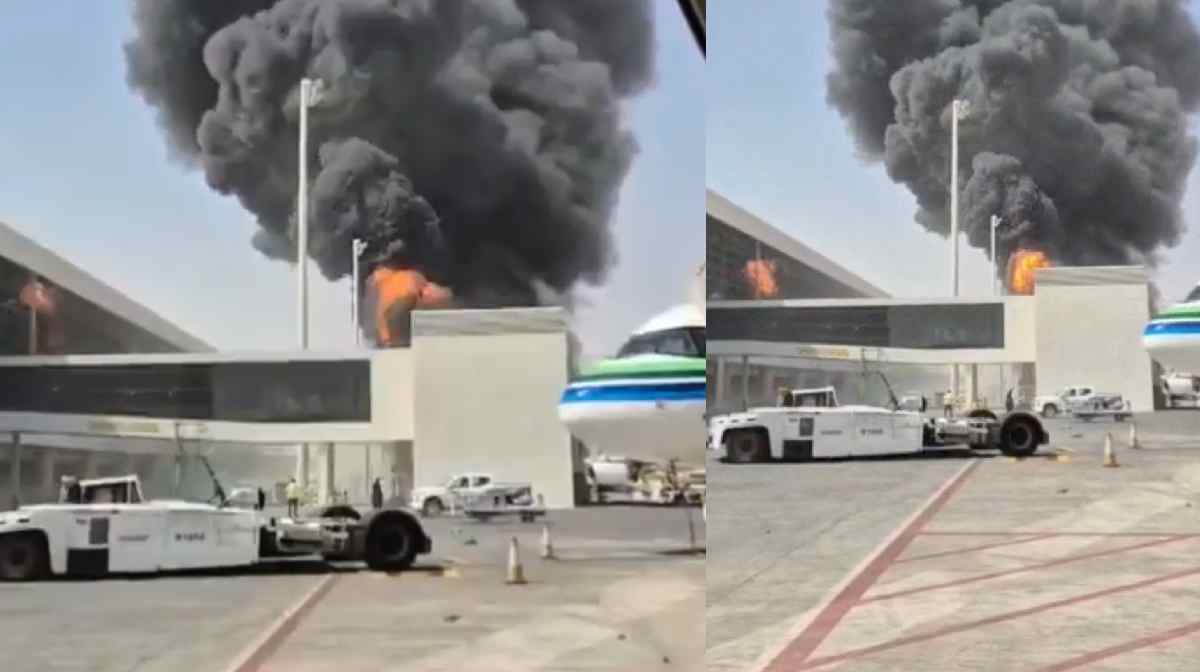
On Saturday, October 10, 2026, travelers at King Khalid International Airport in Riyadh heard a loud blast and saw smoke near the passenger terminal. Witnesses described seeing injured persons and hearing explosions. One passenger recalled in French, "J'ai vu des blessés. Tout le monde courait," which translates to "I saw injured people. Everyone was running." The scene prompted an immediate evacuation as airport staff moved people away from the area.

Just two days before, on October 8, 2026, the same airport had been struck in an attack claimed by the Houthi rebels. That incident killed three people, including a pilot, and was also described as a missile strike. The Houthis asserted responsibility for both strikes, marking a notable escalation in their campaign against Saudi targets.
Medical authorities were summoned for what officials described as a "serious emergency situation." At least five people, all of Saudi nationality, were hospitalized in intensive care in critical condition. Injured victims were transferred to various hospitals across the capital for treatment. Medical staff noted, "les blessés sont transférés vers différents hôpitaux de la capitale," meaning "the wounded are being transferred to different hospitals in the capital."
They urged citizens to stay away from the airport and to monitor local developments closely.
In the aftermath of the October 10 missile hit, several airlines announced cancellations. Etihad Airways, Qatar Airways and Kuwait Airways halted numerous flights to and from Riyadh, with some cancellations extending into Monday. The airport advised travelers to check flight statuses.
Western embassies in Riyadh, including those of Germany, Canada and Spain, issued urgent warnings to their nationals. They urged citizens to stay away from the airport and to monitor local developments closely. The advisories reflected concerns over the safety of foreign nationals amid the rising violence.
The attacks fit into a wider pattern of escalating violence between Iran‑backed Houthi rebels and the Saudi‑backed Yemeni government. According to reports, the Houthis have intensified their strikes on Saudi Arabia amid the escalation of fighting between Iran-backed Houthi rebels and the Saudi-backed Yemeni government. Saudi Arabia’s military involvement in Yemen has contributed to heightened tensions, and the recent strikes on Riyadh represent a notable expansion of the conflict’s reach.

Q: Have you decided whether to join the Saudi strikes on the Houthis? Trump: We may. We're going to look at it. We just found out about the recent attack. We will make a decision. We move very quickly. https://t.co/u5RXXH7dB9
Observers noted that the frequency and intensity of attacks on Riyadh International Airport are unprecedented since the start of the war in the Middle East. The back‑to‑back strikes on October 8 and October 10 mark a sharp increase in the tempo of hostile actions targeting the kingdom’s primary gateway.

Witnesses described seeing injured persons and hearing explosions near the terminal. Travelers are advised to verify flight schedules with their carriers, and authorities continue to assess the situation. The incident underscores the volatile security environment surrounding the airport and the broader regional conflict.