In the heart of India's eastern state of Odisha, amidst the rolling hills and lush greenery, a groundbreaking ceremony took place that would set the stage for a new era of economic power and security. On October 25, 2026, Prime Minister Narendra Modi and Uttar Pradesh Chief Minister Adityanath arrived at the inauguration of the Reserve Bank of India's (RBI) data centre and Cybersecurity Training Institute in Jatni. The event was not just a celebration of technological advancement but a clear statement of India's resolve to protect its financial system against cyber threats.
The data centre, a state-of-the-art facility, was built at a cost of 169 crore rupees. This investment underscores the government's commitment to modernizing India's digital infrastructure. The facility is designed to meet the RBI's computing needs, ensuring that the nation's financial system can support the expansion of digital financial services. By improving reach, operational efficiency, and reliability, the data centre is expected to play a crucial role in the broader digital transformation of the Indian economy.
Prime Minister Modi and Chief Minister Adityanath emphasized India's progress in self-reliance, innovation, and development. They highlighted the country's achievements, from the burgeoning tech sector to the rapid expansion of digital payments. 'Under the visionary and decisive leadership of Prime Minister Narendra Modi, India has written a new chapter in its economic power on the global stage,' said Chief Minister Adityanath. This statement was not just a boast but a reflection of the nation's growing confidence and self-assurance.
This initiative is not only about technology but also about building a culture of security awareness among the workforce.
'Protecting our banking system from cybercriminals and cyberterrorists is as essential as strengthening India’s economic power,' warned Prime Minister Modi. His words echoed a broader concern: that in the 21st century, wars are not fought only with weapons. 'Nowadays, wars are not fought only with weapons. If you want to weaken a country, this can also be done by attacking its economy,' he added. These remarks underscored the critical need for robust cybersecurity measures to safeguard the nation's financial health.

🇮🇳🇷🇺 President Putin has landed in India and will meet PM Modi in a critical moment when the world is breaking into two rival blocs amid the new Cold War. I expect several critical developments to be discussed between India and Russia: Energy first, Stupid! India now buys up to a third of its imported oil from Russia. They want long-term discounts and stability but also transparent workable payment system bypassing Western sanctions. Moscow needs long-term commitment and will offer more on the table - oil & LNG. Both sides know this is the essential backbone of the relationship given the Indian ambition to become world economic power on par with USA and China. Defense realism is everything in a world determined by gray-zone warfare. New Delhi needs Russian equipment to be serviced on time and is open to co-producing some systems. No ideology here, just hard security math. Contrary to the West, Russia is still open to deliver and share military technologies with India. Nuclear and high-tech is the future amid 4IR. Expect talks on new reactors, tech transfer, maybe even joint space projects given the failed lunar mission of Russia. India wants capabilities; Russia wants global relevance. Payments revolution amid global de-dollarisation efforts. RuPay–Mir, third-country currencies, barter relations (fertilizers, fossil fuels, etc.) & new clearing tools: this is about escaping the growing dollar pressure without saying it out loud. Trade corridors are key amid the new scramble of geoeconomic corridors. India eyes participation in Russia’s jewels: the Arctic’s Northern Sea Route facilitated with China; the International North-South Corridor with Iran and South Caucasus, and the revival of the old Chennai–Vladivostok corridor from the Cold War. If they move forward, these routes will reshape Eurasian connectivity and Russian geoeconomics. Fixing the trade imbalance is a must. India wants to sell more; Russia needs urgentlly reliable alternatives. Pharma, machinery, agri, textiles, IT - all back on the table. The geopolitical message is important given that perception of power IS power. India is the player with the most credible strategic autonomy portfolio amid Cold War 2 between America and the DragonBear. For Putin, it’s proof that its two key Asian partners - China and India keep the door open in the long rum. And yes - the US factor. India is not choosing sides in the new Cold War. It is managing pressure, keeping options, and protecting its own strategic space. India is choosing leverage. India plays the multi-vector game: defense+tech with Washington, energy+strategic depth with Moscow & normalization of ties with China. In a fragmenting world order, that may be the most powerful choice of all. Bottom line: India is playing its own game, and playing it well.
The Cybersecurity Training Institute, part of the data centre, is a key component of this strategy. It aims to train a new generation of cybersecurity professionals who can protect the nation's digital assets. The institute will offer courses and certifications to ensure that India's financial system remains resilient against cyber threats. This initiative is not only about technology but also about building a culture of security awareness among the workforce.
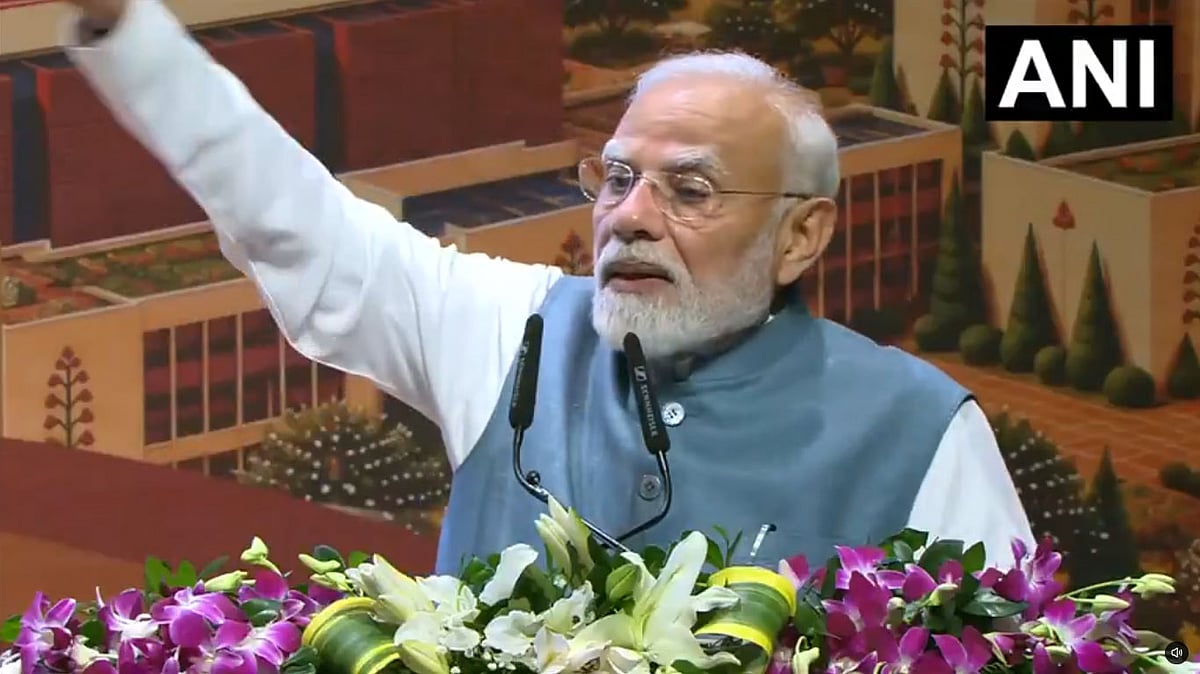
The inauguration ceremony was a blend of grandeur and practicality. Prime Minister Modi, in his address, highlighted the importance of the data centre and the Cybersecurity Training Institute. He spoke of the challenges India faces in the digital age and the need to be prepared. 'The data centre and the Cybersecurity Training Institute are not just about technology; they are about ensuring that India's financial system remains robust and secure,' he said. The Prime Minister's words resonated with the gathering, a mix of government officials, business leaders, and cybersecurity experts.
Despite the challenges, the Chief Minister expressed optimism about India's future. 'Despite these challenges, the Chief Minister said, India is moving forward with unwavering determination towards its development goals,' he stated. This sentiment was echoed by the Prime Minister, who emphasized the need for a comprehensive approach to cybersecurity. 'We must be prepared for any threat, and that is why we are investing in robust cybersecurity measures,' he added.
The inauguration of the RBI's data centre and Cybersecurity Training Institute is part of a broader vision for India's digital future. It represents a step towards a more secure and resilient financial system. As India continues to grow and integrate into the global economy, the need for robust cybersecurity measures becomes increasingly critical. The event in Jatni, Odisha, was a testament to the government's commitment to safeguarding the nation's economic power and security.
The inauguration of the RBI's data centre and Cybersecurity Training Institute in Jatni, Odisha, marks a significant milestone in India's digital journey. As Prime Minister Modi and Chief Minister Adityanath emphasized, the nation is moving forward with unwavering determination, prepared to face any threat to its economic security. The data centre and the Cybersecurity Training Institute are not just symbols of progress but are essential tools in the nation's arsenal against cyber threats. India's path to a secure and prosperous future is clear, and the government is committed to ensuring that the nation remains resilient in the face of any challenge.