In the heart of Warsaw, the air has grown thick with the tension of a country divided against itself. On October 30, 2026, the quiet dignity of the Constitutional Tribunal was replaced by the heavy presence of riot police, their lines forming a perimeter around a court that has suddenly become the epicenter of a national crisis. This was not a planned demonstration, but a sudden, explosive reaction to a judicial maneuver that has left the nation’s political architecture trembling.

The crisis ignited when Judge Anna Korwin-Piotrowska issued a decisive order that sent shockwaves through the Polish political establishment. She issued a one-month suspension against the President of the Constitutional Tribunal, Bogdan Swieczkowski, and his deputy, Bartłomiej Sochański. This move was not made in a vacuum; it followed a request from Minister of Justice Waldemar Zurek, who sought to lift the immunity of both Swieczkowski and his deputy.
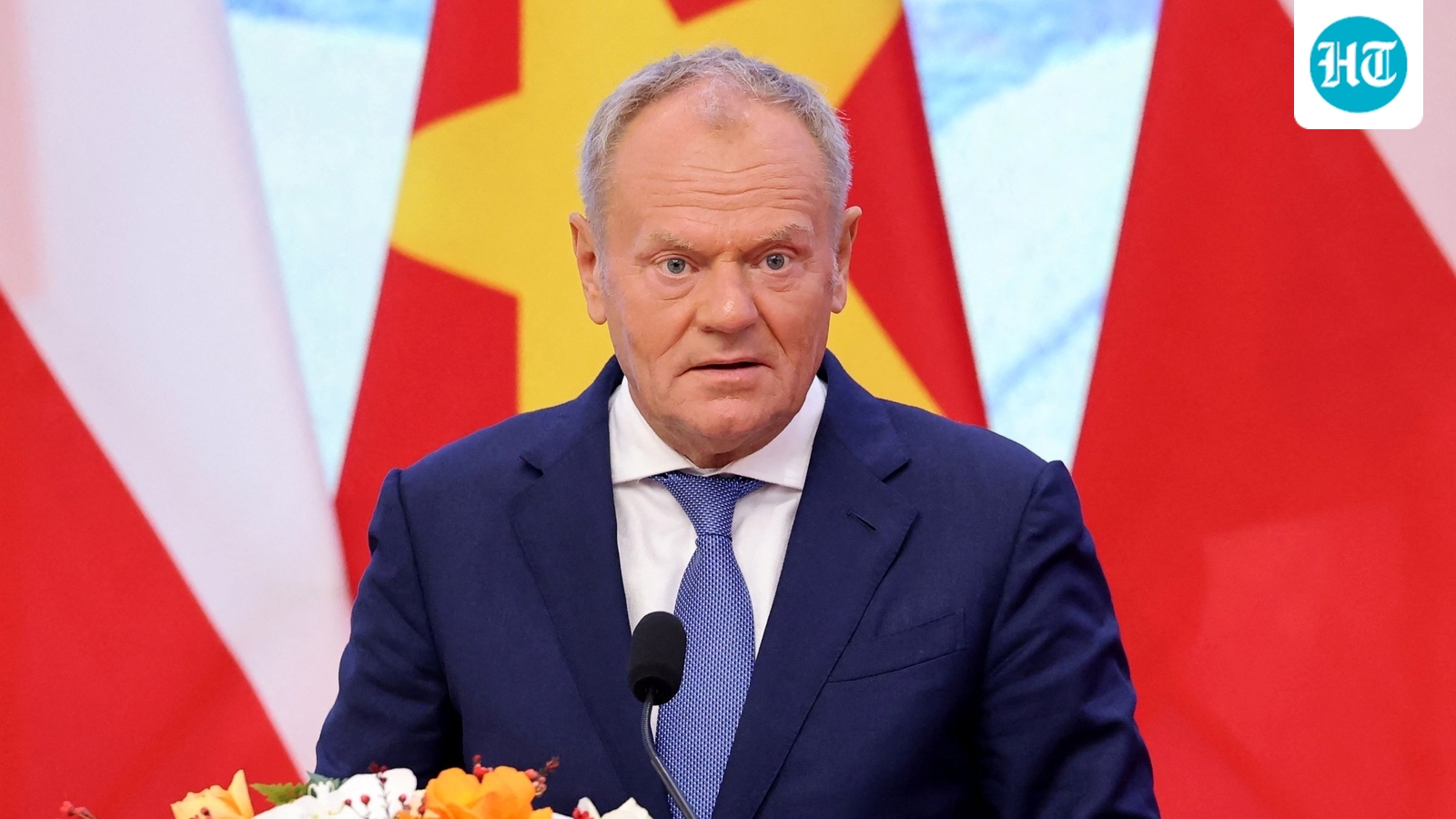
The suspension struck at the very head of the institution tasked with interpreting the nation's highest laws. For the government, led by Prime Minister Donald Tusk, the move was framed as a necessary correction. Tusk, backing the suspension, framed the government's actions through the lens of institutional integrity, stating, "Restoring the rule of law is our duty."
The political earthquake was felt even far beyond the borders of Poland.
But where the government sees restoration, the opposition sees an assault. The Constitutional Tribunal’s own social media presence reacted with visceral intensity, labeling the suspension a "coup d'etat." This language has found an echo in the streets. Outside the court, supporters of the nationalist right-wing Law and Justice party (PiS) gathered in force. The atmosphere quickly soured into confrontation, with demonstrators chanting "Tusk traitor" and condemning the administration's actions as an illegal takeover.
The dispute is not merely about personalities, but about the very foundation of the court itself. At its core, the friction stems from deep-seated disagreements over the Tribunal's membership and a fundamental refusal by the administration to acknowledge certain judicial rulings. This has created a cycle of illegitimacy, where every move by the government is viewed by the opposition as a step toward authoritarianism, and every move by the court is viewed by the government as an obstacle to justice.

Poland President Karol Nawrocki is inside Poland's Constitutional Court tonight Having forced his way into the building, Nawrocki confronted Anna Korwin-Piotrowska..
The political earthquake was felt even far beyond the borders of Poland. President Karol Nawrocki, who was mid-flight on a trip to Africa, found himself forced to change course. The escalating chaos in Warsaw necessitated an immediate return to the capital. In a move that underscored the gravity of the domestic situation, Nawrocki canceled his planned trip to Senegal, opting instead to return to Poland to manage the unfolding emergency.
"At a moment like this, the president must be in Poland," Nawrocki remarked, emphasizing the necessity of his presence as the country teetered on the edge of civil unrest. His return marked a transition from a diplomatic mission to a crisis management operation, as the presidency became a focal point for those resisting the Tusk government's maneuvers.
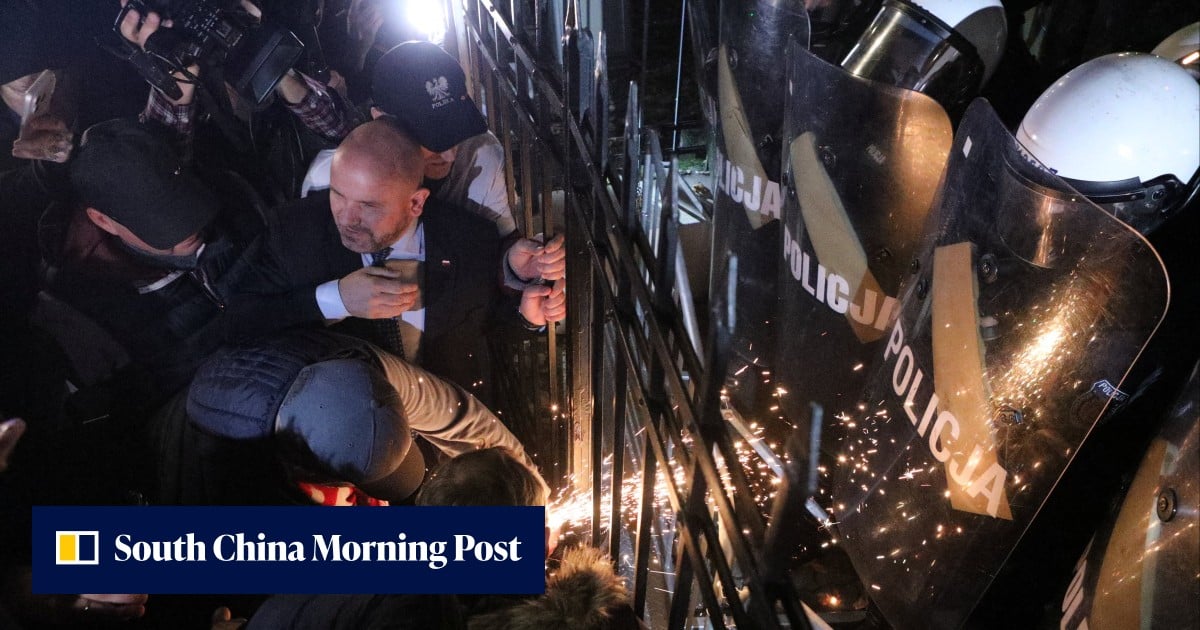
As the sun set on October 30, the streets around the Constitutional Tribunal became a theater of conflict. Protesters, fueled by the perceived threat to the judiciary, clashed with police in a series of volatile encounters. The deployment of riot police was a direct response to the growing numbers of Law and Justice party supporters who viewed the suspension of Swieczkowski and Sochański as a direct attack on their political movement.
The sight of police lines surrounding the court served as a visual manifestation of the deadlock. The government is attempting to reshape the judicial landscape, while the opposition is using the streets to signal that they will not accept a unilateral change in the rules of the game. The physical presence of the police serves as a reminder that the dispute has moved past the realm of legal debate and into the realm of public order.

🚨 CONSTITUTIONAL CRISIS ERUPTS IN POLAND — CONSERVATIVE PRESIDENT RETURNS HOME AS POLICE SURROUND NATION’S TOP COURT Polish President Karol Nawrocki abruptly canceled his trip to Senegal on Friday after a confrontation over control of Poland’s Constitutional Tribunal triggered protests, police deployments and accusations of an attempted political takeover. The dispute pits Nawrocki and the conservative Law and Justice opposition against Prime Minister Donald Tusk’s pro-European government. ▪️ COURT LEADERSHIP SUSPENDED: Judge Anna Korwin-Piotrowska announced the suspension of Tribunal President Bogdan Święczkowski and Vice President Bartłomiej Sochański. Both positions are now contested. ▪️ COUP ACCUSATIONS: The tribunal’s existing leadership denounced the move as an unlawful seizure of judicial authority. Conservative opposition politicians accused Tusk’s government of attempting a coup. ▪️ PRESIDENT RETURNS: Nawrocki turned his plane around mid-flight, declaring that the escalating crisis required his presence in Poland. ▪️ POLICE DEPLOYED: Riot police secured the court grounds as protesters gathered. Three people were detained following confrontations with officers. ▪️ TUSK’S POSITION: The prime minister maintains that his government is restoring judicial independence after years of disputed appointments under the previous conservative administration. This is a confrontation over who has the legal authority to appoint, suspend and recognize judges on Poland’s highest constitutional court. The alleged coup has not been established as a legal finding. Who ultimately determines the tribunal’s legitimate leadership, and can Poland resolve this dispute without further undermining judicial independence? https://t.co/IPApubpX02
As the dust from the initial clashes began to settle, the focus shifted toward the high-level deliberations required to prevent a total collapse of institutional order. On October 31, 2026, President Karol Nawrocki moved to convene an emergency meeting. This gathering was intended to bring together the chief of the Supreme Court and a judge from the Constitutional Court, in an attempt to navigate the legal labyrinth created by the suspension.
The immediate future remains clouded by the intensity of the standoff. With the Tribunal's leadership suspended for a month and the government and opposition locked in a battle over the definition of the rule of law, Poland finds itself in a period of profound uncertainty. The question is no longer just about who sits in the judge's chair, but whether the institutions themselves can survive the weight of the political struggle currently tearing at them.