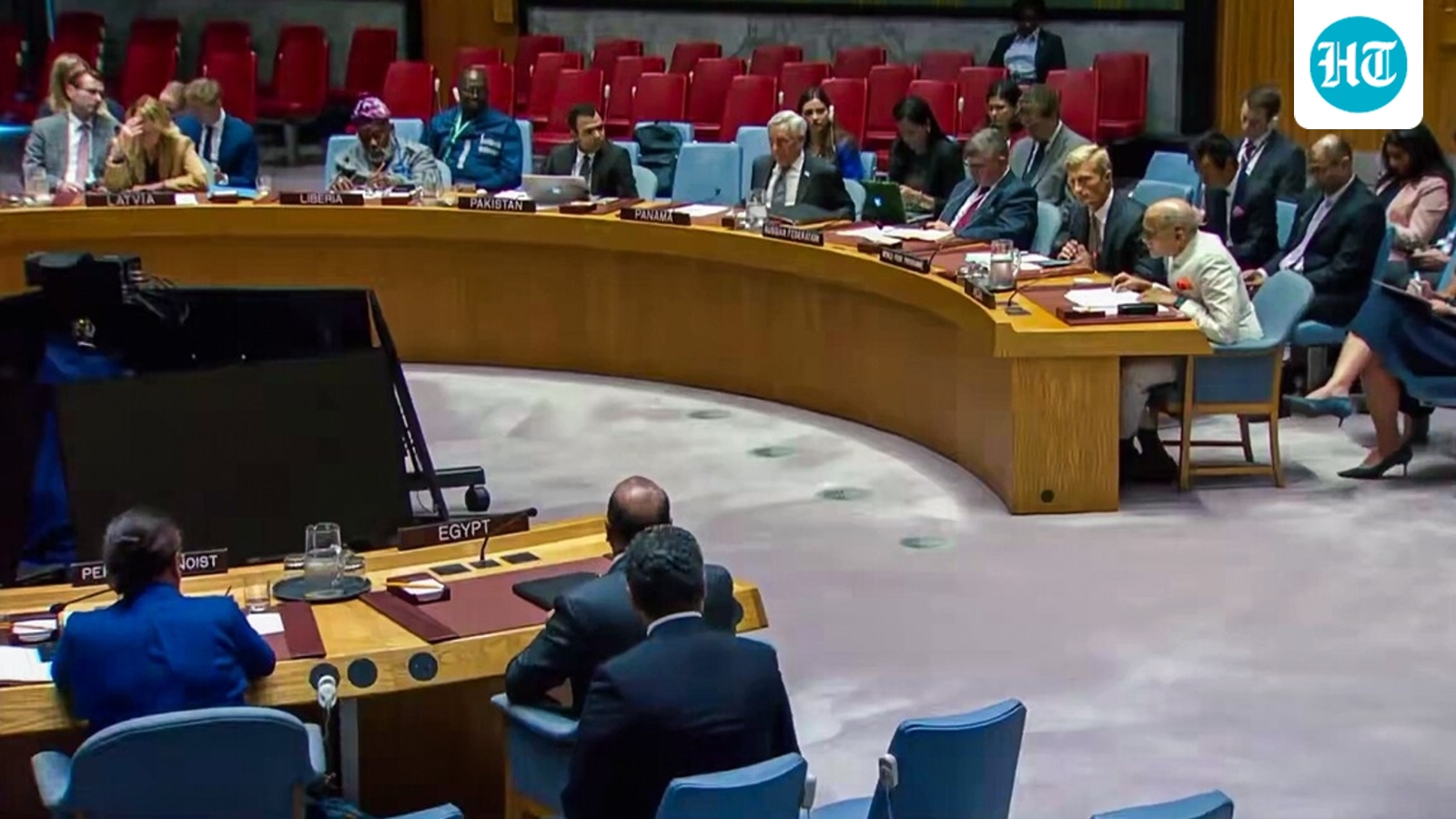
In the grand, marble-lined halls of the United Nations, power is often measured by what you are allowed to stop. Since 1945, the architecture of global security has rested on a specific, concentrated privilege: the veto. It is a mechanism that allows five specific nations—the United States, the United Kingdom, France, Russia, and China—to single-handedly halt the machinery of international consensus. But as the geopolitical landscape of the 21st century shifts, the foundation of that architecture is being called into question.

The United Nations Security Council was designed in a different era, a post-war reality that failed to anticipate the rise of new global powers and the complexities of modern diplomacy. For India, the current configuration is not merely outdated; it is an inaccurate reflection of the world as it stands today. The country has consistently argued that the Council, in its current form, is no longer suitable for the contemporary age. To remain relevant, the Council requires comprehensive reform, moving beyond a structure that favors a small, exclusive club.
However, India is not merely asking for a seat at the table; it is demanding the same tools used by those who already sit there. During recent discussions, Ambassador Harish Parvathaneni, India's Permanent Representative to the UN, made the nation's position unmistakable. India has rejected the notion of creating "second-class" permanent seats. The logic is simple: if a nation is granted permanent status but denied the veto power, it remains a subordinate actor, a permanent member in name only, unable to protect its interests or influence the most critical decisions of the Council.
Records show that the veto has been exercised 331 times, impacting approximately 200 resolutions.
"We reiterate that as long as the veto exists, it must be held by all permanent members of a reformed Council," Parvathaneni emphasized. For New Delhi, the reform cannot be a cosmetic expansion of membership that leaves new powers sidelined. To accept a seat without the veto would be to accept a diminished role in the very body meant to maintain global order.

INDIA’S MESSAGE AT THE UNITED NATIONS: NO SECOND-CLASS PERMANENT MEMBERSHIP India’s Permanent Representative to the UN, Ambassador Parvathaneni Harish, has reiterated New Delhi’s position on reforming the UN Security Council - new permanent members should not be denied veto rights while the existing P5 retain theirs UNSC reform must address representation, equality and accountability https://t.co/eINU2fythD
This demand for equality is rooted in a critique of how the veto has been wielded since its inception. The history of the Council is marked by the uneven application of this power. Records show that the veto has been exercised 331 times, impacting approximately 200 resolutions. Yet, this power has not been distributed evenly among the five permanent members. While the veto is a prerogative of the P5, the reality is that most vetos, or even the mere threat of them, have emanated from only three of those five nations. In fact, two of the five permanent members have not exercised a veto for over three and a half decades.
This concentration of power has led to accusations that the veto is often used not for the sake of global security, but for the sake of individual national interest. Parvathaneni argued that the veto should not be an "instrument of narrow political expediency." Instead, he framed the power as a heavy obligation. "The veto, which is right now a prerogative only of the five permanent members of the UN Security Council, is a responsibility that must be exercised with great restraint, especially on matters bearing upon the maintenance of international peace and security," he stated. He further noted that "the privilege of the veto carries an immense burden of responsibility that requires restraint."
India’s push for reform also touches on the perceived failure of existing oversight. The international community has attempted to introduce measures to hold the permanent members accountable for their use of the veto, but the effectiveness of these efforts remains in doubt. Parvathaneni specifically questioned the efficacy of accountability measures that were introduced in 2022, suggesting that the current system lacks the teeth necessary to ensure the veto is used responsibly.
By calling for a text-based negotiation process, India is seeking a formal, structured way to address these systemic imbalances. The goal is a comprehensive overhaul that expands both permanent and non-permanent membership, ensuring that the Council's composition reflects the actual distribution of power in the modern world.
VIDEO | New York: Permanent Representative of India to the United Nations Parvathaneni Harish (@AmbHarishP) delivered India's statement at the UNGA Plenary on the use of the Veto. "India has always maintained that the veto which is right now a prerogative only of the five permanent members of the UN Security Council, is a responsibility that must be exercised with great restraint, especially on matters bearing upon the maintenance of international peace and security. It should not be an instrument of narrow political expediency. The record of the Veto is stark. Over the life of this Organization, the veto has been exercised 331 times on around 200 resolutions. We also note that two out of the five permanent members have not exercised veto for over three and a half decades and most of the vetos or threat of vetos have emanated from only three of the P5. The Veto Initiative of 2022 was seen as a harbinger of change, by mandating a UNGA debate everytime a veto is cast, to fix accountability. However, the actual record of the large number of vetos cast since the UNGAR 76/262 was adopted tells a contrary story. The question of veto is one of the five clusters of Security Council reforms under the IGN framework.. While we agree with the sentiment behind UNGA Resolution 76/262, as well as the initiatives on mass atrocity situations, the lived experience shows that piecemeal approaches, however well intentioned, are bound to fail." (Source: Third Party) (Full video available on PTI Videos - https://t.co/bIyFWTfmBd)
As India continues to press for these changes, the global political environment remains volatile. The debate over the UN's legitimacy occurs against a backdrop of shifting alliances and domestic political tensions elsewhere. For instance, on October 26, US President Donald Trump made claims regarding Brazil’s presidential election, stating it "looked like another rigged election, frankly," though he provided no evidence to support the assertion.
While such political tremors occur in various corners of the globe, the struggle at the United Nations is a fundamental fight over the rules of the game. For India, the mission is clear: the Security Council must evolve, or it risks becoming a relic of a bygone era, unable to command the respect or the cooperation of the nations it is meant to lead.