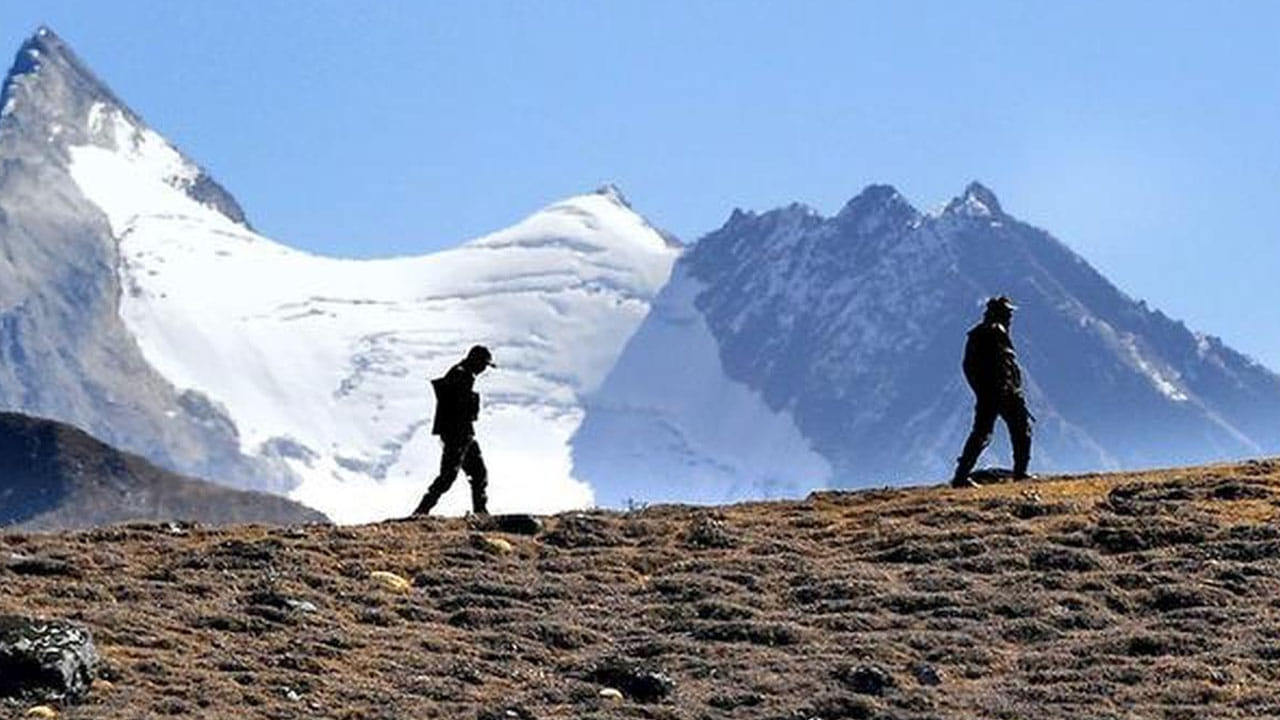
The Himalayas, often romanticized in literature as a place of serene isolation, are currently one of the most volatile geopolitical fronts in Asia. For civilians living in the remote valleys of Arunachal Pradesh, the mountain ranges are not just scenery; they are the boundary line separating them from a foreign military presence. On October 23, 2026, the abstract concept of 'border security' became a tangible reality for the public when the head of the specialized force tasked with holding this line broke his silence. The Indo-Tibetan Border Police, or ITBP, is the paramilitary service of India responsible for protecting the northern borders, a role that has become increasingly difficult as geopolitical frictions between New Delhi and Beijing escalate. The central figure in this unfolding drama is Shatrugan Kapoor, the chief of the ITBP, who found himself at the center of a national debate not through a battlefield announcement, but through a ceremonial address that quickly spilled over into viral political controversy.

To understand the weight of the ITBP chief's words, one must first look at where they were spoken. Shatrugan Kapoor was delivering remarks during the 'Himavir Samman Sammoh,' an event organized to honor and recognize the valor of soldiers. In the Indian context, 'Himavir' translates roughly to 'mountain hero,' and the 'Samman' is a state of honor or respect. For a long time, the internal strategies of the ITBP remained largely opaque to the general public, operating in the shadows of larger geopolitical narratives. However, as social media amplification has turned every general’s speech into a headline, Kapoor’s comments at this ceremony did not stay confined to the auditorium. The video of the speech went viral, forcing a complex, technical explanation of border security into the hands of millions of citizens who were hungry for clarity about the safety of their northern states. This shift from a closed-door military assessment to a public viral moment changed the dynamic of the crisis, transforming it from a quiet diplomatic standoff into a loud domestic political issue.
Within the chaotic audio of the viral clip, one phrase stands out and serves as the key to understanding the ITBP's current mindset: "This is a new experiment." When Shatrughan Kumar (who serves as the ITBP chief) stated that the conflict in Arunachal Pradesh was still ongoing, he did not frame it as a failure, nor did he frame it as a total victory. Instead, he described the management of the conflict as an experimental approach. In military terms, an 'experiment' implies a departure from standard, rigid protocols. It suggests that the command is trying out new methods of engagement, surveillance, or de-escalation in real-time against a highly adaptive adversary. He explicitly noted that "many situations were created in Arunachal Pradesh," acknowledging that the environment is changing and hostile. By calling the management of these situations a "new experiment," the ITBP is admitting to a state of flux. They are not following a centuries-old playbook; they are writing a new one in real-time, testing how far they can push their presence before crossing a line that might trigger a larger escalation. The claim that "the strength of our path has been very good" is less a boast and more a declaration of method. They are arguing that their specific approach to holding the line is functionally working, even if the underlying tension has not been resolved.
They are arguing that their specific approach to holding the line is functionally working, even if the underlying tension has not been resolved.
The military reality of a face-off between Indian and Chinese soldiers is a physical matter of boots on the ground. The political reality, however, is a battle over narrative control. This is where Jayram Ramesh, a leader in the Congress party, entered the fray. Ramesh’s stance was starkly critical of the current government, arguing that the administration was failing to adequately address the issue. For opposition leaders, a border conflict is a potent tool; it allows them to frame the government’s inability to 'solve' the standoff as a failure of leadership and vision. Ramesh’s criticism highlights the gap between what the military is doing on the ground and what the political public expects. While the ITBP commandos are actively playing their role in managing specific face-offs, the opposition argues that the broader state responsibility is being neglected. This creates a double bind for the ITBP: they are trying to run a delicate 'experiment' to de-escalate tensions, but political scrutiny from the opposition makes every inch of border a political battlefield. If the 'experiment' succeeds, the credit goes to the government; if it falters, the blame is pinned on political inaction. The ITBP is caught in the middle, asked to solve a geopolitical dispute with operational subtlety while the political volume is turned up to maximum.
As of late October 2026, the situation in Arunachal Pradesh remains a standstill. The 'face-off' mentioned by Shatrugan Kapoor is not a singular, explosive event but a series of postures and positions maintained by Indian and Chinese forces in various sectors. The ITBP has stated that their commandos are actively engaged, meaning the border is not just a map line but a physical zone of high-intensity vigilance. The 'new experiment' refers to the ongoing, real-time negotiation of space and posture that characterizes modern border management in the high Himalayas. While the public may view the situation as a binary choice between war and peace, the reality for the ITBP is much more nuanced. It is a continuous test of restraint, capability, and strategic calculation. The line is holding, not because the hostility has ceased, but because the 'path' chosen by the Indian forces has managed to contain the conflict despite the 'many situations' created by the opposing side. For now, the mountains remain silent, but the tension within them is palpable, waiting for the next move in a long, unresolved game.