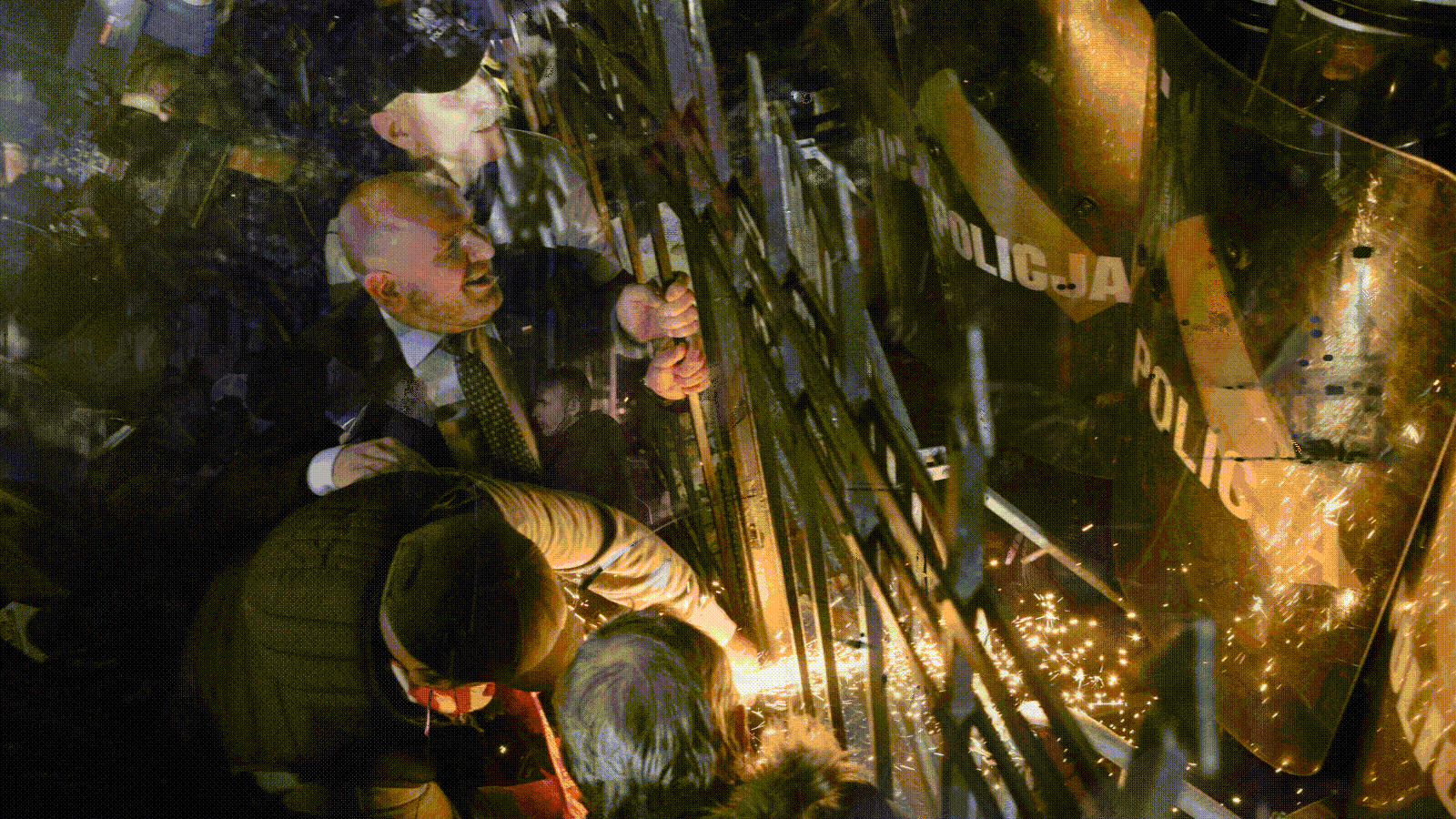
The Long-Running Conflict\n\nThe crisis over Poland's Constitutional Court has been brewing since 2015, when the Law and Justice (PiS) party came to power. The previous conservative government made significant changes to the court, including appointing judges who aligned with their political agenda. These changes were seen as a way to consolidate power and undermine the judiciary's independence. The conflict has since escalated, with both sides accusing each other of undermining the rule of law and democratic norms.\n\n## The Suspension of Chief Justice Swieczkowski\n\nBogdan Swieczkowski, the chief justice of the Constitutional Tribunal, was suspended for a year by the court's longest-serving judge, Anna Korwin-Piotrowska. This decision was seen as a major blow to the government's efforts to reverse the changes made by the previous conservative government. The move prompted immediate backlash, with right-wing politicians and opposition parties accusing the government of carrying out a coup.\n\n## President Nawrocki's Cancellation of Trip\n\nThe situation quickly escalated. President Karol Nawrocki canceled his trip to Senegal and turned his plane around to hold talks at the Constitutional Court. The cancellation was a direct response to the suspension of Swieczkowski and the ongoing tension at the court. Nawrocki's decision to hold talks at the court instead of going on his planned visit to Senegal underscored the severity of the political crisis.\n\n## Demonstrations and Tensions\n\nOutside the Constitutional Court, hundreds of protesters gathered, many of them right-wing supporters of the opposition. They accused the government of trying to undermine the judiciary and the rule of law. The atmosphere was tense, with riot police deployed to maintain order. Three individuals attempting to enter the court premises were reportedly arrested, adding to the sense of confrontation.\n\n## The European Union's Verdict\n\nThe conflict has not gone unnoticed by the European Union. In 2021, the EU's top court ruled that the Constitutional Tribunal is not independent and impartial in its rulings. This decision further fueled the opposition's claims that the government is trying to manipulate the judiciary. The ruling highlighted concerns about the tribunal's independence.\n\n## The Broader Political Landscape\n\nThe political conflict is not just about the current crisis; it is also shaping the broader political landscape in Poland. Both sides are using the Constitutional Court issue to mobilize their base and gain political advantage. The opposition is framing the government's actions as a threat to democracy, while the government, led by Donald Tusk, is trying to present itself as the defender of the rule of law. The ongoing tensions will be crucial in determining the future of Poland's political and judicial landscape.\n\n## The Ongoing Tensions\n\nThe situation remains volatile. The government and the opposition are engaged in a bitter power struggle, with neither side willing to back down. The suspension of the chief justice, the cancellation of the presidential trip, and the demonstrations outside the court are just the latest chapter in a long-running conflict. The European Union's ruling in 2021 has added another layer of complexity to the situation.\n\n## Conclusion\n\nThe conflict over Poland's Constitutional Court is a complex and multifaceted issue that goes beyond the immediate political crisis. It is a battle for the soul of the Polish state, with the government and the opposition each vying for control of the judiciary. The ongoing tensions and the evolving political dynamics will be crucial in determining the future of Poland's political and judicial landscape.
Politics · Poland
A Suspended Chief Justice, Riot Police, and 'Coup' Claims: What's Happening in Poland
Poland is embroiled in a political conflict over the Constitutional Court, with the center-left government and the conservative opposition engaged in a bitter power struggle. This article delves into the events that have led to demonstrations, court rulings, and the cancellation of a presidential trip.
Author
Democracy News Live Desk
Date
31 Oct 2026
Read
3 min