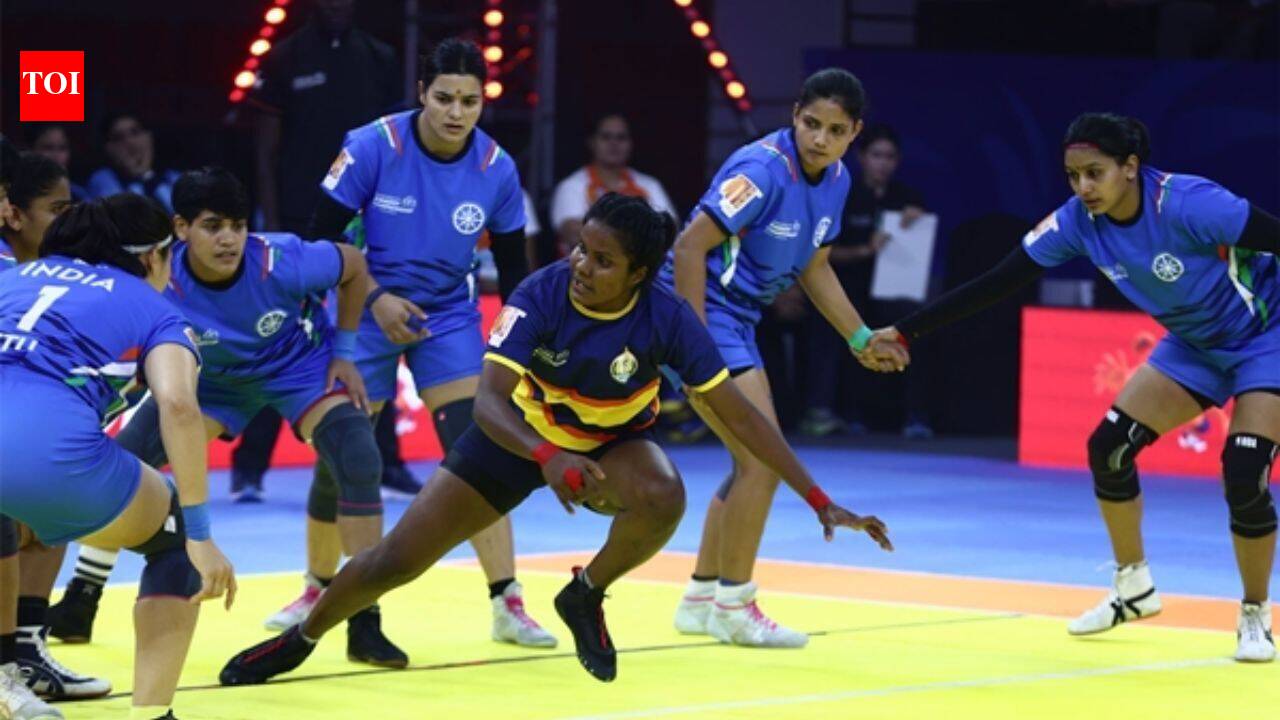
In the bustling arena in Ahmedabad, the atmosphere was electric with anticipation for a sport that had long been a cornerstone of South Asian culture but was making its first major incursion into the Commonwealth Games family. Kabaddi, a high-contact raid-and-defense game, had recently found a new home in international competition. For the women's teams, this was not just a tournament; it was the inaugural Women’s Commonwealth Kabaddi Championship. India, the powerhouse of the sport, stepped onto the mat as the heavy favorites, but the real story was about what they could bring to the world stage in this brand-new format. The pressure was palpable, not just because of the stakes, but because there was no historical precedent to guide the competition. Every raid, every defense, was being watched with the scrutiny of a first-time audience.

From the opening whistle, India’s women’s team signaled that they intended to set the tone for the rest of the tournament. They did not just win; they overpowered their opponents, starting strong in the group stage and establishing a rhythm that proved difficult to disrupt. The team’s cohesion was evident as they moved through their initial opponents, securing crucial victories that built their momentum. By the time the knockout rounds began, the Indian squad had already demonstrated the depth and defensive discipline required to compete at the highest level. This early dominance was critical, not only for their qualification but for the psychological advantage it provided against teams like Sri Lanka and Uganda who were also vying for a place in the final. The consistency of their performance across these early matches laid the foundation for what would become a flawless tournament record.
The knockout stage is where championships are truly won, and India proved their mettle in the rounds against Sri Lanka and Uganda. Each match carried the weight of elimination, demanding not just skill but immense mental fortitude. The Indian team remained unshaken, executing their raids with precision and their defenses with tenacity. It was during these high-stakes encounters that the character of the team became clear. They did not just rely on their star players; they operated as a cohesive unit, with every athlete knowing their role in the complex choreography of the game. The victories in these rounds were not just wins; they were statements of intent that positioned them as the undeniable champions of the preliminary stages. The journey from the group to the final was a testament to their ability to perform when it mattered most, eliminating their rivals one by one to reach the ultimate showdown.
As the final whistle blew, the reality of the win settled in: India had won the inaugural title, making history in the process.
On a date in October, India faced off against Uganda in the final match in Ahmedabad. The match was a display of tactical brilliance from the Indian side, which managed to control the flow of the game from start to finish. They defeated Uganda with a decisive score of 35-15. This was not a close contest; it was a demonstration of superior planning and execution. The Indian defenders were particularly effective, neutralizing Uganda’s raiders and creating scoring opportunities for their own attackers. The final scoreline reflected the team’s confidence and the fact that they had prepared for this specific challenge with meticulous care. As the final whistle blew, the reality of the win settled in: India had won the inaugural title, making history in the process.
One of the defining features of India’s victory was the strength of its defensive line. While raiding was crucial, it was the defense that often decided tight matches. In the final, key players Ritu and Sumana contributed significantly to the team’s defensive success. Their ability to tackle, block, and communicate with each other was instrumental in keeping Uganda’s score low. This defensive anchor allowed the Indian raiders to go on the offensive with more freedom and confidence. The team’s ability to switch between raiding and defending seamlessly was a hallmark of their performance throughout the tournament. It was this balance that set them apart from other teams, ensuring that even when they were not scoring, they were not being scored upon. The synergy between Ritu and Sumana was a critical component of the 35-15 victory, proving that depth and structure are just as important as individual brilliance.
While the team effort was paramount, individual brilliance cannot be ignored. Sakshi emerged as the tournament’s top scorer, playing a pivotal role in India’s success. Her ability to penetrate the opponent’s defensive line and bring back points was a major factor in the final’s outcome. In the final match, her contributions were decisive, adding to the team’s total and helping to extend the lead. Sakshi’s performance was not just about numbers; it was about the impact of her presence on the mat. She inspired her teammates and forced the opposition to adjust their strategies. Her scoring prowess, combined with the team’s defensive strength, created a complete package that was nearly impossible to beat. As the top scorer, she carried the weight of expectation on her shoulders and delivered, cementing her status as one of the key players in the inaugural championship.