
In the crowded and commercially vital heart of New Delhi, a political movement with a name that would likely not be taken seriously in a stable democracy is rapidly becoming a major headache for the legal system. The Cockroach Janta Party, or CJP, led by Abhijeet Dipke, has positioned itself at the center of a fierce dispute over the right to demonstrate. While the name itself signals an outsider, satirical approach to politics, the movement's specific grievances are tied to the core machinery of Indian governance: the conduct of national elections. As the country navigated a wave of opposition protests over alleged electoral fraud beginning on October 10, 2026, the CJP did not merely join the broader dissent; it carved out a distinct, highly publicized lane of protest that has since pulled the Delhi High Court into a prolonged legal and public debate.
The immediate trigger for the legal intervention was not national politics, but local commerce. The CJP proposed a major demonstration at Central Park, a space adjacent to the bustling market of Connaught Place. Anil Kumar Gupta, a street vendor, filed a plea with the Delhi High Court to stop this planned event. His argument was straightforward: the disruption of traffic and the presence of a large protest would devastate local traders, especially as the event was scheduled to overlap with a major Hindu festival and the associated festive weekend. For the High Court, this created an immediate tension. On one side was the fundamental right of a political party to voice dissent; on the other was the economic livelihood of vendors and the public’s interest in a functioning commercial hub during a culturally significant period.
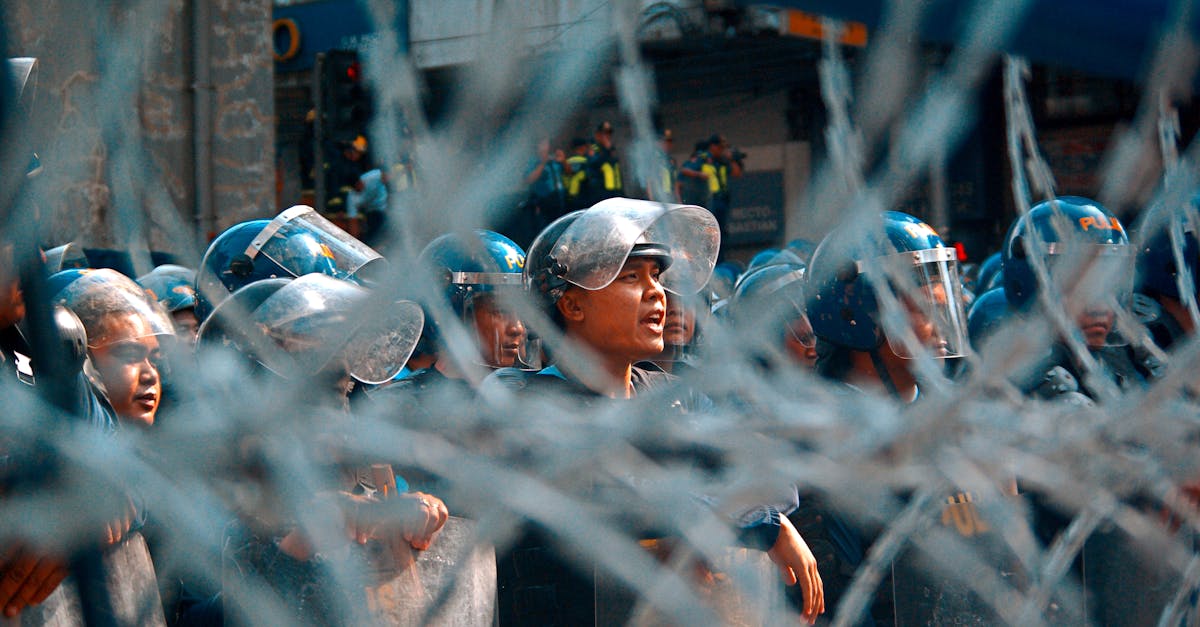
When the Delhi High Court took up the matter on October 15, 2026, the court did not issue a simple ban. Instead, it turned to the executive branch for a framework of control. The Delhi Police, through its representatives, provided a formal assurance to the court that all necessary legal measures would be taken to regulate and control the activities of Dipke and the CJP during the protest. This procedural step is significant: it shifts the burden of maintaining public order onto the police force, granting them legal cover to manage the crowd, restrict access, or disperse the march if it violated regulations. The court noted that authorities had already begun taking action to control Dipke’s activities and would continue to do so. This established a delicate legal floor: the protest could proceed, but only within a tightly managed perimeter defined by the police.
In doing so, the party attempted to reframe its specific protest as a necessary check on what it viewed as a broader political failure.
Dipke and the CJP did not accept this legal framing as neutral. In response to the court's proceedings, Dipke accused the government of actively cracking down on protesters. He argued that the very legal and administrative hurdles being placed in their path were a sign of targeted state hostility. “We are being targeted. This is not a site (for protest). They have already started shutting down,” Dipke stated, implying that the police assurance to 'regulate' was a thinly veiled effort to suppress a legitimate political voice. This narrative of victimization serves to rally the CJP’s base, framing the legal state not as an arbiter of rights, but as an instrument of political suppression.
The CJP’s critique extended beyond the police to the highest levels of the executive. Dipke explicitly linked the government’s perceived crackdown to Prime Minister Narendra Modi’s protection of the Chief Election Commissioner. By making this connection, the CJP elevated a local protest dispute into a national constitutional question. It suggested that the state was not merely managing a crowd at Connaught Place, but actively shielding the architecture of the electoral process from scrutiny. In doing so, the party attempted to reframe its specific protest as a necessary check on what it viewed as a broader political failure.
Despite the legal complications, the CJP proceeded with its planned march. The demonstration, part of a broader 'Tiranga March' campaign, moved through Central Park on October 16, 2026. The party's leadership had appealed directly to the public, calling on citizens to join them in a display of national sentiment. “I appeal to everyone to be part of our 'Tiranga March' at 5 PM today,” Dipke called out, attempting to weave the march into the fabric of public celebration rather than purely political confrontation. The AAP, a major opposition political force in the region, provided visible support for the CJP’s cause, lending its own organizational weight to the event and further complicating the police’s task of managing the crowd.
Even as the main march proceeded, the legal repercussions of the CJP’s activities began to manifest. Two individuals, Saurav Das and Ashutosh Ranka, were remanded to jail for having raised a flag at Jantar Mantar earlier in the week. They were charged with trespass. This move by the authorities served as a warning: while the organized CJP protest was being 'regulated,' the individual acts associated with its broader campaign were being met with criminal prosecution. The dichotomy between a controlled main event and the penal treatment of participants highlighted the selective nature of the state’s approach to this specific wave of unrest.

Because the dispute over the protest’s legality, location, and scale remained unresolved, the Delhi High Court did not conclude its review. The matter was simply posted for further consideration, with the next hearing scheduled for November 3. This procedural pause reflects a common judicial tactic: the court has set the immediate framework, but the legal question of the CJP’s right to demonstrate remains a matter for future judgment. For the CJP, the victory is merely a postponement of a definitive ban. For the Delhi Police, it is a continued directive to maintain control. And for the vendors of Connaught Place, the uncertainty itself remains the primary threat, leaving the commercial heart of Delhi in a state of suspended tension.
As of the latest filings, the CJP exists in a liminal legal space. Its leaders have successfully staked out a position of political relevance, using the threat of protest to challenge the government’s narrative on elections. Yet, the outcome remains strictly bound by the court’s procedural schedule. The legal measures promised by the Delhi Police stand as a de facto ceiling on the party’s ability to disrupt. The protest is permitted only so long as it remains a regulated event, not an open political challenge. In this way, the CJP has managed to insert itself into the national conversation, but only by accepting the terms of a state that is willing to tolerate its existence under strict legal surveillance.