On October 26, 2026, the dust settled on Brazil’s presidential runoff, but the silence that followed was not one of peace, but of profound political friction. Luiz Inácio Lula da Silva emerged as the victor, securing 51.8% of the vote. In a standard democratic transition, such a moment usually triggers a cascade of international recognition. Instead, the victory was met with a sharp, public skepticism from the United States, as President Donald Trump cast a shadow of doubt over the integrity of the Brazilian electoral process.

In the immediate aftermath of the vote, the machinery of the U.S. government prepared to follow diplomatic protocol. The U.S. Department of State had drafted a formal statement of congratulations for the president-elect. However, that message never reached its destination. In a move that underscored the volatile relationship between the current U.S. administration and the Brazilian political landscape, the congratulatory statement was suspended. The delay was not a bureaucratic oversight, but a calculated response to the objections raised by the losing camp.
This hesitation reflects a broader geopolitical shift. While leaders from neighboring Colombia and Chile moved quickly to congratulate Lula, the U.S. administration withheld its endorsement. The decision has significant implications for the bloc of right-wing governments in Latin America that have traditionally aligned with Trump’s political movement. By pausing the recognition of Lula, the U.S. has signaled that it is closely watching the claims of the Bolsonaro camp, potentially altering the diplomatic temperature of the entire region.
While the legal battles brew in Brazil, the political battle has moved to the global stage via Donald Trump.
The numbers themselves tell a story of a deeply polarized nation. Lula’s victory was not a landslide, but a hard-fought margin. He secured 51.79% of the votes, leaving his right-wing challenger, Flávio Bolsonaro, with 48.2%. The difference between the two candidates stood at 4.4 million votes—a gap that, while decisive in the eyes of Brazil's top electoral court, remains a point of intense contention for those who refuse to accept the outcome.
Flávio Bolsonaro, the son of the former president Jair Bolsonaro, has signaled his intention to contest the results. The crux of the challenge lies in a last-minute extension of polling hours, a procedural move that the Bolsonaro camp views as a vulnerability in the system. Furthermore, Jair Bolsonaro has leveled specific accusations against the judiciary, claiming that Judge Cristiano Zanin manipulated the election timeline to favor the incoming administration. For the Bolsonaro family, the election was not a settled matter of math, but a process marred by irregularity.
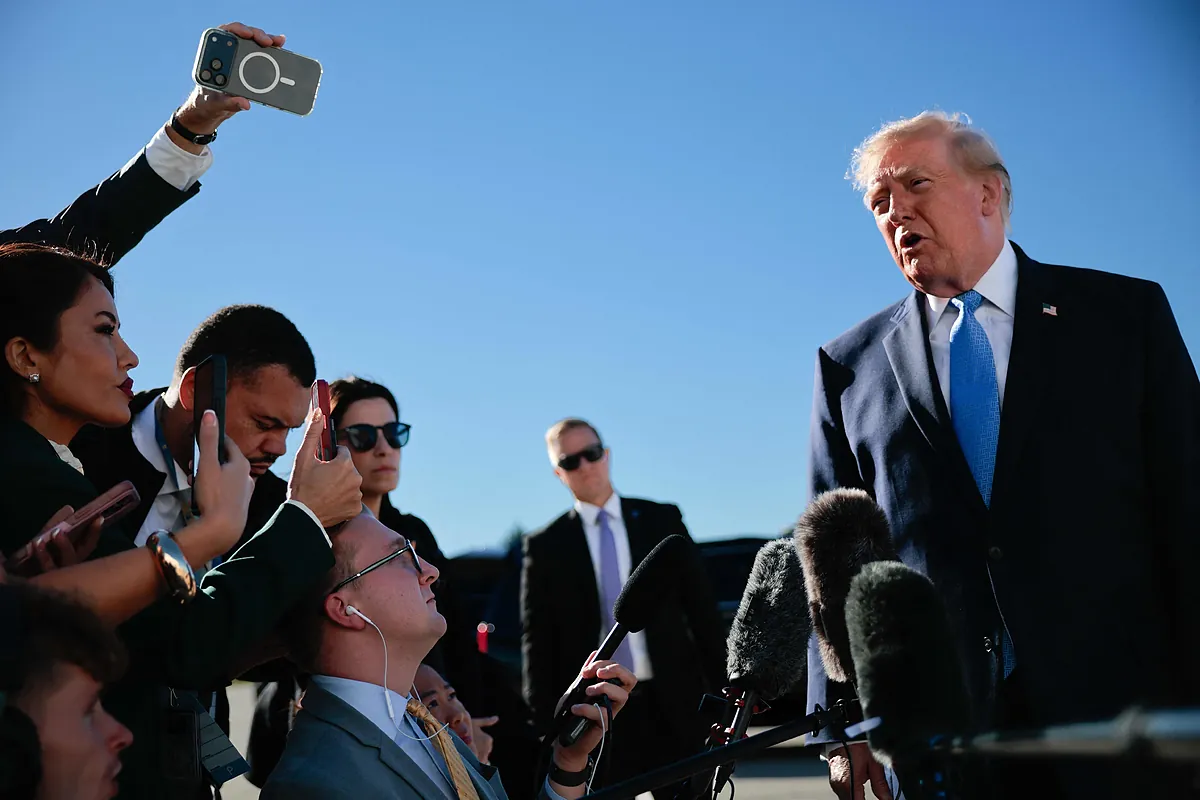
While the legal battles brew in Brazil, the political battle has moved to the global stage via Donald Trump. Breaking his silence on the Brazilian results, Trump did not merely observe the transition; he actively criticized it. His rhetoric has been consistent across languages, framing the event not as a democratic milestone, but as a cautionary tale of electoral manipulation.
"It looked like another rigged election, frankly," Trump remarked, emphasizing that while he does not direct Brazil, the optics of the situation were damaging to the global perception of democracy. He characterized the proceedings as "terrible" and suggested that elections must be indisputable to maintain their legitimacy. By calling the victory "manipulated" and "corrupt," Trump has aligned himself firmly with the grievances of the Bolsonaro family, reinforcing a narrative that the democratic process in Brazil was compromised.

The tension is compounded by the history between the leaders involved. The relationship between Lula and Trump has long been described as difficult. Historically, Trump has been a supporter of Jair Bolsonaro, creating a political divide that transcends borders. This is not merely a disagreement over votes, but a clash of political identities. The U.S. government has previously applied both political and economic pressure on Brazil, adding layers of complexity to an already strained bilateral relationship.
As the world watches, the transition in Brazil remains caught between the official declaration of the electoral court and the fierce resistance of the opposition. With the U.S. administration withholding its formal blessing and the Bolsonaro camp demanding an annulment, the path toward a stable presidency for Lula is fraught with uncertainty. The election in Brazil has ended, but the contest over its legitimacy is only just beginning.