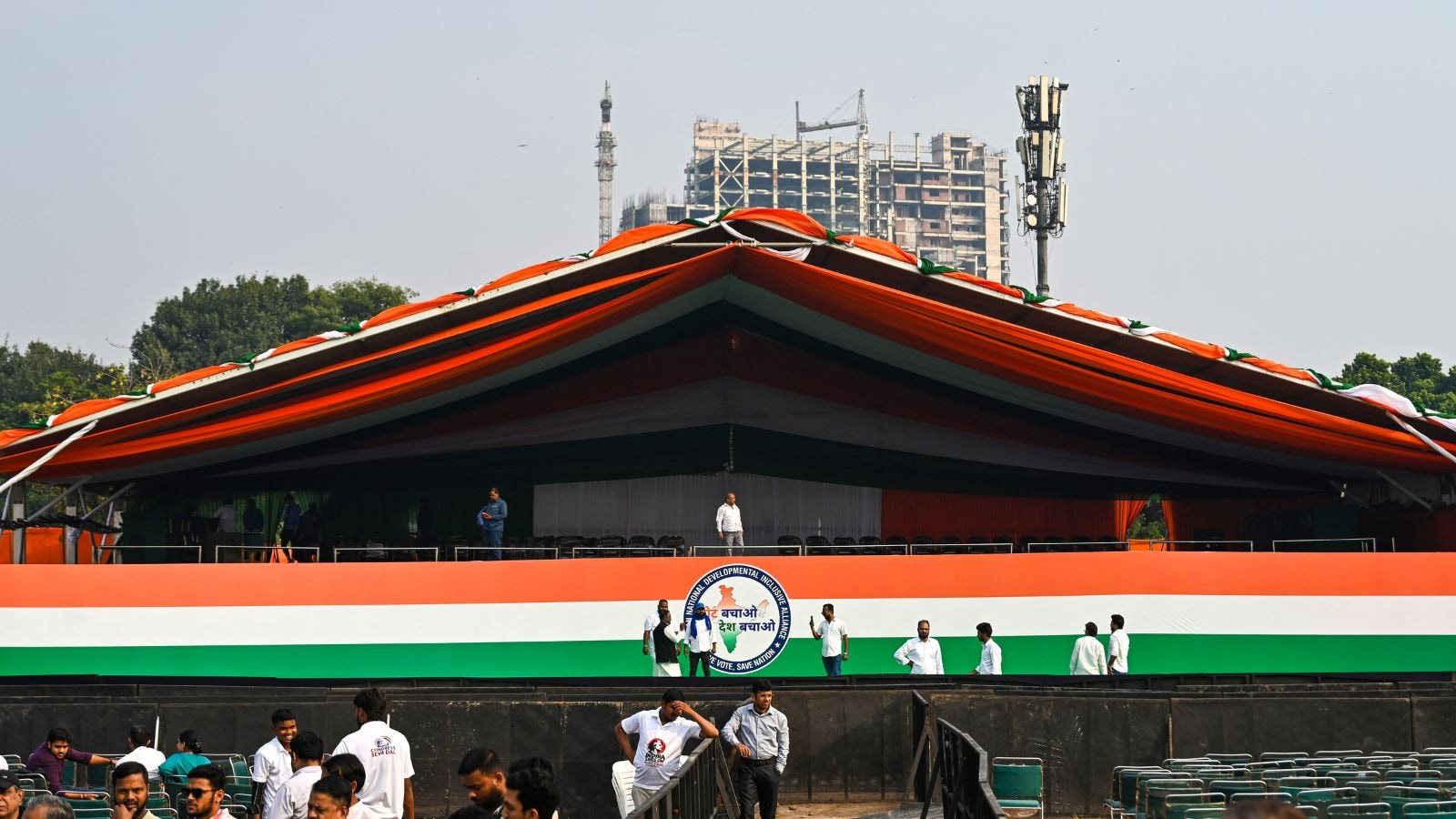
The opposition’s ‘Chalo Delhi’ rally demanded the resignation of Chief Election Commissioner Gyanesh Kumar, accusing him of systemic electoral fraud, including the deletion of 13.2 crore voters from the rolls and unauthorized changes to voter lists. Meanwhile, the BJP, in a move that felt like a calculated provocation, released a poster titled ‘Thago Ka Mela’—a fair of thugs—targeting Rahul Gandhi and other opposition leaders. The poster framed the INDIA bloc’s rally as a dangerous conspiracy to spread rumors and destabilize the country. It was a political chess match played out in plain sight, with 10,000 police personnel deployed to keep the peace, and the fate of India’s electoral integrity hanging in the balance.

For the opposition, this was not just another protest—it was a moment of reckoning. The INDIA bloc, a coalition of parties including the Congress and regional allies, had spent months organizing what they called a ‘unity rally’ at Ramlila Maidan, one of Delhi’s largest open spaces. Their demand was simple: ‘Resign, Gyanesh Kumar.’ The allegations were serious—accusations of ‘vote chori’ (vote theft), the deletion of millions of voters without proper oversight, and the use of digital tools like ECINET to manipulate electoral rolls. The opposition argued that these irregularities undermined the very foundation of democracy, where every citizen’s vote should be counted equally.
But the BJP was not about to let the opposition have the stage unchallenged. The poster was a visual assault on the opposition’s credibility. It depicted Rahul Gandhi and other INDIA bloc leaders as puppeteers pulling strings, with the caption reading: ‘The objective of this ‘mela’ is to spread rumors and create anarchy in the country at the behest of anti-national forces to protect their political ground.’ The implication was clear: the opposition was not fighting for electoral justice but for chaos, and they were willing to use any means—including false accusations—to achieve it.
The Delhi Police’s presence was a reminder that this was not just a political rally—it was a potential flashpoint.
The timing of the poster’s release was deliberate. The BJP knew that the opposition’s rally was a high-stakes moment, a test of their unity and resolve. By framing the protest as a threat to national stability, the BJP sought to discredit the entire INDIA bloc before the crowd even assembled. It was a classic example of political warfare, where the goal is not just to win an argument but to shape the narrative entirely. The poster’s release was a signal: ‘We will not let you define this moment.’
Yet the opposition was undeterred. Their rally at Ramlila Maidan was more than a protest—it was a statement of defiance. The venue itself held symbolic weight. For the INDIA bloc, standing there was an act of reclaiming that legacy. They were not just demanding the resignation of the Chief Election Commissioner; they were asserting their right to be heard in the same space where India’s political destiny had been decided before.
The opposition’s unity was a key factor in their strategy. Their shared grievance—electoral irregularities—had united them in a way that few other issues could. Even the Cockroach Janta Party (CJP), a smaller, independent outfit, had found common ground with Banerjee, who had publicly supported youth-led protests against police brutality. Abhijeet Dipke, a CJP leader, spoke of Banerjee’s unwavering support during a previous protest at Jantar Mantar, where he and his colleagues had been arrested by Delhi Police. ‘She was always so strongly with the youth movement,’ Dipke said. ‘When Saurav and Ashutosh were arrested, even then Didi stood with us very firmly.’ For the opposition, Banerjee’s presence was a reminder that this was not just a Congress-led movement—it was a broad-based demand for accountability.
The BJP’s response was predictable. By invoking the riots, the BJP was not just attacking the opposition—they were appealing to a deeper sense of fear and division. The message was clear: ‘You want to talk about democracy? Let’s talk about the violence that followed when it was broken.’

The security crackdown was a testament to the high stakes of the moment. 4,000 police personnel were stationed around Ramlila Maidan alone, a force large enough to deter even the most determined protesters. The Delhi Police’s presence was a reminder that this was not just a political rally—it was a potential flashpoint. The opposition had every reason to be cautious. The BJP’s poster campaign had already framed them as troublemakers, and the police deployment suggested that the authorities were prepared for unrest. Yet, despite the risks, the opposition pressed forward. Their demand for the resignation of the Chief Election Commissioner was non-negotiable. They had spent months gathering evidence of electoral irregularities, and they were not about to back down now.
The irony was not lost on many. The BJP had spent years portraying itself as the defender of democracy, the party that would protect India’s electoral integrity from foreign interference and internal corruption. Yet here they were, releasing a poster that accused the opposition of spreading rumors and creating anarchy—behaviors that, if true, would undermine the very principles they claimed to uphold. But to them, the stakes were far higher. If electoral rolls could be manipulated with impunity, if millions of voters could be deleted without explanation, then the foundation of democracy itself was at risk.
As the rally at Ramlila Maidan began, the contrast between the two marches could not have been clearer. The opposition’s gathering was one of defiance, a show of unity and determination. The BJP’s march, by contrast, was a reminder of the divisions that still plague Indian politics. The poster’s release had done its job: it had turned the opposition’s rally into a spectacle, a moment to be watched and judged, rather than a legitimate demand for justice.
Yet for all the posturing and political maneuvering, the underlying issue remained unchanged: the integrity of India’s electoral process. The opposition’s allegations of vote deletion and unauthorized changes to voter lists were serious, and they had the potential to shake the foundations of the country’s democracy. The BJP’s response—accusing the opposition of spreading rumors—only served to highlight the deep distrust that had grown between the ruling party and its critics. In the end, the question was not who was right, but who would be heard. And in a country as politically polarized as India, that was never a sure thing.
By the time the rally at Ramlila Maidan ended, the political temperature in Delhi had risen significantly. The opposition had made its demands clear, and the BJP had staked its claim to the narrative. The Chief Election Commissioner’s future hung in the balance, and the fate of India’s electoral integrity was far from settled. What had begun as a protest against electoral irregularities had become something far larger—a clash over the soul of Indian democracy itself.