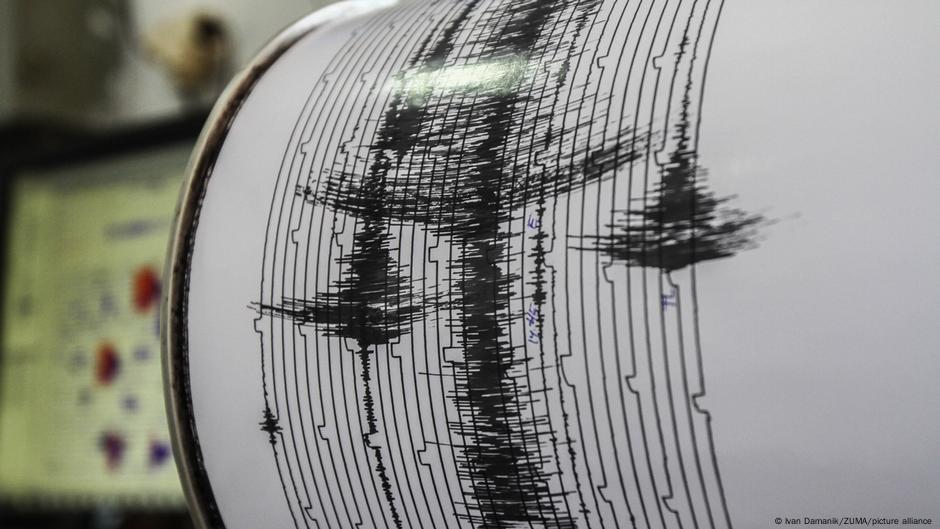
The ground stops moving, but the danger doesn't. In the vast, high-altitude plateau of northern Tibet, the quiet that follows a major seismic event is often the most terrifying part of the experience. For residents in the Nagqu region, that silence was broken not by aftershocks, but by the realization that their infrastructure had vanished. A magnitude-7.0 earthquake struck the area, a force strong enough to level neighborhoods and trigger a cascade of secondary disasters that quickly outpaced the immediate tremor. It was a sudden, violent reminder that in a landscape defined by its remoteness and elevation, a natural disaster is never just about the shaking; it is about what happens when the shaking stops and the world outside ceases to reach you.

The geological data paints a precise, if stark, picture of the event's intensity. The earthquake struck at a depth of just 10 kilometers, a shallow rupture that meant the energy released was felt with devastating force at the surface. This was not a distant rumble felt across a continent; it was a localized cataclysm centered northeast of Nagqu, a city situated roughly 400 kilometers from the capital, Lhasa. The average elevation in this part of the region is 4,864 meters. At such high altitudes, the air is thinner, the temperatures are extreme, and the infrastructure is already stressed by the environment. A magnitude-7.0 shockwave doesn't just test buildings; it tests the very capacity of a region to withstand sudden, violent disruption. The result was immediate and widespread physical destruction, leaving communities in a state of confusion as they assessed the damage around them.
The human cost of the quake is measured in numbers that feel abstract until you imagine the scenes on the ground. According to state media reports, 339 residential buildings collapsed entirely. These were not just structures; they were homes, storage for food, and the primary shelter for families. The collapse of this many houses in a short period signifies a significant impact on the local community. Beyond the total destruction of 339 units, the damage extended to the wider community. Initial reports indicated that at least 16 people were killed in the immediate aftermath. While other figures suggested up to 46 injuries, the consistent core of confirmed data points to 32 individuals who survived the initial impact but were wounded by falling debris or the collapse of their surroundings. In a high-altitude region, the margin for error in medical care is small. These injuries, occurring in remote areas, represent a critical challenge for the medical systems that are already stretched thin by the logistics of delivering supplies to such isolated zones.
For a region that relies on central coordination for emergency response, losing the ability to communicate is a paralyzing blow.

At least 16 people were killed and 54 injured in a magnitude-7 earthquake in Tibet, according to Chinese state media.
Perhaps the most consequential aspect of the earthquake was the sudden severing of modern lifelines. The quake disrupted power lines and communication networks, plunging the affected areas into darkness and silence. For a region that relies on central coordination for emergency response, losing the ability to communicate is a paralyzing blow. It is difficult to dispatch rescue teams, coordinate medical aid, or even count the full extent of the damage when the phones and radios do not work. This isolation transformed a local disaster into a regional crisis. The lack of immediate information created a vacuum that was filled by rumors and anxiety, making the first few hours after the quake particularly chaotic. The disruption of power also meant that heating and lighting failed in the cold, high-altitude night, adding a secondary environmental threat to the structural dangers.
The earthquake did not just damage buildings; it rewired the region's logistics. A major highway, a critical artery for moving people and goods, was closed after the quake triggered rockfalls. These landslides are a common secondary hazard in mountainous terrain, where seismic activity destabilizes loose rocks and soil. The closure of this highway meant that trucks carrying emergency supplies could not easily reach the most affected areas. Compounding this issue, railway services were suspended. In a geography where overland travel is difficult and flights are weather-dependent, the suspension of rail transport removed another key option for evacuation and supply delivery. The combined effect of closed highways and stopped trains created a logistical bottleneck that delayed the arrival of aid, forcing local communities to rely on immediate, neighborly help while waiting for organized rescue teams to arrive.

Tibet Earthquake: Powerful Quake Kills 16, Panic Caught On Camera https://t.co/WYwpuvN1cU
In response to the crisis, emergency services were mobilized, and disaster relief efforts went into full swing. The immediate task was search and rescue, digging through the rubble of the 339 collapsed houses to find survivors. This is a grueling operation, slowed by the difficult terrain and the harsh weather conditions typical of the Tibetan plateau. As the days passed, the focus shifted from pure rescue to sustained relief. Emergency supplies were dispatched to assist displaced residents who had lost their homes. The distribution of these supplies is complex in a region where communication lines are still being restored and roads are slowly being cleared. The state's response highlights the immense logistical challenge of supporting a population in one of the most difficult environments on Earth. For the survivors, the wait for these supplies is a test of endurance, relying on community solidarity to provide war