
Across the national capital, the physical manifestations of a government on high alert are impossible to miss. More than 35,000 Delhi Police and paramilitary personnel have taken up positions across the city, transforming key intersections into heavily guarded checkpoints. The massive apparatus—complete with drone surveillance, facial recognition systems, and specialized tactical units—was mobilized to intercept a planned demonstration before it could take root at Jantar Mantar.
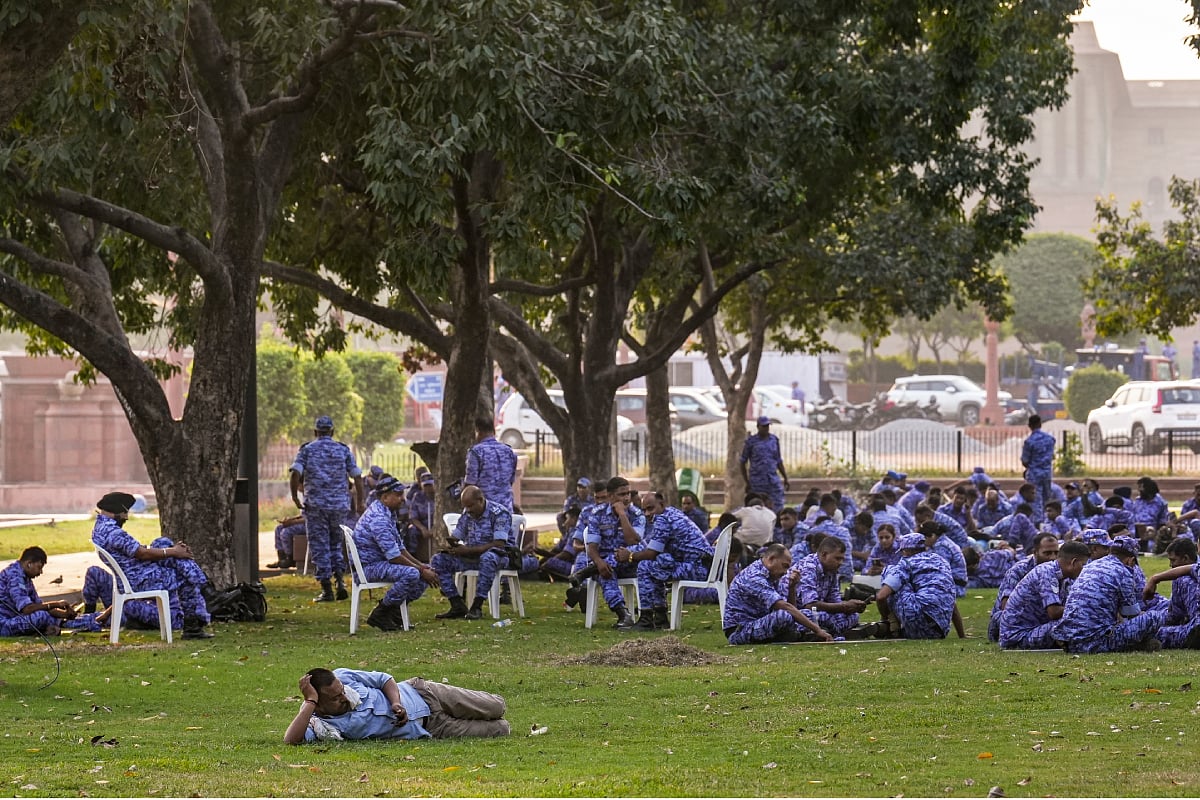
At the center of the confrontation is a sharp dispute over electoral integrity. The Cockroach Janata Party (CJP), joined by the broader INDIA bloc, announced a major demonstration targeting Chief Election Commissioner Gyanesh Kumar. The organizers are demanding the immediate sacking of Kumar over the Special Intensive Revision of electoral rolls, alleging deep irregularities in how voter lists were being updated. But with law enforcement denying permission for the gathering, the capital has become the stage for an intense standoff between political organizers and state security forces.
The political buildup to this confrontation has been brewing for years. On July 20, 2023, CJP activists signaled their long-term intention to challenge the authorities, staying firm on their protest call against the Election Commission. The political friction steadily intensified over the subsequent months as controversies surrounding the Special Intensive Revision deepened.
To prevent demonstrators from reaching the iconic protest site at Jantar Mantar, authorities initiated a sweeping lockdown of Delhi's core infrastructure.
By October 10, 2025, the party formally escalated its campaign, launching a nationwide rally cry for a massive demonstration termed 'Jantar Mantar 2.0.' In a public call outlining their demands, the Cockroach Janata Party declared: "10th October. Jantar Mantar 2.0. We’re coming together again to raise our voice against Gyanesh Kumar. Thousands of us are expected..." The organizers framed the event as a direct challenge to the decisions made under Chief Election Commissioner Gyanesh Kumar, setting the stage for a coordinated show of strength alongside alliance partners from the INDIA bloc scheduled for October 10, 2026.

#WATCH | Delhi: RAF (Rapid Action Force) personnel carry out a flag march from Mandi House Circle, ahead of Cockroach Janta Party (CJP) protest today. https://t.co/sdO5740o9f
Despite the CJP's preparations, the legal foundation for the gathering collapsed when the Delhi Police formally denied permission for the event on Friday. Authorities cited severe law-and-order concerns and historical precedents, noting that past demonstrations had escalated into violence resulting in injuries to over 200 police personnel. Security officials also raised red flags regarding intelligence reports that highlighted the potential involvement of 2,000 individuals with criminal records participating in the demonstrations.
To prevent demonstrators from reaching the iconic protest site at Jantar Mantar, authorities initiated a sweeping lockdown of Delhi's core infrastructure. Crucial public transit nodes, including the Supreme Court and Mandi House Metro stations, were abruptly closed to cut off direct train access to the government quarter. Across West Delhi and key inter-state borders—including entry points at Ghazipur, Badarpur, and Aya Nagar—heavily armed security forces set up strict vehicle inspection pickets.
On October 10, 2026, DCP Anant Mittal directly reviewed security arrangements at the Aya Nagar border, ensuring that incoming traffic was systematically screened to halt unauthorized entry into the city. Describing the comprehensive perimeter management, Niharika Bhatt noted, "From a security perspective, pickets have been deployed at the entry and exit points of the" district, ensuring that potential marchers could be intercepted miles before reaching their destination.
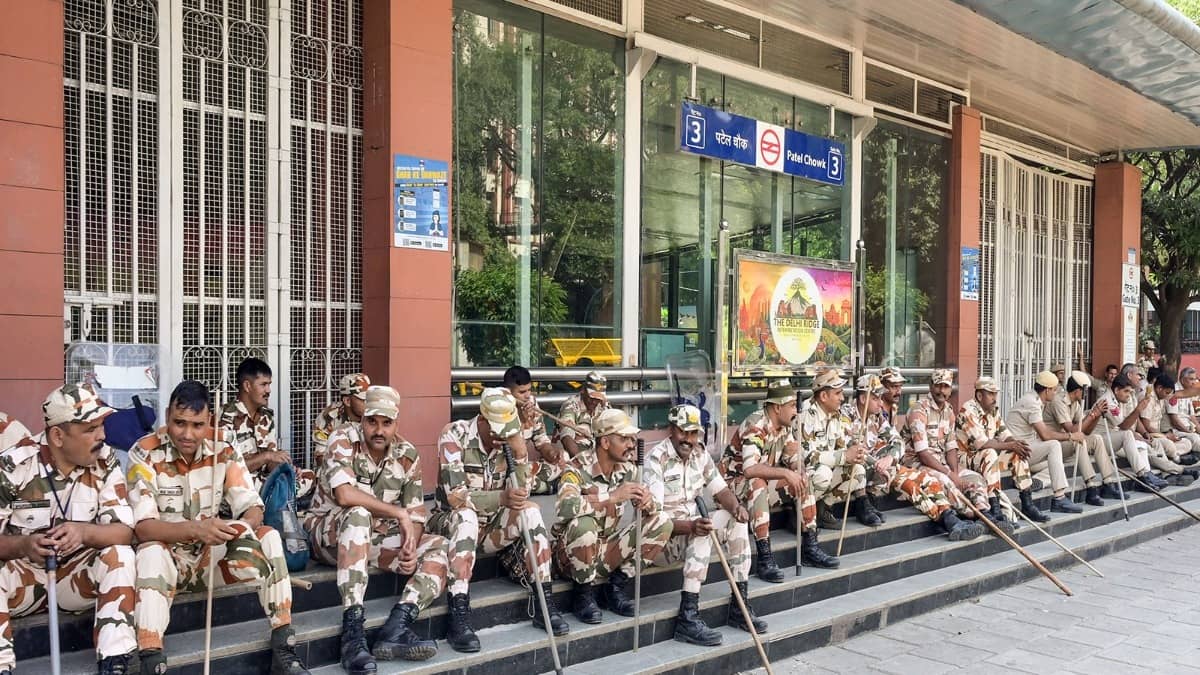
Outlining the broader operational strategy, DCP Anant Mittal emphasized the preventative nature of the deployment: "Regarding the call given by the CJP to protest in New Delhi, security arrangements have been made accordingly in Delhi and in the South district as well. Special security arrangements are in place at inter-state and inter-district borders. We are preventing unauthorised elements from entering New Delhi and checking them. Our effort is to ensure that everything remains peaceful and law and order is maintained."

The State is at war with its citizens! The State is at war with its citizens! The State is at war with its citizens!
Within the city, law enforcement deployed an array of specialized monitoring tools and tactical assets. Rapid Action Force (RAF) personnel and additional security forces were posted across key premises, while additional resources—including women personnel drawn from neighbouring states—were brought in to handle potential crowds. Overhead, drones provided real-time surveillance feeds to command centers, complemented by an extensive grid of CCTV cameras and automated facial recognition systems.
Frontline officers were also equipped with body-worn cameras to record all interactions at containment points. Explaining the necessity of the technology during potential friction points, an official statement via ANI noted: "These body cams are to protect us and others. In situations of manhandling, allegations are levelled against Delhi Police."
To handle the logistics of potential mass arrests, authorities prepared six designated holding centres across the capital to accommodate shifted detained protesters. That infrastructure was put to work almost immediately: despite the heavy security blanket, groups of CJP protesters managed to assemble near Janpath, leading to swift detentions by police forces monitoring the area. Simultaneously, security was tightened significantly around the official residences of key political figures, including the Chief Election Commissioner and the Leader of the Opposition.
As the day unfolded, the national capital remained in a state of rigid containment. With inter-state borders monitored, transit hubs restricted, and thousands of security personnel lining the streets, the massive law enforcement effort succeeded in preventing a large-scale gathering at Jantar Mantar. Yet, with the underlying grievances over the Special Intensive Revision of electoral rolls unresolved and the Cockroach Janata Party continuing its campaign against CEC Gyanesh Kumar, the physical lockdown of Delhi underscores how deeply the battle over electoral trust has shaken the political landscape.

🚨ASSAM: CM HIMANTA BISWA SARMA SLAMS CJP OVER DELHI PROTEST, SAYS ‘STREET POWER’ CANNOT DICTATE VOTER LIST REVISION; Sarma challenges CJP and Congress to visit Assam and West Bengal to assess the situation, insists that names of Bangladeshi nationals must be removed from electoral rolls, and says the Election Commission is responsible for the process.