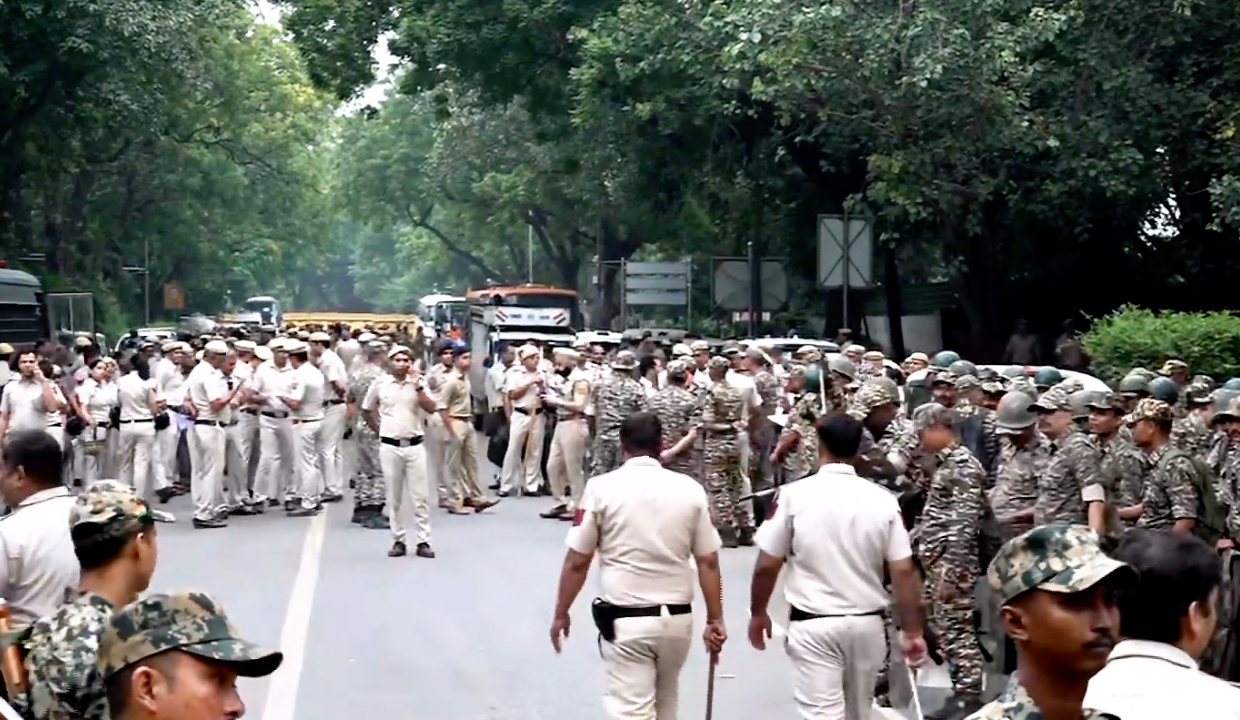
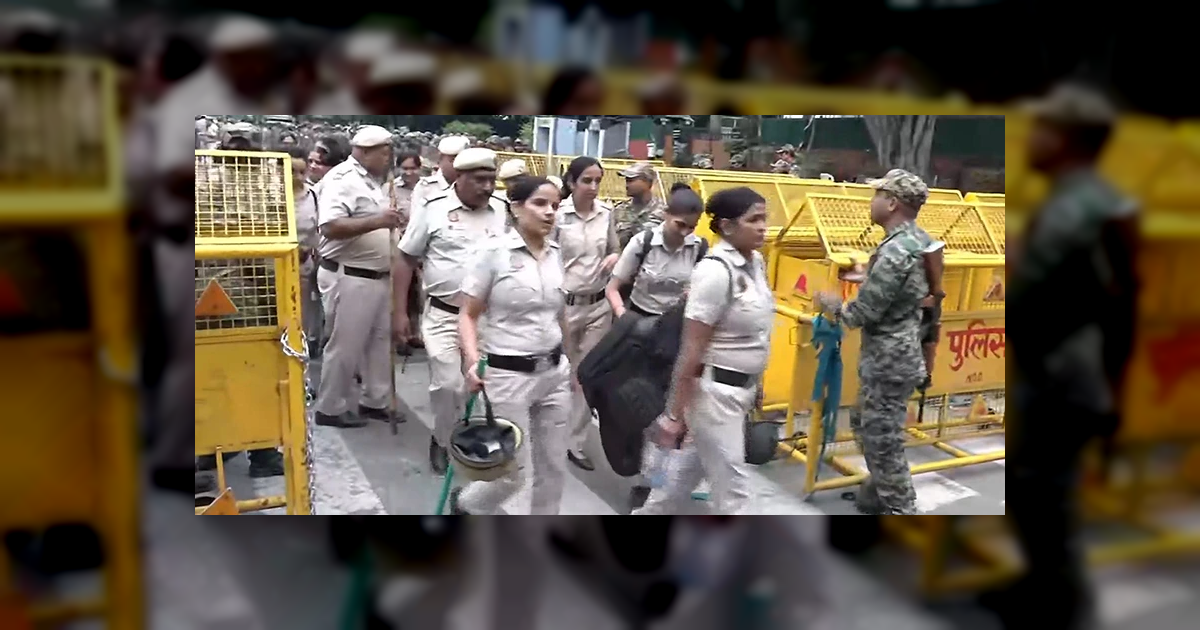
In the heart of Delhi, the rhythm of daily life is being disrupted by a heavy, visible layer of state security. Ahead of a planned demonstration at Jantar Mantar, the Delhi Police have moved to transform the capital's usual kinetic energy into a controlled, monitored environment. The measures are sweeping: flag marches through the streets, rigorous vehicle checks, and a strategic tightening of the city's arteries.
At the center of this friction is a protest scheduled for October 10, 2026, organized by the Cockroach Janta Party (CJP) and the INDIA bloc. The demonstrators are converging on Jantar Mantar, a site historically synonymous with political expression, to voice specific grievances against the current administration. Their demands are pointed: they are calling for the resignation of Chief Election Commissioner Gyanesh Kumar and expressing strong opposition to the Special Intensive Revision exercise. What began as a political disagreement has escalated into a logistical standoff, as the state prepares for the arrival of the opposition.

#BreakingNews: Internet Services to Be Suspended in Central #Delhi From 10 PM Tonight Until Further Orders https://t.co/0oIrsb2vXv
To manage the anticipated crowds and the potential for unrest, the authorities have moved beyond simple patrols to significant infrastructure interventions. Perhaps the most disruptive of these measures is the proposed closure of 57 metro stations. For a city where the metro serves as the lifeblood of movement, such a closure represents more than just a commute delay; it is a physical attempt to limit the flow of people toward the protest site. This deployment of transit control marks a high-stakes effort by the Delhi Police to contain the demonstration before it can fully saturate the city's core.
Dipke has leaned heavily on the constitutional protections afforded to every citizen, specifically citing Article 19.
As the police implement these security protocols, the rhetoric from the protesters has sharpened, moving from policy critiques to accusations of systemic suppression. Abhijeet Dipke, an activist with the Cockroach Janta Party, has framed the police presence not as a matter of public safety, but as a deliberate tactic to stifle democratic participation. Dipke has alleged that police personnel have been visiting residential areas, making announcements in societies to discourage citizens from joining the demonstration. The claim suggests a struggle that is moving from the public squares into the very neighborhoods where the people live.

“Opposition has reached at their last resort that is why they are doing everything. Government has taken measures to avoid any kind of incidents.” - West Bengal Minister Dilip Ghosh on restrictions in Delhi ahead of CJP protest https://t.co/d4A9XLUqID
For the organizers, the legality of their movement is the bedrock of their defiance. Dipke has leaned heavily on the constitutional protections afforded to every citizen, specifically citing Article 19. He asserts that the right to protest in a peaceful and democratic manner is a fundamental guarantee that cannot be bypassed by administrative hurdles. To the CJP and the INDIA bloc, the heavy-handedness of the state—the vehicle checks and the station closures—is not a neutral security measure, but an attempt to circumvent the very democratic rights the constitution protects.
As the tension reaches a boiling point, the language used by the opposition has become increasingly visceral. Dipke has leveled severe charges against the leadership, characterizing Prime Minister Narendra Modi as a dictator who is "scared of the youth." The activist's narrative suggests that the state's actions—the shutting down of railways, metros, and roads—are not merely logistical decisions, but desperate attempts to preserve power. In this view, the government is not merely managing a protest, but is engaged in a conflict against its own citizenry.

West Central Railway and Western Railway cancelled several Delhi-bound trains on Friday, citing anticipated heavy traffic congestion in the national capital and other operational reasons. The cancellations came a day before the Cockroach Janta Party's planned protest at Jantar Mantar on Saturday. More details: https://t.co/3NUr5IqtsB #IndianRailways #DelhiProtest #Delhi #Travel
When the date arrived on October 10, 2026, the theoretical tension manifested into physical confrontation. The planned protest at Jantar Mantar met the reality of the police's security perimeter. In the ensuing friction, the Delhi Police moved to detain protesters, marking a definitive moment in the day's events. The collision between the CJP's demand for visibility and the state's mandate for order resulted in a series of arrests, leaving the city to grapple with the aftermath of a demonstration that sought to challenge the very mechanisms of its governance.
