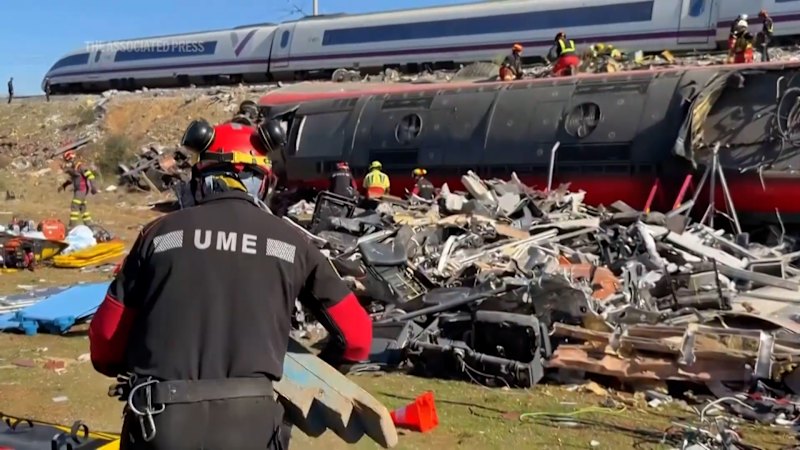
It was supposed to be a leisurely afternoon in central Spain. A visitor from abroad, strolling near the tracks that cut through the rolling hills of Toledo province, heard the unmistakable roar of a high‑speed train. Within moments, the world tilted. The train, traveling at full speed, collided with a stationary carriage. The tourist later described the scene in stark terms: "Everything started 'falling apart' after the deadly train crash in Spain." The words capture more than personal shock; they echo the sudden unraveling of safety protocols, emergency response, and public confidence that followed.

The impact was catastrophic, sending metal and debris scattering across the tracks. Rescue crews arrived to find a scene of twisted steel and anguished survivors. By the end of the day, officials confirmed at least 68 fatalities and 179 injuries, a figure that includes 58 people taken to hospital and 15 in critical condition. Earlier reports had spoken of “100 injured,” underscoring the fluid nature of casualty tallies in the immediate aftermath.

Have all 500 + passengers been found on Spain’s deadly train crash? @jvelazquez_ is in Urda, Toledo. #España https://t.co/ICptCknMeG
The October crash was not an isolated incident. Earlier that year, in January, Spain had already been grappling with a high‑speed crash that left 46 dead. The recurrence of fatal accidents on the nation’s prized AVE network reignited a simmering debate about rail safety. The proximity of two deadly events within months forced policymakers, engineers, and the public to confront uncomfortable questions about the reliability of Spain’s high‑speed rail system.
The transport minister disclosed that the decision to move the train, made in error, directly caused the collision with the stationary carriage.
Investigators quickly zeroed in on a chain of errors that led to the October disaster. A technical failure had halted all services on the line, prompting operators to issue a stop order. Yet, despite the system’s warning, a train was ordered to proceed. The transport minister disclosed that the decision to move the train, made in error, directly caused the collision with the stationary carriage. This revelation highlighted a critical vulnerability: the reliance on human judgment in the face of automated safety systems.

Anwar Extends Malaysia's Condolences to Spain After Deadly High-Speed Train Collision PM Anwar Ibrahim offered condolences after two high-speed trains collided near Toledo, killing at least 68. #LNA #Malaysia #Anwar #Spain https://t.co/0OpQGZC7Vo
Spain’s railway infrastructure is overseen by ADIF, the state-owned entity responsible for tracks, stations, and signaling. In the wake of the crash, ADIF launched an internal review to assess whether its signaling protocols had been compromised by the technical glitch.
The tragedy resonated beyond Spain’s borders. Saudi Arabia’s foreign minister reached out to his Spanish counterpart, extending condolences to the government, the people of Spain, and the families of the victims. The phone call on 28 October 2026 underscored the diplomatic etiquette that follows large‑scale disasters, where nations express solidarity while respecting the grieving process.

🇪🇸 At least 64 people were killed and 58 hospitalized after two high-speed trains collided in Spain. The crash happened near Toledo. One train slammed into the back of another that had stopped on the tracks. The impact tore through the carriages and derailed two of them. Passengers were left trapped in the wreckage. Witnesses said people tried escaping through windows while bystanders rushed to help. Rescue crews continue searching the wreckage. The crash is Spain’s second deadly high-speed train accident this year. https://t.co/8thxkIsj12
Beyond the stark numbers—68 dead, 179 injured, 58 hospitalized, 15 in critical condition—lies a tapestry of personal loss. Families gathered at morgues, friends waited in makeshift shelters, and the tourist who witnessed the crash found themselves thrust into a role of reluctant chronicler. Rescue operations continued for days, with emergency crews working tirelessly to retrieve bodies and tend to the wounded. The phrase “everything started falling apart” became a shorthand for the cascading failures of equipment, communication, and preparedness.
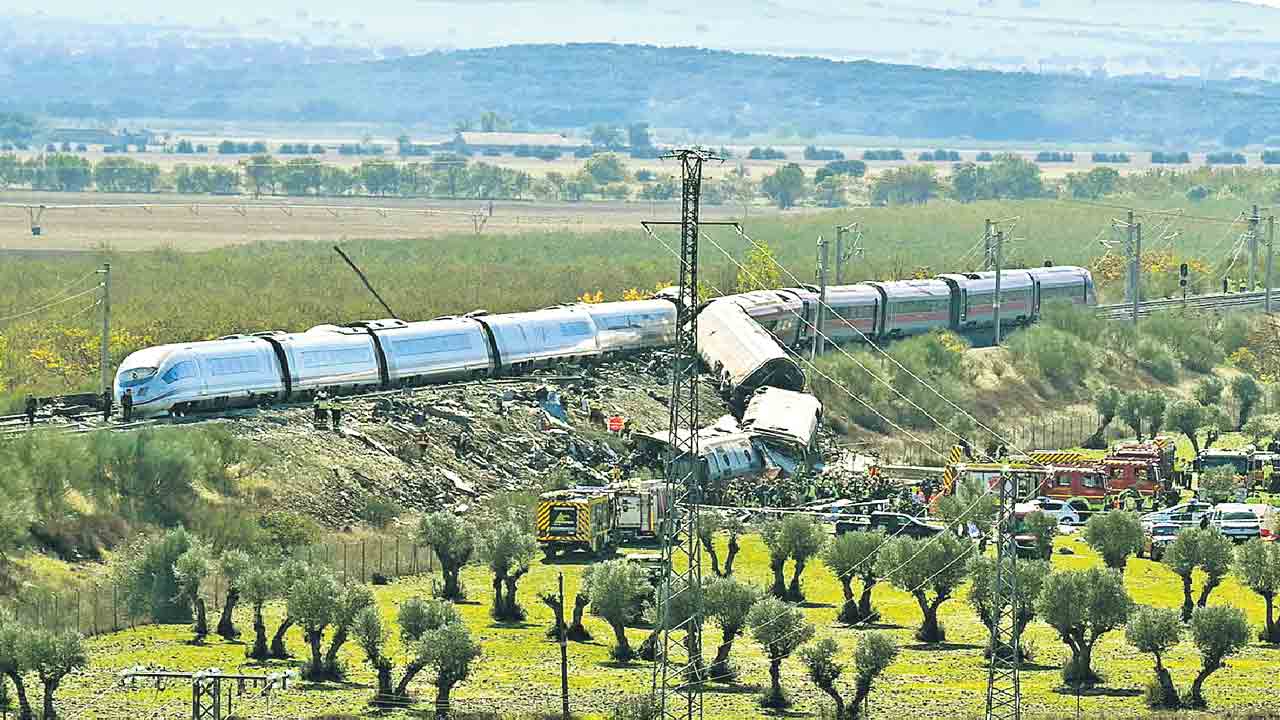
The twin crashes of January and October have placed Spain’s high‑speed rail safety under a microscope. Stakeholders anticipate stricter protocols for train dispatch during technical outages, enhanced real‑time monitoring, and perhaps a reevaluation of the balance between automated safeguards and human decision‑making.
The story of the Toledo collision is still unfolding. As investigations continue and families seek closure, the nation grapples with rebuilding trust in a system once hailed as a symbol of modernity. For the tourist who stood on the platform that fateful day, the memory remains a stark reminder that even the most advanced technology can falter, and that the human cost of such failures is immeasurable.