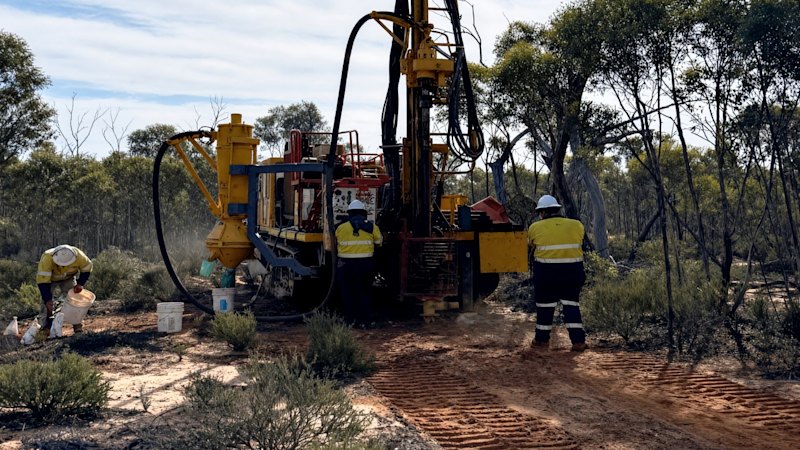
Deep in the vast expanse of Western Australia's Eucla Basin, McLaren Minerals has been conducting an ambitious drilling campaign at its titanium project. The company recently completed the final 137 aircore holes of this extensive program, delivering results that have the potential to substantially increase the project's mineral resource estimate. The drilling campaign, which represents a significant investment and technical undertaking, has now concluded with assays that validate the company's geological models and potentially open new avenues for development.
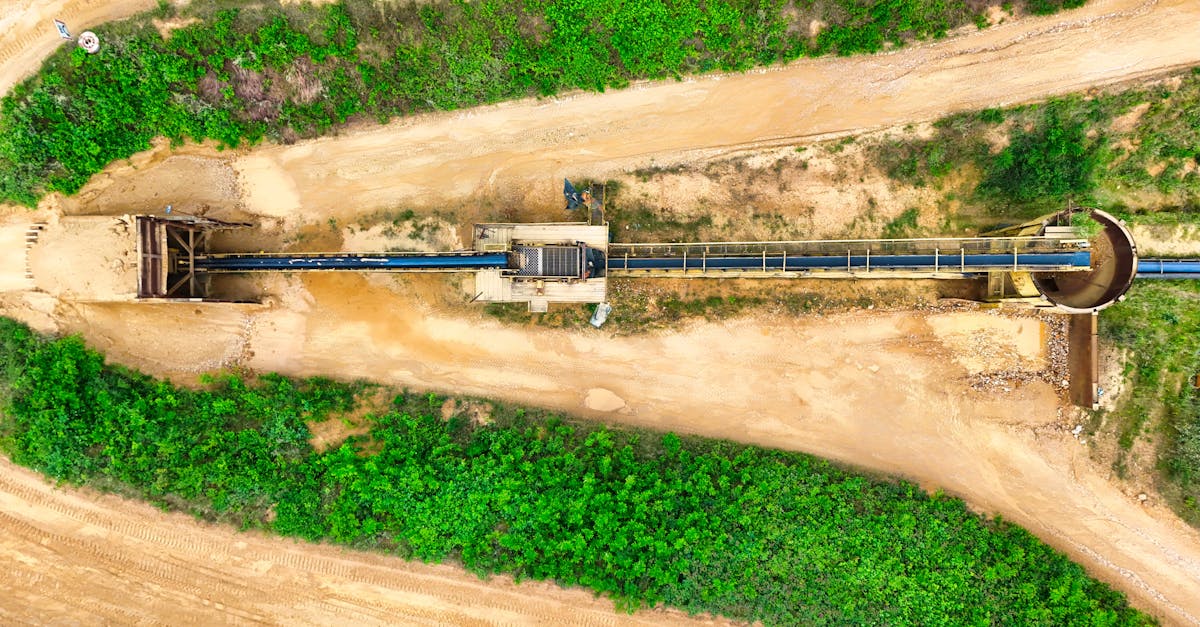
The final batch of drilling results has shown consistently strong heavy mineral grades, continuing a pattern established throughout the campaign. The best result came from the south-western extension corridor, where a 21-meter interval returned an impressive 6.35 percent heavy minerals (HM). This particular zone lies outside the current Inferred Resource boundary, suggesting that McLaren's exploration efforts have successfully expanded the known mineralized area. The company reported a length-weighted average grade of 4.27 percent HM across all sampled one-meter intervals, with the highest individual assay reaching 14.15 percent HM.

Mineral explorer @McLarenMinerals is set for a resource boost at its WA #titanium project after final drilling assays delivered strong heavy mineral grades, including 21m at 6.35 per cent HM. $MML #BULLSNBEARSWA #ASX @theage https://t.co/1ZmVSSRliK
The drilling campaign represents a considerable technical achievement for McLaren Minerals. In total, the company drilled 663 holes, covering 11,568 meters of exploration. Beyond the main drilling program, McLaren also conducted additional sampling of 2,210 meters of one-meter intervals, providing a comprehensive dataset for resource estimation. This level of detail and coverage is essential for accurately defining the extent and quality of the mineralization, particularly as the company moves toward an updated mineral resource estimate.
In total, the company drilled 663 holes, covering 11,568 meters of exploration.
According to Simon Finnis, McLaren Minerals' managing director, the final results validate the company's exploration strategy. "It's really good to see these final results, and they continue the consistently strong results we have reported to date from this program," Finnis stated. "In particular, it is gratifying to see the results from the south-western extension corridor outside of the Inferred Resource returning good grades." This validation is crucial as it demonstrates that McLaren's geological understanding is sound and that the company is effectively targeting areas with high mineral potential.
With the drilling campaign complete and all assays received, McLaren Minerals is now focusing on updating its mineral resource estimate. This process involves compiling all the drilling data, applying appropriate geological modeling techniques, and calculating the volume and grade of the mineralized material. The strong results from the extension zones, particularly the high-grade intervals outside the current resource, suggest that the updated estimate will be significantly larger than the previous one. This increase in resources could position McLaren as a more substantial player in the titanium market, potentially attracting further investment and development opportunities.
Titanium is a critical material in various industries, including aerospace, defense, and medical applications, due to its strength, light weight, and corrosion resistance. The heavy minerals that McLaren is targeting include ilmenite, rutile, and zircon, which are sources of titanium dioxide and other valuable byproducts. As global demand for titanium continues to grow, particularly in emerging economies and advanced manufacturing, projects like McLaren's in the Eucla Basin are becoming increasingly important. The company's success in expanding its resource base could have significant implications for the titanium supply chain and for Western Australia's mining sector.