
On June 15, 2024, a missile slammed into Terminal 3 of Riyadh’s King Khalid International Airport, igniting an explosion that sent dust and debris swirling through the concourse. An eyewitness described the blast as a sudden flash followed by a rush of injured people onto the tarmac. By nightfall, Saudi authorities confirmed that at least twelve people had been killed and 309 wounded, a casualty list that spanned eight nationalities. The dead included four Saudi citizens, two Bangladeshis, and one each from the United States, Jordan, Palestine, Syria, Sudan and Egypt. Hospitals across the capital were inundated with ambulances and helicopters ferrying the critically injured, some of whom remained in intensive care.

The attack arrived without any prior alert from Saudi Arabia’s threat‑warning system, a failure that analysts quickly flagged as a critical blind spot. While the nation’s air‑defense network had intercepted a ballistic missile over Al‑Hasa province and a projectile near King Fahd Airport in Dammam on the same day, the system that should have warned the airport of an inbound strike remained silent. The Houthi media office later claimed responsibility, declaring Riyadh’s airspace a “military operations zone” and urging airlines to avoid it.
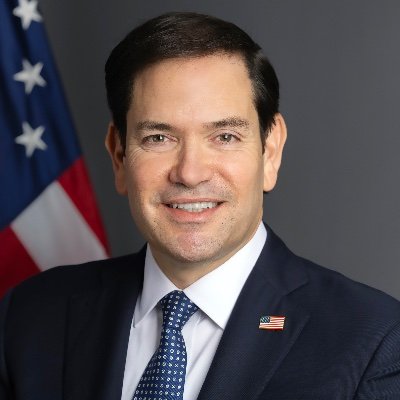
The United States strongly condemns the recent attacks on the Kingdom of Saudi Arabia by the terrorist Houthis, including today’s strike on King Khalid International Airport in Riyadh that took numerous innocent lives, including an American citizen. These reprehensible attacks demonstrate a blatant disregard for innocent civilian life. They must stop now. We stand with the Kingdom of Saudi Arabia and its people and extend our condolences to the victims and their families.
The diversity of the victims underscored the airport’s role as a hub for the kingdom’s eight‑million‑strong metropolitan region. Among the dead, a U.S. citizen’s name surfaced in official statements, prompting a swift rebuke from U.S. Secretary of State Marco Rubio, who called the attacks “reprehensible” and a “blatant disregard for innocent civilian life.” The United Kingdom, Germany, Australia and Canada all issued travel advisories urging their nationals to steer clear of the airport in the aftermath.
Every inbound flight was either diverted to alternate airports or cancelled outright, and the airport’s entrances were sealed off.
Within minutes of the explosion, Saudi civil aviation ordered an immediate suspension of all operations at King Khalid. Every inbound flight was either diverted to alternate airports or cancelled outright, and the airport’s entrances were sealed off. Flight‑tracking data showed a complete halt of traffic, with only a lone helicopter observed hovering over the runway at one point. The Civil Aviation Authority advised travelers to verify flight statuses before attempting to depart, as the shutdown was expected to last until a full security assessment could be completed.

Saudi Arabia says 12 killed, 300 injured in Riyadh airport attack https://t.co/ATNGqkWQxD
The June 15 strike marked the third assault on the Riyadh hub within a single week. Two earlier attacks on October 10, 2026, had already killed four people and damaged a commercial aircraft, while a rocket strike on the same day added to the mounting pressure on Saudi air defenses. The June 15 incident occurred against the backdrop of a Saudi‑backed offensive launched on June 10, 2024, against Houthi‑controlled areas in Yemen. The Houthis, backed by Iran, have intensified cross‑border operations, recently striking locations in Pakistan and Israel as well.
U.S. President Donald Trump responded by saying he was “considering the possibility of joining American forces to Saudi strikes against the Houthis,” a neutral stance that nonetheless signaled a potential escalation of American involvement. Meanwhile, Saudi Arabia appealed to France, Britain, Pakistan and Egypt for assistance in bolstering its air‑defense capabilities as the kingdom grappled with dwindling U.S. missile stockpiles.
The June 15 attack laid bare a stark vulnerability: while Saudi forces successfully intercepted a ballistic missile in Al‑Hasa, the failure to detect the inbound weapon that struck Riyadh highlighted a systemic shortfall. The Houthi militia’s ability to launch a missile that evaded early warning and penetrated the capital’s airspace raised urgent questions about the efficacy of existing radar and missile‑defense installations. Saudi officials, who remained neutral in their official statements, pledged a thorough investigation but offered few details on immediate remedial measures.


#BREAKING | The latest attack on the international airport in Saudi Arabia's capital of Riyadh killed 12 people and injured over 300 others, civil aviation authorities said early Sunday, with some in critical condition. A Saudi-led coalition blamed Iran-backed Houthi rebels in neighboring Yemen. NDTV's @nazir_masoodi joins @reetksahni, with more details
As the dust settled over Terminal 3, the kingdom faced a sobering reality. With three attacks on the same airport in a week, the risk calculus for airlines, passengers and the broader economy shifted dramatically. The airport serves as the primary gateway for millions of residents and international travelers, and its prolonged closure threatens to ripple through Saudi Arabia’s tourism and business sectors.
The episode remains a stark reminder that the conflict spilling over from Yemen can strike at the heart of the Gulf’s most modern infrastructure, and that the safety of civilians—whether Saudi, Bangladeshi, American or otherwise—remains precariously balanced on the edge of a missile’s trajectory.