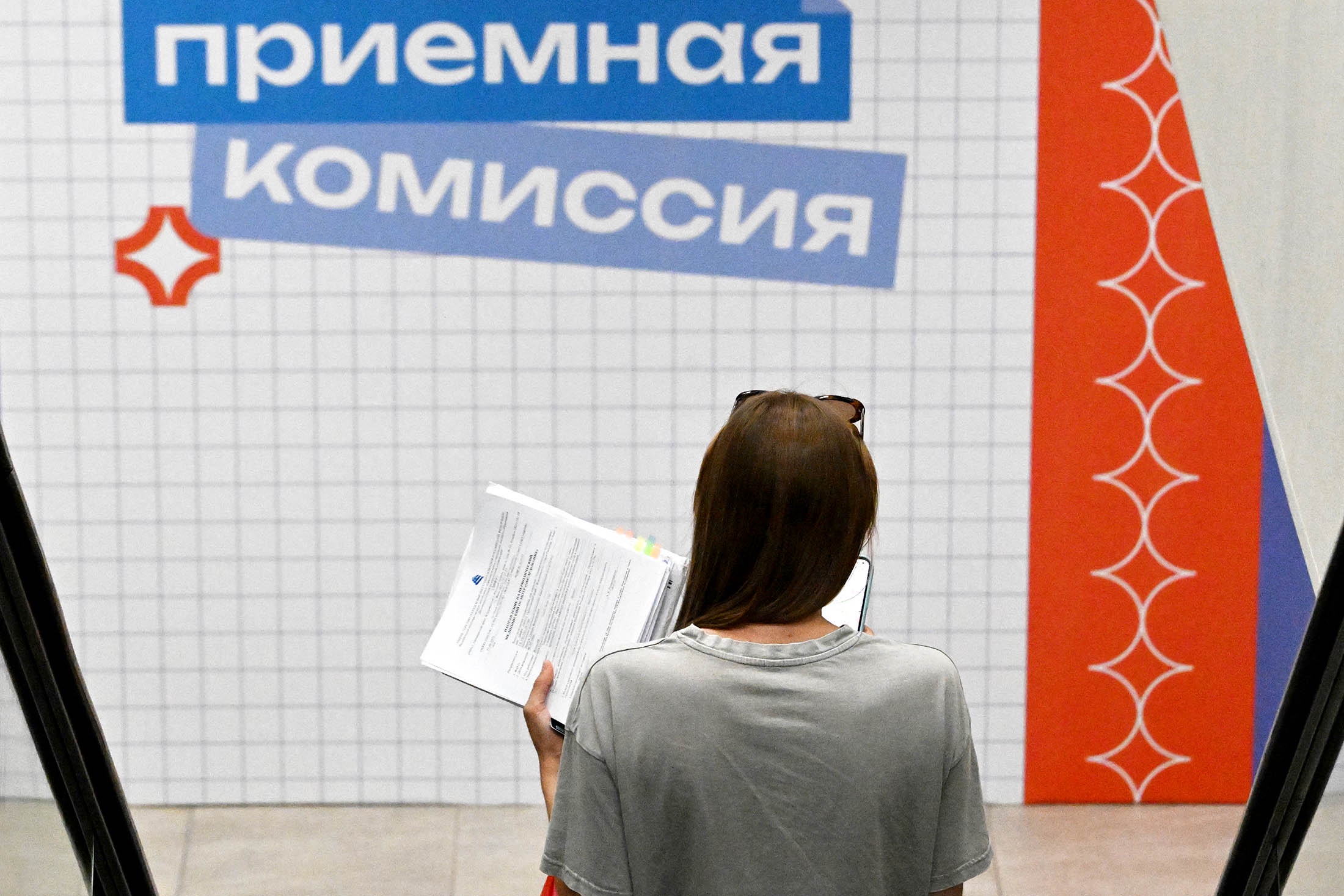
For a student navigating the complex landscape of Russian higher education, the path to a career is often a high-stakes gamble between personal passion and the shifting tides of state priority. But as the Ministry of Science and Higher Education of Russia looks toward the 2027/28 academic year, the direction of that path is becoming increasingly clear. The state is no longer merely funding education; it is architecting a workforce, specifically targeting the technical and scientific sectors required to sustain its industrial ambitions.

The announcement regarding the 2027/28 academic year marks a significant expansion of the state’s footprint in the classroom. Rather than a uniform increase across all disciplines, the Ministry has orchestrated a targeted surge in budget-funded places—seats paid for by the government—concentrated in sectors deemed vital for national stability and growth. This is not a random expansion, but a strategic deployment of human capital designed to meet the demands of a changing economy.
At the heart of this expansion is a massive push for mechanical engineering. The Ministry has announced an increase of 516 additional budget places in this field alone, making it the largest single growth area in the new allocation. This move suggests a profound emphasis on the physical machinery of industry, ensuring that the next generation of engineers is large enough to fill the gaps in the nation's technical infrastructure.
However, the new allocation strategy seeks to redistribute this intellectual weight.
While mechanical engineering takes the lead in sheer numbers, the expansion extends deep into the digital and biological realms. The Ministry is betting heavily on the architects of the information age, allocating 290 additional budget places to informatics and computing technology. This is closely shadowed by a focus on the invisible battlegrounds of the modern era, with 236 new places dedicated to information security.
This digital push is balanced by a significant investment in human health and the fundamental sciences. Clinical medicine is set to see an influx of 283 additional budget places, reflecting a sustained priority on medical training. Simultaneously, the state is looking toward the atom, providing 241 additional budget places for nuclear energy. When viewed together, these numbers reveal a hierarchy of importance: the state is prioritizing the machines that build, the code that protects, and the science that sustains.
Historically, the prestige of Russian higher education has often been concentrated in a few elite urban hubs. However, the new allocation strategy seeks to redistribute this intellectual weight. The Ministry has stipulated that at least 73 percent of all budget places will be allocated to regional universities. This is a deliberate attempt to ensure that high-level technical and scientific training is not a luxury reserved for the capital, but a resource available across the country's vast geography.
This decentralization is not merely about geography; it is about economic relevance. The distribution of these seats will not be arbitrary. Instead, the Ministry has outlined a sophisticated selection process based on regional requests, labor market forecasts, and direct proposals from industry leaders and 'centers of responsibility.' By tying university funding to the specific needs of local industries, the state aims to create a direct pipeline from the lecture hall to the factory floor or the research lab.
The architecture of this educational shift is built on a specific structural hierarchy. The Ministry has decided that more than half of these budget places will be dedicated to on-campus bachelor's and specialist programs, providing the foundational training required for most technical professions. Another third of the allocation is reserved for master's programs, ensuring that the surge in capacity also supports the advanced research and specialization necessary for high-level technological leadership.
This process is governed by a strict administrative timeline. The Ministry is working toward a deadline of November 1, 2026, to finalize the control numbers—the official quotas that dictate how many students can enter specific programs. Once these numbers are set, the final distribution to individual universities is scheduled to be completed by December 29, 2026. This rigorous schedule ensures that institutions have the clarity needed to prepare for the upcoming academic cycle.
This expansion comes at a time of heightened competition for academic entry. In previous cycles, a tension has existed between traditional meritocracy and specialized access. It has been noted that top-scoring students have sometimes found themselves unable to secure admission to leading universities because a significant portion of budget places were reserved for winners of various academic olympiads. This creates a complex environment where high achievement in specialized competitions can sometimes bypass the standard entrance metrics.
As the 2027/28 academic year approaches, the landscape of Russian higher education is being fundamentally redrawn. The emphasis is clear: engineering-technical, natural science, and medical specialties are the new pillars of the state-funded system. By focusing on these sectors, the Ministry is attempting to bridge the gap between current educational output and the future requirements of its most critical industries.