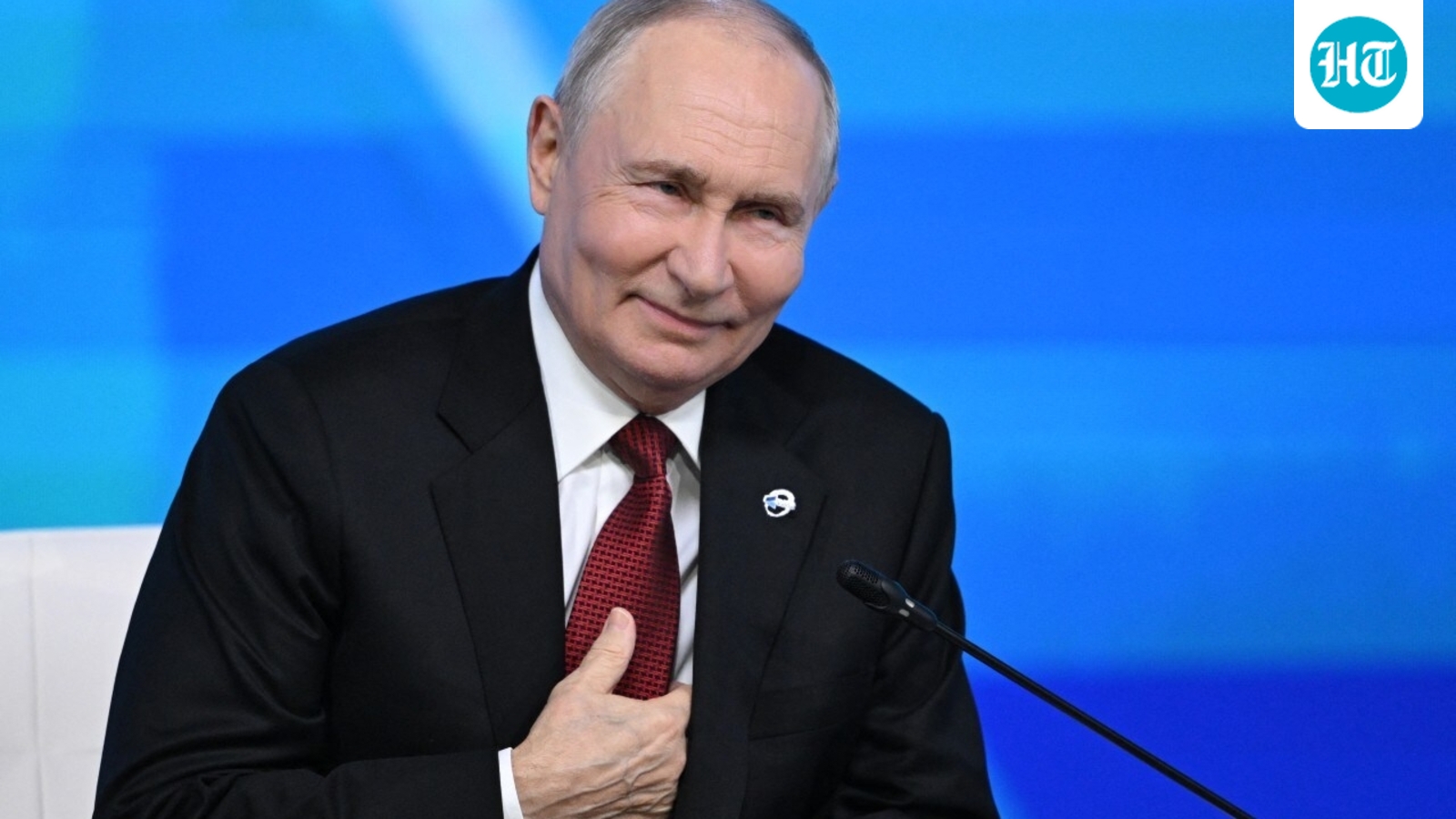
In recent weeks, Russian President Vladimir Putin announced a bold diplomatic overture: a trilateral summit with U.S. President Donald J. Trump and Chinese President Xi Jinping to negotiate an end to the Ukraine conflict. The suggestion arrives at a moment when the relationship between Moscow and Washington has shown signs of warming. Around the same time, Trump announced a deal to buy Russian diesel and signed an executive order waiving key sanctions on Moscow—steps that indicate a willingness to engage with the Kremlin on economic grounds.

Putin’s invitation is linked to the upcoming Asia‑Pacific Economic Cooperation (APEC) summit in Shenzhen, scheduled for November 18, 2023. By proposing the summit on the sidelines of APEC, Putin hopes to use the gathering’s diplomatic profile to advance the idea of a three‑way meeting.

Inside the shadowy world of anti-Putin sabotage from within Russia https://t.co/E2pKStpEZq
A senior U.S. official described Trump’s stance as “open but not formal.” The president has not yet signed onto the summit, yet the same official noted that Trump “might be open to the proposal given his push to resolve the war.” Trump’s recent diesel purchase suggests a pragmatic, if controversial, approach to re‑engaging with Russia. The executive order waiving sanctions further underscores a willingness to test the limits of U.S. policy, even as critics warn that such steps could legitimize Moscow’s aggression.
” European capitals, long the front line of diplomatic and economic resistance to Russia, have reacted critically.
China’s involvement is equally strategic. By positioning Xi Jinping as a co‑host, Moscow signals a desire to elevate Beijing from a peripheral observer to a central power broker in the conflict. Xi’s participation hints at Beijing’s ambition to be seen as a diplomatic arbitrator in a war that has largely been framed as a West‑Russia showdown.

Ukraine will defeat russia
Ukrainian President Volodymyr Zelensky has already voiced sharp criticism of the proposal. He warns that a summit favouring Moscow could “prolong the war” by granting Russia a diplomatic platform without demanding concrete concessions. Zelensky’s concern reflects a broader unease among Kyiv’s allies, who fear that a trilateral meeting might dilute the pressure that sanctions and military aid have placed on Moscow. The Kremlin’s spokesperson, Dmitry Peskov, offered a measured response: “There is no clear understanding yet regarding the meeting itself or its potential agenda, although all three parties acknowledge the hypothetical possibility of such a meeting taking place.”
European capitals, long the front line of diplomatic and economic resistance to Russia, have reacted critically. The same sentiment echoes among U.S. allies who view the diesel deal and sanctions waiver as premature concessions that could undermine the unified front that has kept Russian revenues in check. Their criticism is rooted in the belief that any diplomatic overture must be paired with tangible steps toward de‑escalation.
An executive order waiving “key sanctions” on Moscow is a technical but potent tool. Sanctions—restrictions on trade, finance, and technology—are designed to cripple a target’s economy and limit its ability to fund conflict. By lifting some of these constraints, the United States is effectively opening a narrow corridor for Russian energy exports, exemplified by the diesel purchase. Critics argue that this not only provides Russia with hard‑currency revenue but also signals to other sanctioned states that diplomatic overtures can be rewarded with economic relief.

Discussions about the summit are already underway, according to Kremlin officials. Whether the meeting will materialise at the Shenzhen APEC gathering remains uncertain, as Trump has yet to formally agree. Yet the very act of proposing such a summit reshapes the diplomatic calculus surrounding Ukraine. It places China at the centre of a potential peace process, tests the durability of the U.S.–European sanctions regime, and forces Kyiv to confront a new diplomatic reality where Moscow seeks legitimacy through multilateral engagement. As the world watches the APEC sidelines, the question is not only if the leaders will meet, but whether that meeting will move the war toward resolution or simply give Moscow a louder voice in the global arena.