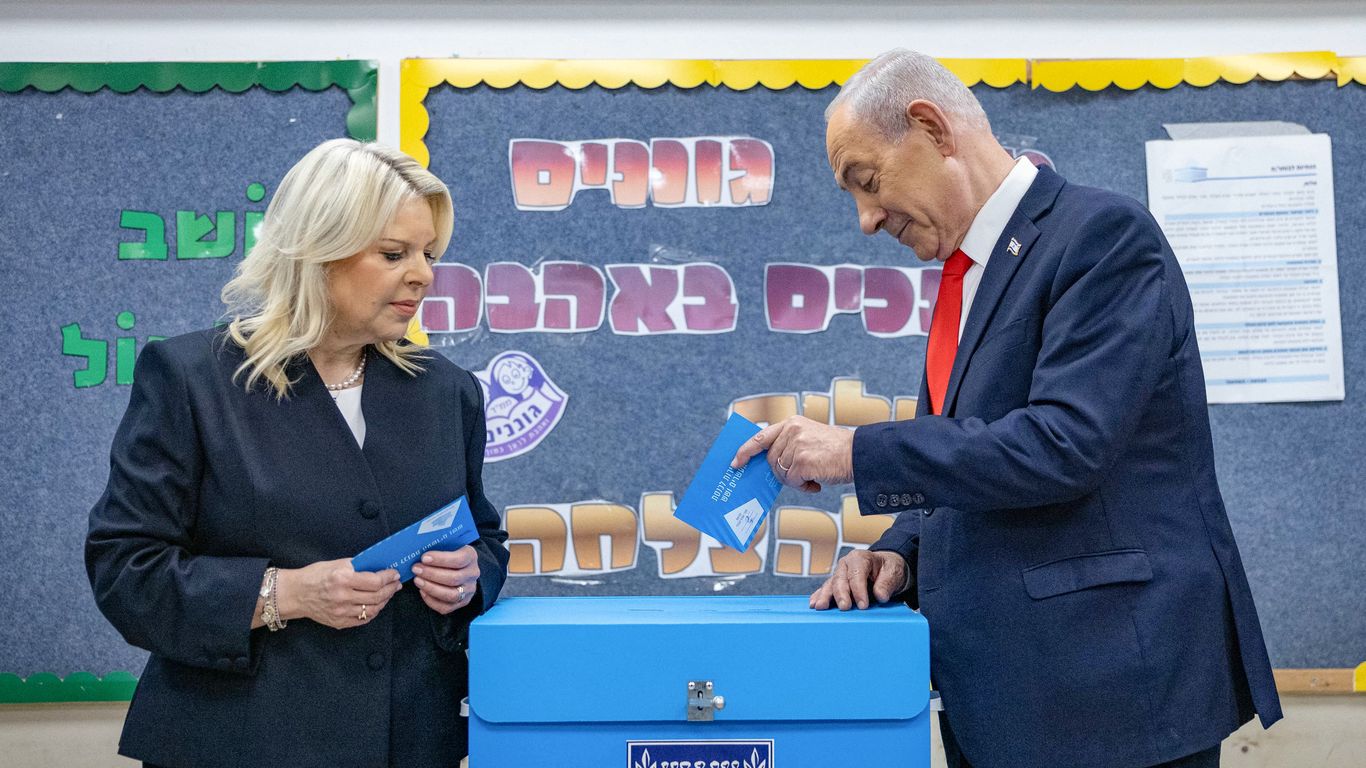
On October 27, 2026, the Israeli electorate went to the polls in a climate defined by profound national tension. Following the events of October 7, 2026, the atmosphere surrounding this general election was charged, with Prime Minister Benjamin Netanyahu framing the day as a "matter of life and death." Throughout the voting hours, Netanyahu engaged in a frantic, day-long effort to mobilize his base, urging supporters to cast their ballots to stave off a political shift. Yet, as the polls closed, the initial data painted a picture of a nation deeply divided, with no clear path forward for the established political blocs.

Exit polls released on election night revealed a landscape that offers little comfort to either side. In the 120-seat Knesset, a party or coalition must secure 61 seats to form a government. The data, however, suggests a persistent deadlock. Benjamin Netanyahu’s right-wing alliance, anchored by his Likud party, is projected to hold 50 seats. While Likud itself is expected to remain the largest single party in the Knesset with between 24 and 25 seats, its broader coalition—including the ultra-Orthodox parties Shas and United Torah Judaism, which are projected to win a combined 12-14 seats—falls significantly short of the threshold required to govern.
Opposite them, the 'Together' opposition slate, led by Gadi Eisenkot, is projected to capture 53 seats. While this gives the opposition a narrow lead in the seat count, it is equally insufficient to command a majority. The result is an inconclusive outcome that leaves the country facing a period of intense political maneuvering.
Perhaps the most striking feature of these results is the surge in participation among Palestinian citizens of Israel.

Eisenkot: Exit polls 'victory for Israeli majority,' vows to replace Netanyahu https://t.co/dP0FIqfCqf
Perhaps the most striking feature of these results is the surge in participation among Palestinian citizens of Israel. Projected to secure 17 to 18 seats through the Joint List and Raam, these parties have achieved a record-breaking presence in the legislature. This surge comes after four years in which these voters have witnessed the destruction in Gaza, the rise of violent settlers in the occupied West Bank, and a perceived increase in discriminatory rhetoric from state leadership. By voting in record numbers, this bloc has effectively acted as a kingmaker, complicating the arithmetic for both the incumbent Prime Minister and the opposition.
With the numbers failing to provide a clear victor, the focus now shifts to the political maneuvering that will define the coming weeks. Gadi Eisenkot has already signaled his intent, declaring the exit poll results an "unequivocal lack of confidence in Netanyahu" and the government associated with the failures of October 7. Eisenkot has vowed to act immediately to replace the current administration, aiming to establish what he terms a "Zionist government committed to military service."
Conversely, Benjamin Netanyahu is expected to wage a fierce public campaign to retain his position. Given that Likud is projected to emerge as the largest single party, Netanyahu will likely use every available political tool to persuade the President to grant him the first opportunity to form a coalition. The process of government formation is notoriously arduous in the Israeli system; while official results are expected on Wednesday, the actual establishment of a ruling coalition could take up to a month of negotiations.

⚡#BREAKING Bennet: Netanyahu lost, the evasive coalition will go home
As the country awaits the final tally, the reality remains that the Knesset is more fractured than ever. The exit polls confirm that neither the Netanyahu bloc nor the opposition can govern without significant compromise or the inclusion of partners who may be difficult to reconcile. For now, the Israeli political system is suspended in a state of transition, waiting to see if the preliminary numbers hold and how the various factions will navigate the narrow, difficult path toward a 61-seat majority.
