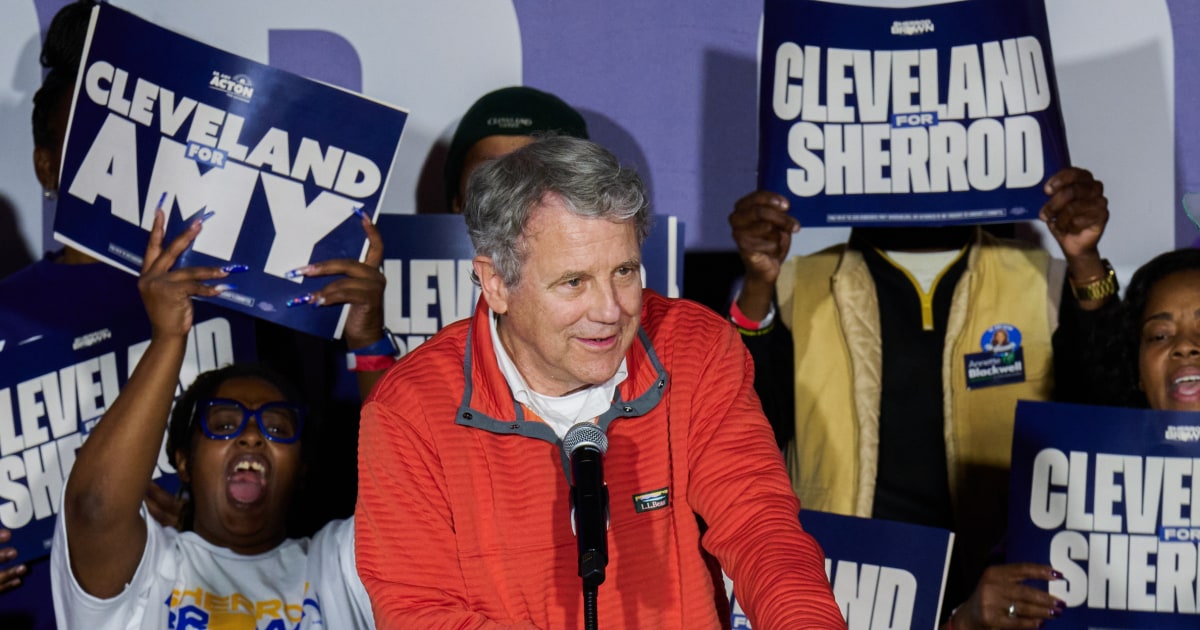
In the long, arid history of United States Senate comebacks, there is a silence that stretches back to 1988. That was the last time a senator successfully clawed their way back to the upper chamber after losing reelection. For nearly four decades, that path was considered a ghost story, a political impossibility that few dared to whisper. Then, on November 4, 2026, Sherrod Brown walked into the Ohio Senate race and made that impossible thing happen.
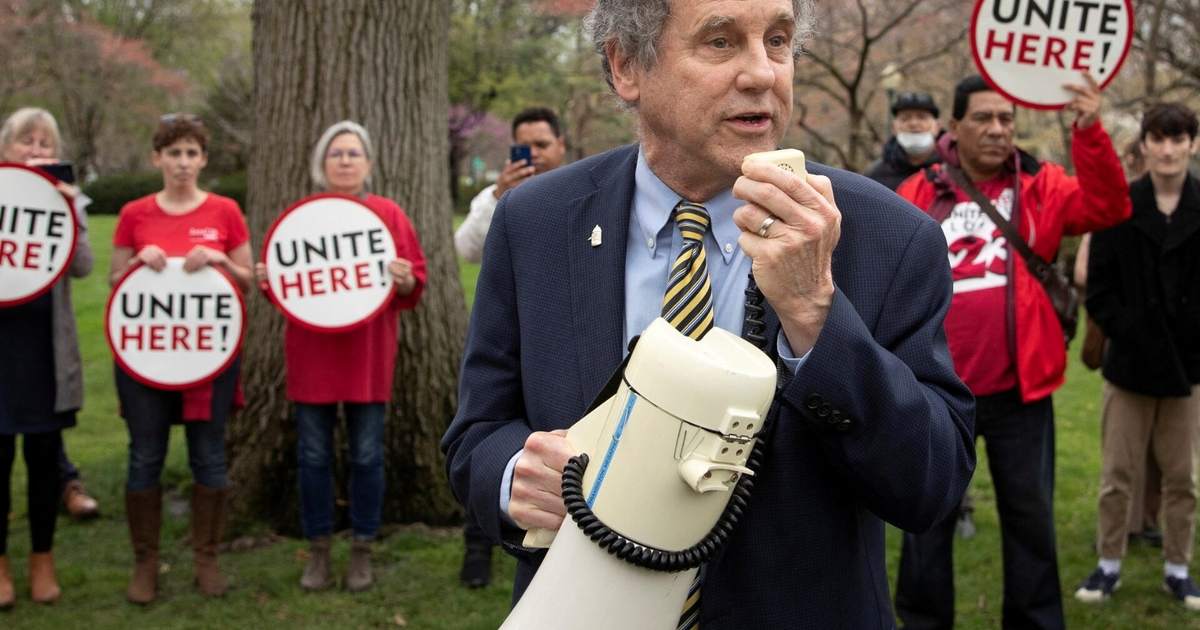
Brown is 73 years old, a man who has served in the Senate since 2007 and lost his seat in the chaotic 2024 election. But he was not finished. His victory over the Republican incumbent, Jon Husted, is not just a win for one man; it is a seismic shift for the entire Democratic Party. In an era where red states like Ohio have become solid Republican strongholds, Brown’s triumph suggests the party may need to rewrite its playbook on what is possible in the Midwest.
The stakes were impossibly high. This race was the linchpin for Democrats’ attempt to regain control of the Senate. While other states remained fiercely contested, the outcome in Ohio hung in the balance. If the Democrats could hold a seat in a state where President Trump won by 11 percentage points in the 2024 general election, it signaled that the national mood was shifting. For Brown, it was a second chance at the kind of legacy that usually belongs to the young and the hungry.
It was a war of attrition fought on a scale rarely seen in a single state’s congressional contest.
To understand why Brown’s return is so remarkable, you have to look at the door he is walking through. The seat Brown won is not one he lost to a primary challenger or a minor upset. It is the seat that belongs to Vice President JD Vance.
Vance, who has a deep personal connection to Ohio—his home state—was the one who originally vacated this position. The framing of Vance’s interest in the state has been complex. He himself noted that he "understand[s] this state probably instinctively better" than most, citing a deep personal love for the region. But that affection did not translate into a political safe haven for his party’s appointed holdover.
When Vance left, the vacancy was filled by Jon Husted, a 59-year-old Republican officeholder who was appointed to the Senate on January 1, 2025. Husted was a safe pair of hands, a long-tenured official expected to hold the seat until a new appointment or election could solidify the Republican grip. Instead, he found himself in a crossfire of modern politics that he had not fully anticipated.

BREAKING: Democrat Sherrod Brown unseats GOP Senator Jon Husted in Ohio https://t.co/RONx9JK5CM
The 2026 race was a financial behemoth, featuring more than $500 million in campaign spending. It was a war of attrition fought on a scale rarely seen in a single state’s congressional contest. Brown, who had previously lost to Bernie Moreno in 2024, returned to the arena with a strategy of relentless aggression. He did not let Husted breathe.

At the heart of the campaign was a new kind of political villainy: the AI data center. As the artificial intelligence boom continues to reshape the American economy, the energy costs and environmental impact of these massive computing facilities have become a lightning rod for voters. Democrats framed Husted as the face of this transformation, pointing to his vocal support for the technology’s expansion in Ohio. It was a simple, potent narrative that played well with voters tired of seeing their electric bills climb.
The money in the race was staggering. Brown himself pointed out the sheer scale of the intervention, noting that "Peter Thiel, Elon Musk, Donald Trump, these three gentlemen, shall we call them, and others, have poured hundreds of millions into this race." It was a reminder that modern politics is no longer just about local issues; it is about the global power players who see Congress as a battleground for their own technological and business ambitions.
But it was not just data centers that haunted Husted’s bid for survival. The race also dragged in some of the ugliest politics in Ohio. Husted had long-standing ties to a bribery scandal at the statehouse, a blemish on a record that had otherwise been comfortable and uneventful. Adding to the trouble, Husted was known to have accepted campaign donations from Les Wexner, the billionaire retail magnate.
In a world where trust is the most valuable currency a politician can have, those connections made Husted vulnerable. Brown exploited these cracks relentlessly. He painted a picture of a man out of touch, a politician who had become too cozy with the very billionaires and corporate interests that were driving the state’s economy in dangerous directions.

🚨 NEW: Republican Bernie Moreno unseats Democrat Sherrod Brown, who has been the senator of Ohio for almost 20 years.
As the votes tallied, it became clear that Brown’s message had landed. He captured 48.4 percent of the vote, just edging out Husted’s 46.7 percent. It was a slim victory, but in the tightest of races, that slimness is everything.
Brown’s win is particularly noteworthy for his peers. Barack Obama, who has watched Brown’s career unfold for two decades, summed up the man’s character in a way that resonated with voters who were skeptical of the current political class. "This is not a guy who enriched himself cozying up to corporations," Obama said. "He’s still wearing the same suit he was in when I met him 20 years ago."
That quote is a powerful image. In a race where so much money and so many new players entered, Brown’s identity remained the one constant. He is the old guard, but not the old guard that has gone soft. He is the comeback, the second act that history had not written.
For Jon Husted, the loss leaves him in a precarious position. As a 59-year-old with a long tenure in office, defeat in a special election is not just a career setback; it is an uncertain future. He will remain a respected figure, but the political center of gravity in the state has shifted. The fact that a Democrat could win a Senate seat in Ohio in 2026, in a state that Trump carried by double digits in 2024, forces the entire Republican establishment to rethink their assumptions about the state’s political map.

Democrat Sherrod Brown unseats Sen. Jon Husted in Ohio, completing comeback bid https://t.co/p4XAzGMqYf via @nbcnews
This victory is more than just a personal triumph for Brown. It is a blueprint for the Democratic party. It proves that in the modern American political landscape, you can beat the odds if you have a compelling narrative about the future—like the dangers of unregulated AI—and the grit to fight through a $500 million war of spending.
For the Senate, the balance of power is tipped. For the next two years, the upper chamber will have a senator who has been out of the building for a short period but has now returned with a renewed sense of urgency. It is a rare story, one that was thought to be impossible, that finally came to life on a November night in Ohio.