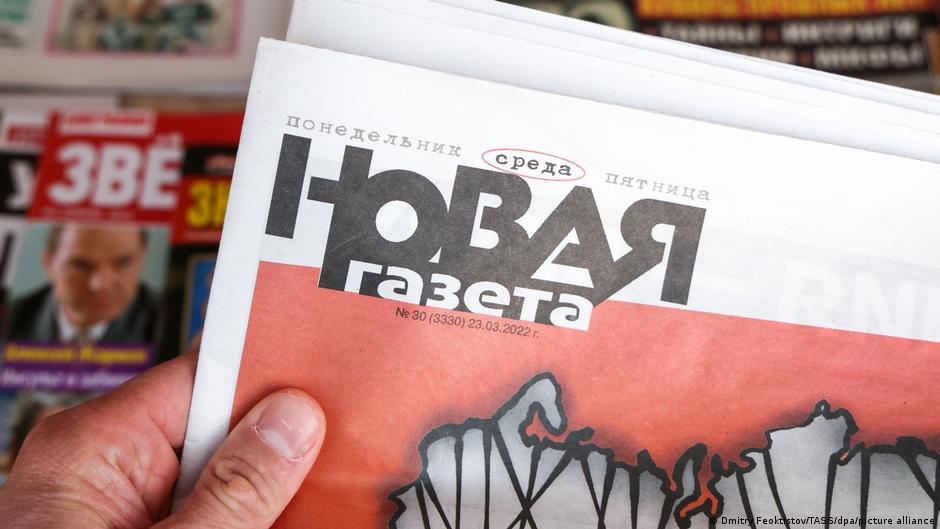
For thirty years, Novaya Gazeta stood as a defiant beacon of independent journalism in Russia. Founded in 1993, the publication carved out a reputation for investigative rigor, often tackling the most sensitive and dangerous topics in a landscape increasingly hostile to dissent. But on October 30, 2026, that long history reached a definitive and abrupt end. The newspaper announced it was shutting down, marking the conclusion of a three-decade journey that survived shifting political tides only to be dismantled by the current state apparatus.
The collapse of the publication was not a gradual fading away, but a rapid, coordinated strike. On October 30, 2026, the pressure reached a breaking point. In a single day, the machinery of the Russian state moved to dismantle the outlet: the newspaper’s website was blocked, its license was officially revoked, and police conducted a search of the editorial offices. The editorial team, faced with the impossibility of continuing their work under such conditions, declared that the paper simply ceased to exist.
At the center of this closure is a clear accusation from the staff: that the Russian authorities and the Russian special services acted in concert to force the editorial team to stop its work. Editor-in-chief Sergei Sokolov, who was himself questioned by investigators on the day of the closure, has been explicit about the nature of this pressure. According to the publication, this was not a legal or administrative dispute, but a calculated effort by the state to eliminate a critical voice that had become an obstacle to the current political order.
The physical and financial strangulation of the paper was as effective as the legal maneuvers.
For the journalists at Novaya Gazeta, the closure represents more than just the loss of a workplace; it is a symptom of a broader transformation in the country. The paper has stated that human rights and freedoms have been effectively eliminated in Russia, and that the very act of protecting or advocating for those rights has been equated to a crime. This environment, characterized by the designation of journalists as 'foreign agents' and constant state surveillance, made the continued operation of an independent newsroom untenable.
The physical and financial strangulation of the paper was as effective as the legal maneuvers. Beyond the revocation of their license, the newspaper faced an eviction order from its premises and had its ability to receive donations disabled. By cutting off the financial lifeblood of the organization and physically removing them from their home, the authorities ensured that the editorial team had no path forward. As the staff noted in their final announcement, the state had successfully forced their hand.
The finality of the situation was captured in a stark, emotional statement from the editorial team: "They've killed us." The staff announced that they would turn off the lights in the home where they had lived for 30 years, stop their servers, and walk away. For a generation of readers and journalists, the disappearance of Novaya Gazeta marks a profound shift, signaling that the space for independent inquiry in Russia has been closed off, leaving a silence where there was once a persistent, investigative voice.