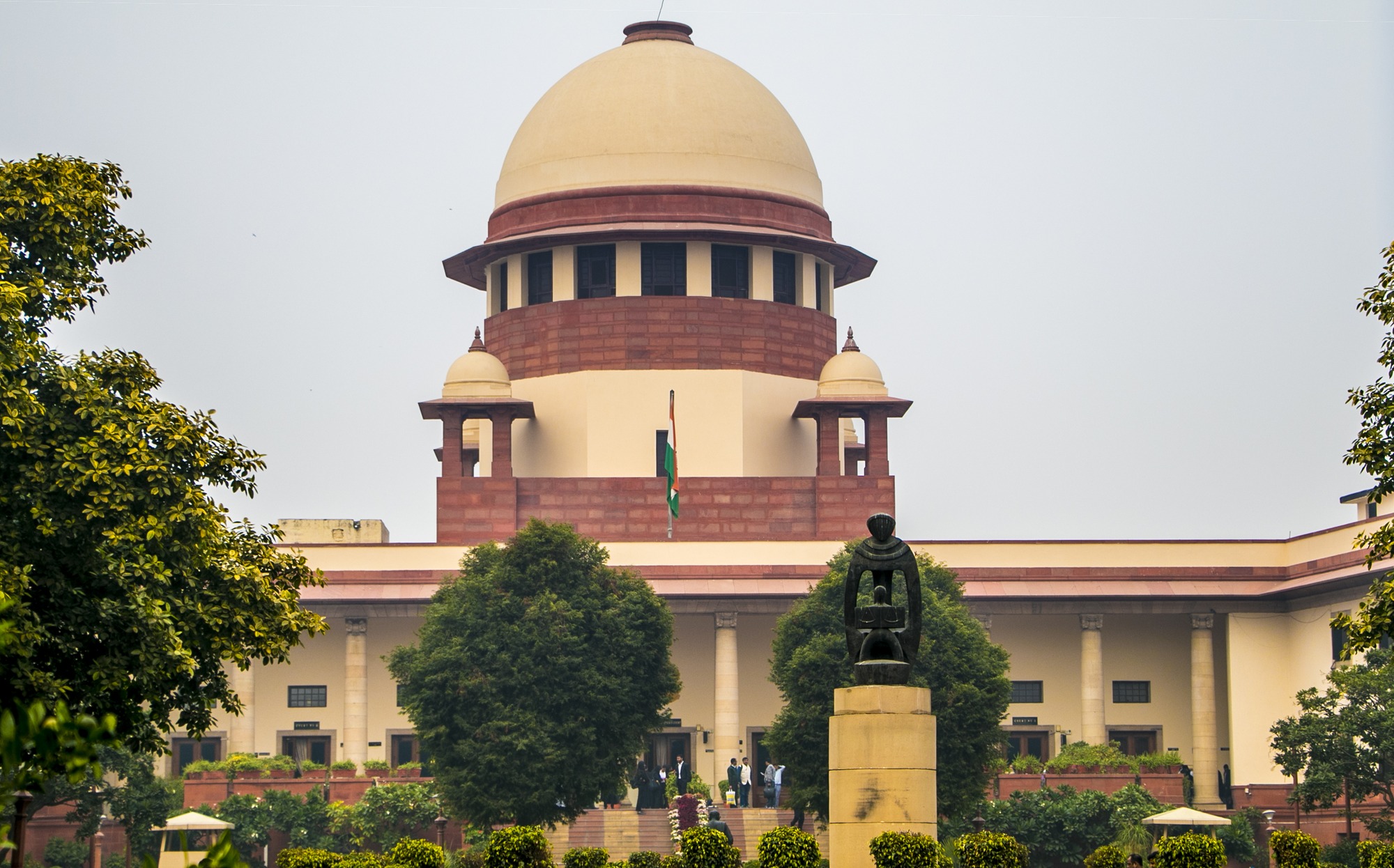
Advocate Shailendra Mani Tripathi has filed a contempt petition in the Supreme Court against the Union Home Secretary, the Delhi Police Commissioner, and the chairperson of the Delhi Metro Rail Corporation. The filing names the three officials as respondents and argues that they have failed to obey a judicial directive.
The plea submitted by Tripathi asserts that the respondents wilfully disobeyed the Supreme Court’s October 9 order, which had prohibited a blanket shutdown of public transport during protests. According to the petition, the officials acted contrary to the court’s clear instruction.
Earlier, the Supreme Court had ruled that while authorities could regulate metro and train services for security reasons, they could not impose a complete ban. This distinction forms the legal backdrop against which the current allegations are measured.
This filing identifies the officials by name and repeats the core accusation.
Tripathi’s petition states that 57 metro stations were closed and train services were cancelled, causing significant public inconvenience and undermining the authority of the court. The numbers cited are drawn from reports that followed the alleged shutdown.
Lawyer Narendra Mishra has filed an urgent application before the Chief Justice of India, seeking an immediate hearing on the contempt petition. Mishra’s move highlights the perceived urgency of addressing the alleged non‑compliance.
Mishra’s application contends that authorities have failed to comply with the Supreme Court’s October 9, 2026 order, which mandated the controlled operation of metro and railway services. The petition argues that the officials ignored the directive to keep services running.
Despite the court’s directive to ensure smooth operations and to issue public consultations, reports indicate that 250 trains were cancelled and 45 metro stations were closed. These figures are presented as evidence of the alleged breach.
Mishra maintains that the continued non‑compliance justifies immediate judicial intervention to uphold the Supreme Court’s previous instructions and to restore orderly transport functioning.
A separate contempt of court petition has been lodged by Shailendra Mani Tripathi against the Union Home Secretary Govind Mohan, Delhi Police Commissioner Anurag Kumar, and DMRC Chairperson D. Tara. This filing identifies the officials by name and repeats the core accusation.
The petition alleges that the named officials violated the October 9 order by unilaterally closing metro stations and cancelling train services without any valid justification. It characterizes the actions as unilateral and unjustified.
Tripathi argues that the officials’ actions have severely disrupted public life and caused significant hardship to commuters across the national capital. The petition stresses the impact on everyday travel.
One of the central claims in the petitions is that the officials violated the October 9 order by closing metro stations. This claim recurs across the filings as a factual assertion.
Another claim holds that the restrictions imposed on metro and rail services have severely disrupted life in the national capital. The petitions link the shutdowns to broader inconvenience for residents.
The petitions also assert that authorities continued to restrict Delhi Metro and railway services even after the Supreme Court’s October 9 order, indicating an ongoing pattern of non‑compliance.
According to the allegations, Delhi Police communications directed the DMRC to close 57 metro stations. This specific instruction is cited as the mechanism behind the reported closures.
Both contempt petitions repeatedly allege that the respondents violated the Supreme Court’s October 9 order, reinforcing the core legal contention.
The petitions conclude by referencing reports that 250 trains were cancelled and 45 metro stations were restricted, using these numbers to substantiate the claim of widespread disruption.