
In the modern age of information warfare, the battlefield is often as much about perception as it is about physical territory. The fragility of this digital landscape was laid bare when a series of videos began circulating across social media platforms. These clips, shared by a Congress leader in Bihar, purported to show Chinese vehicles deep within Indian territory, specifically near the sensitive border regions of Arunachal Pradesh. For a public already attuned to the geopolitical tensions between India and China, the footage served as a potent, if incendiary, claim.
Within hours of the content gaining traction, the Indian Army moved to intercept the narrative. Recognizing that the videos were being used to manufacture a crisis, military officials issued a swift and categorical refutation. The Army’s investigation revealed that the footage was not evidence of an incursion, but rather a sophisticated manipulation of reality. The vehicles depicted in the clips were identified as JAC-branded commercial transport trucks, and they were not in Arunachal Pradesh at all. Instead, the footage had been captured near the Nathu La Pass in Sikkim, where such commercial traffic is a routine part of regional trade. The Army’s intervention was a rare, direct confrontation with viral disinformation, aimed at preventing a localized social media post from escalating into a broader geopolitical panic.

India deploys extra forces amid protests over China border dam India has deployed hundreds of additional security personnel to Arunachal Pradesh after protests over a planned mega-dam escalated into violent clashes with police last week. The dam, intended to counter a Chinese hydropower project upstream, faces opposition from villagers fearing displacement. https://t.co/MWbgEydc6W
As the investigation deepened, the scope of the deception became clearer. The Army identified 12 specific social media accounts that were systematically circulating the same misleading content, suggesting a coordinated effort to amplify the false claims. Among the most egregious examples was a video featuring Lieutenant General Girish Kalia. The clip, which appeared to show the officer discussing the situation, was quickly debunked as a deepfake. The reality was far more mundane: the actual Lieutenant General Girish Kalia had been conducting a legitimate media conference in Kupwara, Jammu & Kashmir. By grafting his image onto a false narrative, the creators of the video had attempted to lend the weight of military authority to a fabrication.
The reality was far more mundane: the actual Lieutenant General Girish Kalia had been conducting a legitimate media conference in Kupwara, Jammu & Kashmir.
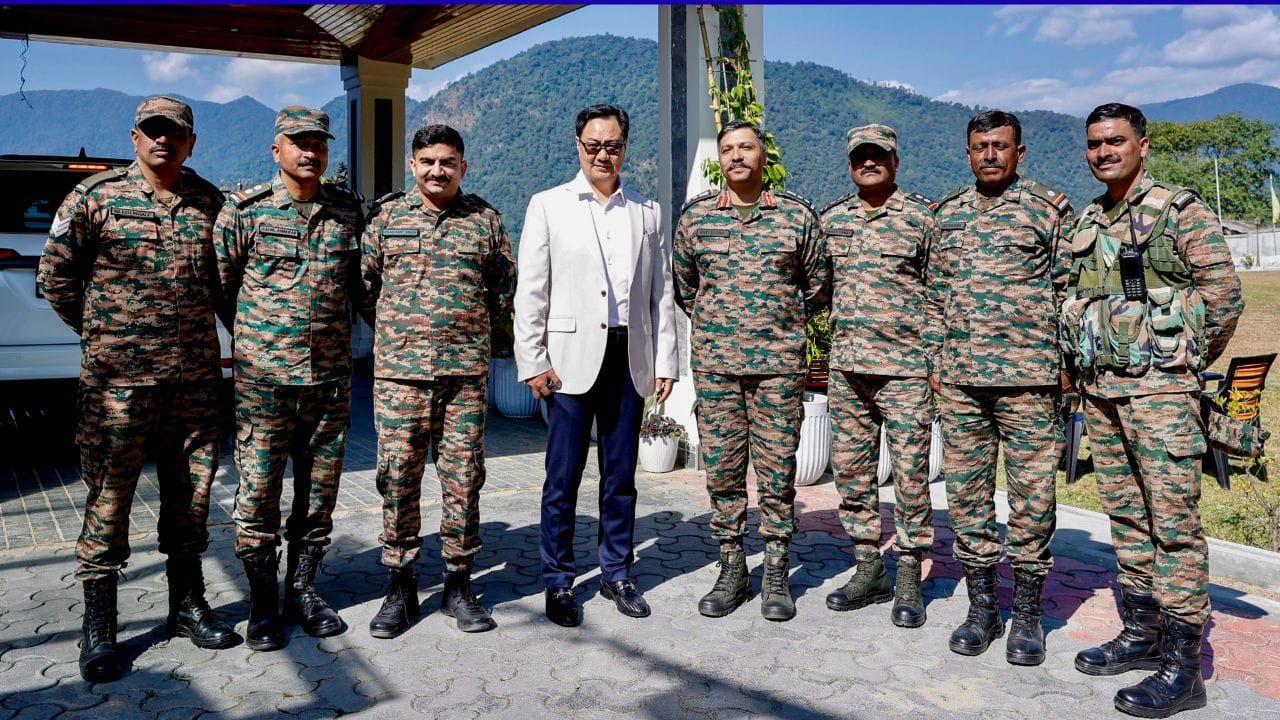
The reaction from the political establishment was immediate and scathing. Union Minister Kiren Rijiju, viewing the incident as a direct assault on the integrity of the nation’s defense forces, launched a fierce critique of the Congress party. Rijiju had already begun to signal his stance, but as the evidence of the disinformation campaign mounted, his rhetoric sharpened. He accused the Congress party of actively damaging the reputation of the Indian Army and, more provocatively, of acting in the interest of the nation’s enemies. For Rijiju, the circulation of these videos was not merely a political error; it was an act of treason that required a public reckoning.

Arunachal Pradesh main ho rahe Gen-z protest mujhe CJP protest jaisa protest jaisa kyu lag raha hain? What do you guys think 🤔 about it? https://t.co/r2H6JXJm5E
In the wake of the debunking, the political divide widened. Kiren Rijiju did not mince words when addressing the implications of the incident, demanding that the Congress party issue a formal apology to the people of the country. He argued that by spreading fake news regarding Chinese incursions, the party had compromised the morale of the military and misled the citizenry. The minister’s position was clear: the Congress party was effectively campaigning on behalf of the enemies of India by destabilizing the public’s trust in the security apparatus. This demand for an apology underscored the gravity with which the government viewed the incident, framing it as a test of national loyalty in an era of constant digital threat.
As the dust settles, the incident serves as a stark reminder of the vulnerabilities inherent in the digital age. While the Indian Army successfully debunked the claims and restored clarity to the situation in Arunachal Pradesh, the ease with which the false narrative traveled remains a point of concern. The episode has left a lasting mark on the political discourse, with the government and the opposition locked in a bitter dispute over the ethics of information sharing. For now, the borders remain secure, but the battle for the truth continues to be fought in the comments sections and feeds of the nation, where the line between reality and fabrication is increasingly difficult to discern.