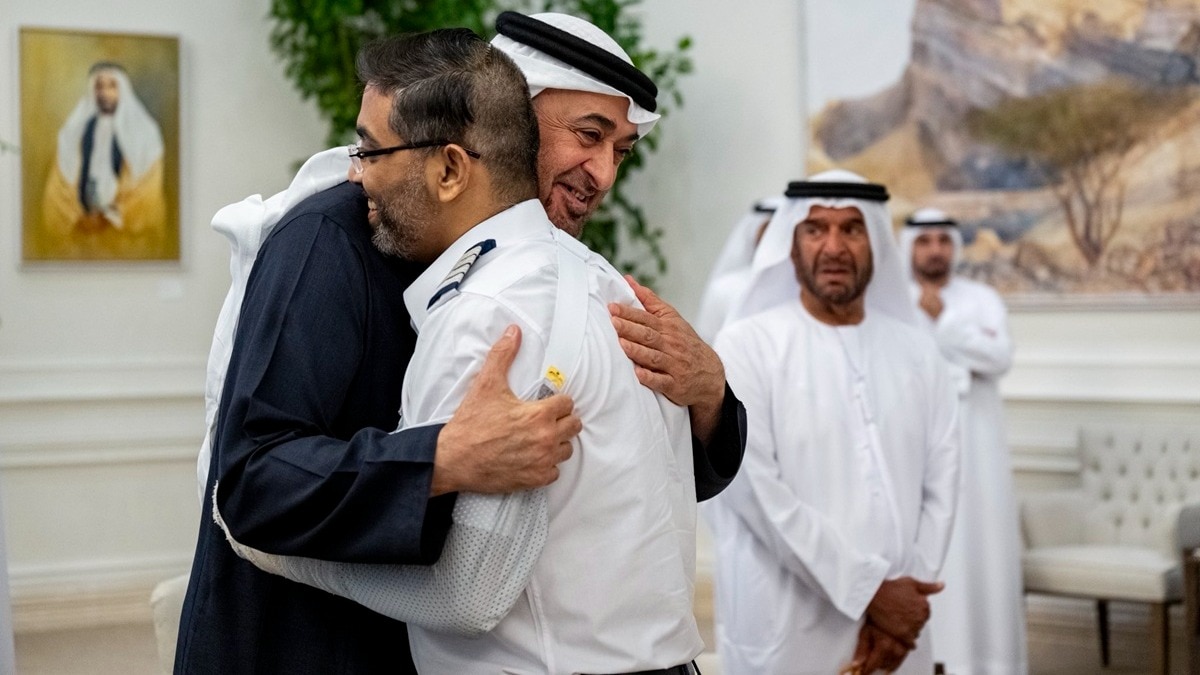
On a routine commercial service designated FZ1073, 174 passengers settled into their seats, unaware that the journey would become a crucible of bravery. Captain Smit Machhar, the aircraft’s commander, stepped forward, physically restraining the attacker despite sustaining injuries himself. His actions contributed to the safety of the 174 passengers.

The physical toll on Captain Machhar was immediate. Medical assessments projected a recovery period of roughly two months before he could return to the cockpit. Yet the narrative of his heroism did not end with the hospital bed. On 29 October 2026, the United Arab Emirates staged an honors ceremony that placed the captain at its centre. The event was attended by President Sheikh Mohamed bin Zayed Al Nahyan and Dubai ruler Sheikh Mohammed bin Rashid Al Maktoum.
Sheikh Mohamed bin Zayed Al Nahyan, the UAE’s President, addressed the assembled crowd with a tone that blended admiration and paternal concern. “So I have an idea. When you get better, I want to have a session with you, where I will tell you how to fight,” he declared, offering to teach the wounded captain the art of combat once his health permitted. The sentiment was echoed in Hindi by Sheikh Mohammed Al Nahyan, who added, “जब आप ठीक हो जाएं, तो मैं आपके साथ एक सेशन करना चाहता हूं, जहां आपको मैं बताऊंगा कि कैसे लड़ते हैं.” Both statements framed the captain’s recovery as an opportunity for personal growth under the President’s tutelage.
When the President’s words reached Captain Machhar, his response was measured and respectful.
When the President’s words reached Captain Machhar, his response was measured and respectful. “It is an honor for me, Your Highness,” he said, acknowledging the personal significance of the promise. The exchange underscored a cultural motif in the Gulf: the intertwining of state leadership with individual valor, where a ruler’s endorsement can transform a professional accolade into a lifelong mentorship.
Sheikh Mohammed bin Rashid Al Maktoum took the podium to commend the entire flight crew, highlighting the collective effort that kept the aircraft aloft. His remarks reinforced the notion that while Captain Machhar’s physical intervention was pivotal, the safe operation of the flight was a team effort.
The ceremony on 29 October 2026 closed with a shared sense that the nation’s leaders were personally invested in the safety and development of its aviators. The President’s pledge to teach Captain Machhar “how to fight” suggests a future where the line between military preparedness and civilian aviation safety may blur. For Captain Machhar, the promise of mentorship offers a path from recovery to renewed command, while for the public, it reinforces confidence that the UAE’s leadership will stand beside those who protect its skies.
In the weeks to come, as Captain Machhar embarks on his two-month healing journey, the words spoken at the ceremony will linger: a blend of gratitude, honor, and an invitation to learn the very skills that saved 174 lives.