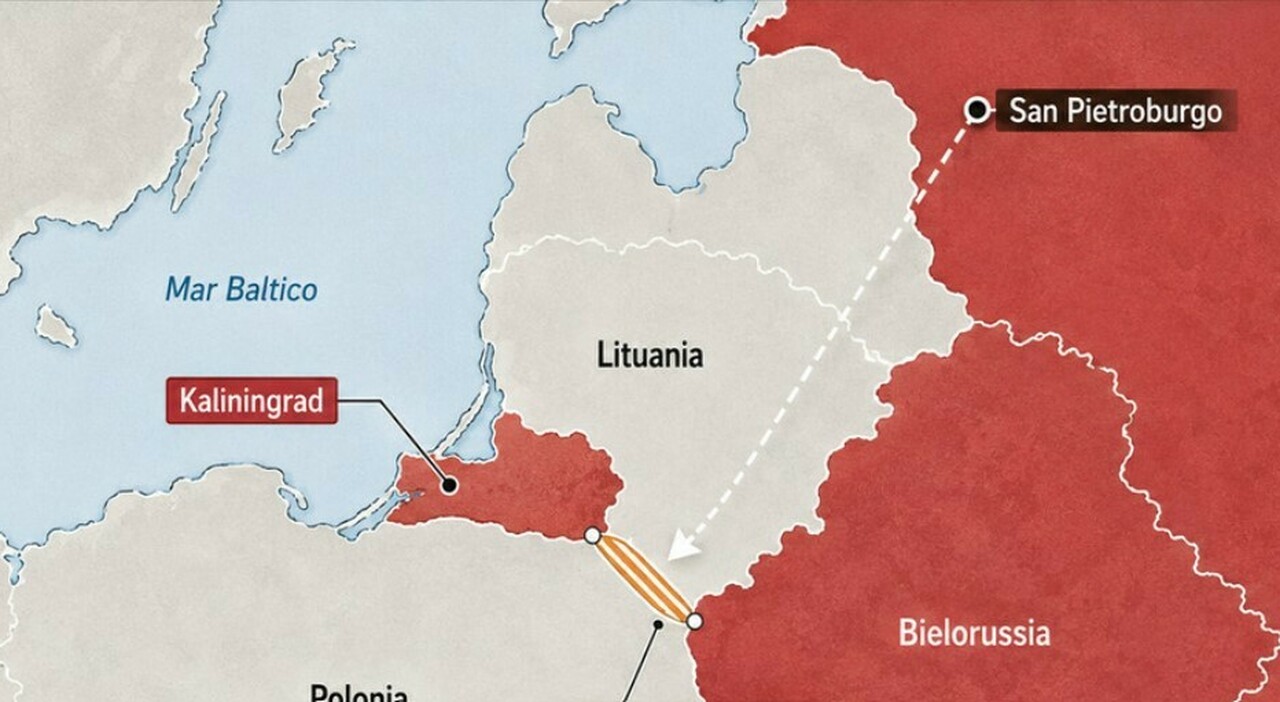
The Wall Street Journal reported that NATO’s defense plan calls for immediate firepower against strategic enemy facilities in Belarus, the Kaliningrad exclave and St. Petersburg. The purpose of these strikes is to rapidly disorganize the adversary’s command structure at the outset of a conflict.

General Alexus Grynkewich, who shared the analytical document with the Journal, emphasized that the military bloc does not seek to overthrow the Russian government. Instead, the focus is solely on eliminating the direct threat posed by an attacking force.
According to the plan, long‑range missile systems would target decision‑making centers and air‑defense nodes belonging to the Kremlin. By hitting these hubs, NATO hopes to disrupt Russian plans and create an opening for allied ground forces to launch a counterattack.
The stated goal of the Eastern Flank Deterrence Initiative is to halt a Russian offensive in its early stages.
NATO has also prepared a separate concept known as the Eastern Flank Deterrence Initiative. This strategy envisions striking military targets, command posts and supply lines across Russia, Kaliningrad and Belarus. The means to carry out these strikes include drones, robotic systems and long‑range missiles.
The stated goal of the Eastern Flank Deterrence Initiative is to halt a Russian offensive in its early stages. By doing so, NATO aims to limit troop casualties and prevent the conflict from expanding into a broader conventional or nuclear confrontation.
At a NATO military summit, Alliance leaders unveiled a new strategy for countering potential Russian offensives on the eastern flank. The approach incorporates drones, missiles and autonomous sensors, drawing directly from lessons observed during the war in Ukraine.
During his remarks, General Alexus Grynkewich detailed what he called the Alliance’s “victory theory.” The idea is to stop an invasion at its earliest moment and to deter any future attacks by demonstrating that aggression will be met with swift, effective resistance.
The announcement of these plans came amid growing unease in Europe about the security outlook and questions regarding the durability of United States military commitments. At the same time, former President Donald Trump made diplomatic statements concerning energy deals and a possible truce between Russia and Ukraine.
The war in Ukraine is now approaching its fifth year, a period marked by continued fighting and shifting front lines. The NATO military summit that introduced the new eastern‑front concept took place on 2024-01-01, while General Alexus Grynkewich spoke at the Warsaw Security Forum on 2026-10-13. Together, these elements illustrate NATO's preparations to deter and, if necessary, respond to a Russian attack on its territory.