On the morning of the third day of Sharadiya Navratri, households and temples turn their devotion toward Maa Chandraghanta, the third form of Goddess Durga. The arrival of this day invites devotees to prepare their worship and gather the traditional offerings prescribed for the deity who embodies both power and grace.

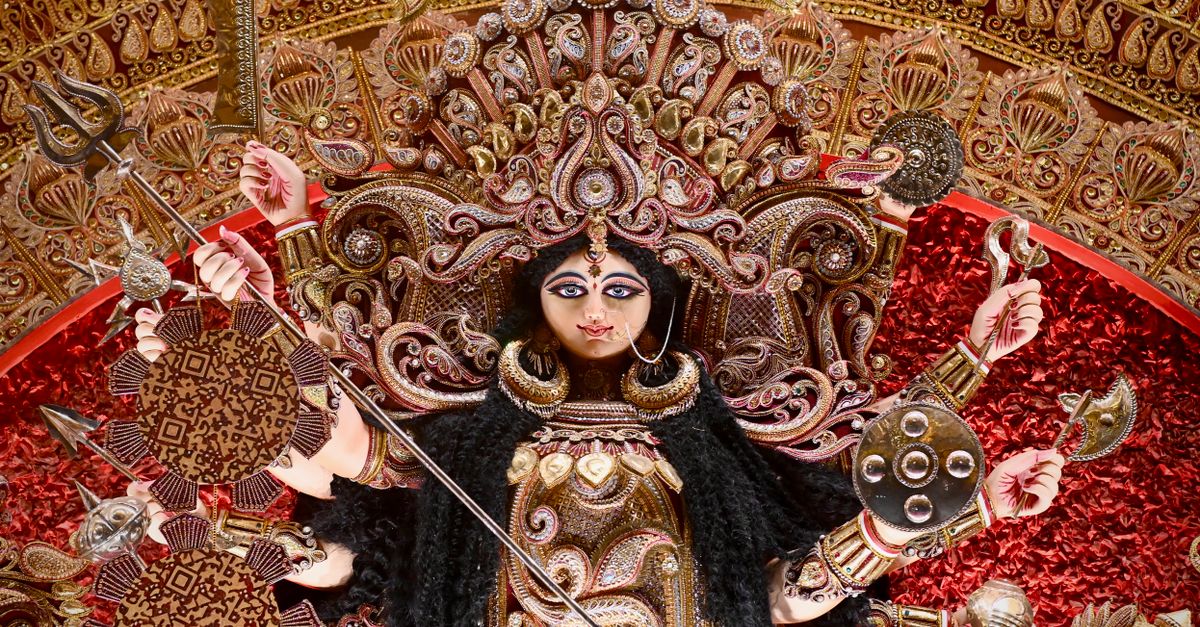
Maa Chandraghanta is revered as the third manifestation of Goddess Durga. She is worshipped on the third day of Sharadiya Navratri, scheduled for October 13, 2026. A defining feature of her divine form is the half‑moon positioned on her forehead, an iconographic detail highlighted alongside her ten hands in devotional accounts.
Iconographically, Maa Chandraghanta is depicted riding a lion, an image of supreme power and protection. She is portrayed with ten hands holding weapons, showing her formidable divine nature. Her mount and weapons together emphasize her fearless presence and readiness to defend righteousness, embodying both grace and strength.
Devotional and astrological sources emphasize that her grace strengthens the spirit and enables the faithful to navigate challenges with deep resolve.
The goddess is recognized as an enduring symbol of courage, strength, and peace. Worshippers believe that meditating on her form helps to dispel hesitation and anxiety. By holding weapons in her ten hands while bearing a half‑moon on her brow, her divine appearance symbolizes both fierce protective power and inner serenity.
A central promise attached to the worship of Maa Chandraghanta is the removal of fear. Sincere prayer to her is believed to instill confidence, courage, and fearlessness. Devotional and astrological sources emphasize that her grace strengthens the spirit and enables the faithful to navigate challenges with deep resolve.
Beyond general worship, traditional sources link Maa Chandraghanta directly to the planet Mars. In astrological beliefs, an afflicted or weak Mars in a horoscope can pose personal obstacles. Worshipping Maa Chandraghanta on the third day of Navratri serves as an astrological remedy to mitigate Mars dosha or defects, thereby helping devotees bolster courage and vitality.
The religious significance of Maa Chandraghanta is enriched by the mythological legends and background associated with her divine form. Traditional accounts recall her vital role within the sacred lore of Goddess Durga, underscoring why devotees revere her as a guardian who brings peace, fearlessness, and divine strength.
Observing the third day of Navratri follows a prescribed, step‑by‑step puja vidhi. Sources outline guidelines for the observance, including recommendations regarding preferred clothing colors for devotees, the presentation of sacred offerings, and the recitation of dedicated mantras to invite peace and strength into the home.
The preferred offerings for Maa Chandraghanta include red flowers, incense, and sandalwood. Devotees also offer milk or milk‑based sweets, especially preparations such as kheer or rabri, which are presented as bhog during her rituals. These items are offered alongside heartfelt prayers to honor her grace.
Chanting forms an essential component of the ritual worship. Devotees are encouraged to recite the mantras dedicated to Maa Chandraghanta with focus and devotion. Chanting her sacred verses while focusing on her ten‑armed form helps devotees connect with her qualities of courage, peace, and fearlessness.
Ultimately, devotees worship Maa Chandraghanta seeking courage, strength, and peace. Through sincere observance of the third day of Navratri, the faithful look to the goddess to remove fear, steady the mind, and bless them with enduring confidence.
As October 13, 2026 marks the third day of Sharadiya Navratri, temples and households will welcome the auspicious day with devotion, honoring the lion‑riding deity who grants fearlessness, mitigates planetary defects, and brings divine peace.