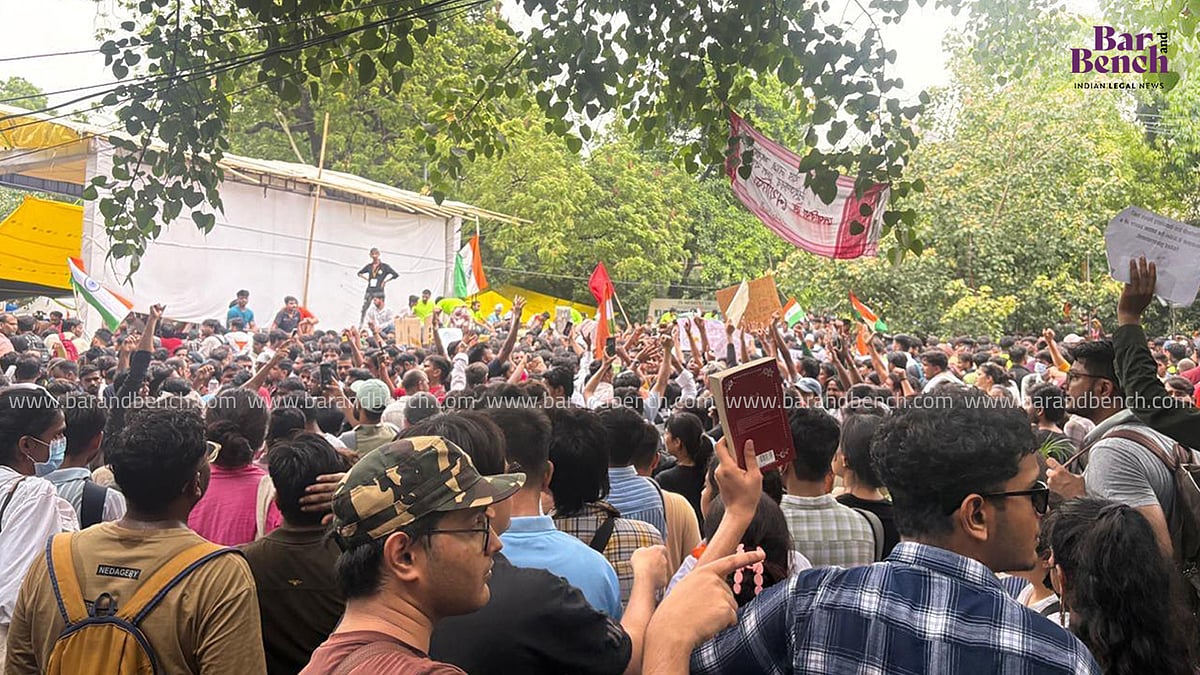
In the heart of New Delhi, where millions rely on a single set of roads for their daily lives, a specific group of citizens found themselves at the center of a legal storm. On October 28, 2026, an ordinary resident raised a question that cut through the noise of political maneuvering: what about the right of the general public, the ordinary citizen, whose only crime is that he has chosen to reside in Delhi? This sentiment was not merely rhetorical; it became the foundation of a formal legal petition lodged before the judiciary. For years, the rhythm of life in central Delhi has been punctuated by the movement of vehicles, but recent events have introduced a new variable. The Cockroach Janta Party (CJP) organized protests that, while politically charged, resulted in tangible inconvenience for those who simply wished to live their lives without obstruction.

The judicial response began with a clear directive from the Delhi High Court. On October 28, 2026, the court took active steps to address the grievances filed against the party. Rather than dismissing the concerns outright, the High Court instructed an advocate representing the petitioner to approach the Supreme Court of India. This move signals a shift in jurisdiction, elevating the issue from a local administrative dispute to a matter requiring higher scrutiny. The court noted that the Supreme Court is already dealing with similar issues regarding protest-related disruptions. By advising the advocate to proceed accordingly, the High Court effectively opened the door for a more comprehensive review of the situation, ensuring that the lower court's decision aligns with the broader legal landscape.
At the core of this legal escalation is a specific financial demand. The Delhi High Court asked the advocate to present a plea for ₹50 crore as interim compensation. In the context of Indian law, interim compensation serves as a provisional remedy intended to provide relief while a final judgment is pending. The amount sought reflects the severity of the alleged inconvenience and disruption caused by the CJP protests. This figure represents a significant sum, designed to offset the costs incurred by citizens due to traffic congestion and the general inability to access public spaces. The request underscores the courts' willingness to quantify the impact of civil unrest when it crosses into the realm of public disorder.
The disruption extended beyond mere noise; it involved significant traffic congestion in central Delhi, areas critical for commerce and daily transit.
The underlying reason for this compensation claim lies in the conduct of the protesters. The CJP is accused of violating conditions imposed on protests, which typically include restrictions on time, location, and scale to prevent public safety hazards. The disruption extended beyond mere noise; it involved significant traffic congestion in central Delhi, areas critical for commerce and daily transit. When protesters block essential arteries, they do not just create a nuisance; they impede the fundamental flow of society. The Delhi High Court recognized these violations as grounds for seeking redress, noting that the actions taken by the party directly impacted the ability of residents to function normally in their own city.
While the High Court moved forward with the compensation plea, it simultaneously drew a boundary regarding how such matters should be handled. On the same day, October 28, 2026, the Delhi High Court declined to entertain a separate petition seeking a community fine on the Cockroach Janta Party. A community fine would impose a collective penalty on the organization itself. However, the court cited numerous similar petitions pending in the Supreme Court. To avoid conflicting orders across different levels of the judiciary, the High Court prioritized judicial discipline. This ensures that the Supreme Court can consolidate its review of similar cases, preventing contradictory rulings that could undermine the authority of the legal system.
Throughout this process, the voice of the individual remains paramount. The petitioner articulated the core grievance clearly, emphasizing the rights of the general public. They argued that the ordinary citizen bears no responsibility for political choices made by others, yet suffers the consequences of those choices. The quote highlights the frustration felt by those living in Delhi: "What about the right of the general public, the ordinary citizen, whose only crime is that he has chosen to reside in Delhi, his day-to-day activity..." This perspective frames the legal battle not just as a political dispute, but as a defense of civic space and personal liberty against organized disruption.
As of the latest reporting following the October 28, 2026 decisions, the legal machinery remains in motion. The Delhi High Court has established the path for the advocate to seek ₹50 crore in compensation, while simultaneously rejecting immediate fines to await Supreme Court guidance. The case now rests on the shoulders of the Supreme Court, which is already managing a backlog of similar petitions. Until the higher court rules on the merits of the disruption claims, the status quo involves ongoing uncertainty for both the organizers of the protests and the residents of central Delhi. The outcome will determine whether the judiciary treats protest disruption as a manageable political expression or a breach of civic order warranting substantial financial liability.