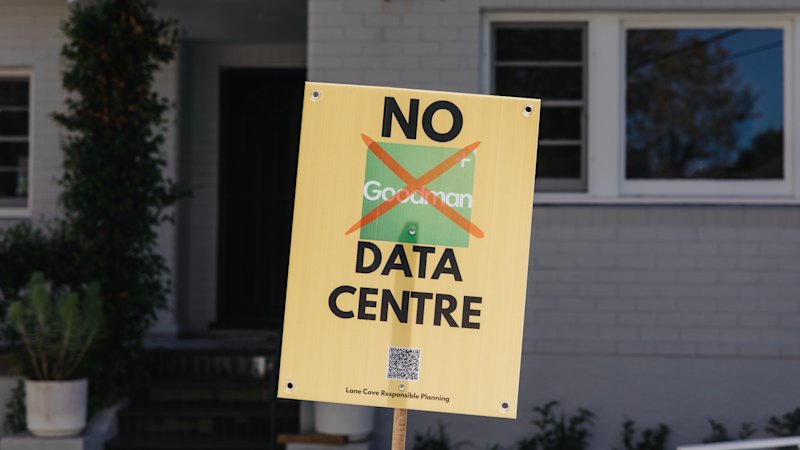
In the leafy suburbs of Sydney, a quiet revolution is underway—one powered not by political ideology, but by artificial intelligence and the insatiable demand for data storage. What began as a trickle of development has become a flood, as AI companies race to establish massive data centre clusters in residential areas. The result? A growing backlash from communities suddenly finding themselves on the front lines of the digital economy.

The New South Wales government's approach to this development boom has been anything but cautious. Through fast-track processes, including the Investment Delivery Authority, the state has effectively created what critics dub a 'tech bro concierge service'—streamlining approvals for data centre projects with remarkable speed. This approach, however, has come under sharp criticism for being 'entirely backwards.' The government opened the floodgates for development before establishing clear guidelines, only releasing those guidelines a year later. The consequences have become increasingly apparent as communities grapple with the sudden transformation of their neighborhoods.
The numbers tell their own story. The value of data centre projects endorsed by the Investment Delivery Authority alone reaches a staggering 51.89 billion AUD. One proposed development by Goodman alone carries a price tag of 1.2 billion AUD. These aren't minor expansions but massive construction projects that fundamentally alter the landscape and character of Sydney's suburbs. The pace and scale have left many residents feeling overwhelmed and excluded from decisions affecting their communities.
The value of data centre projects endorsed by the Investment Delivery Authority alone reaches a staggering 51.
As the backlash grows in Sydney, Australian planners are looking nervously across the Pacific to the United States, where the political fallout from unchecked data centre development became impossible to ignore during the 2026 midterm elections. In those elections, anti-data centre Democrats swept gubernatorial races, demonstrating the political potency of community anger over unchecked technological development. The NSW parliamentary inquiry explicitly cites these results as a cautionary tale, warning that without proper planning and community engagement, Australia risks following a similar path.
The parliamentary inquiry's recommendations represent a course correction aimed at preventing further community anguish. At its core is a call for smarter planning controls that assess the cumulative impacts of multiple data centres in an area, rather than treating each project in isolation. The inquiry also emphasizes the need for AI companies to genuinely listen to community concerns—a basic requirement that has been notably absent in the current development boom. As Abigail Boyd, a key voice in the debate, puts it: "Unless we want to be where America is now, if we want to have actual sensible investment in data centres we need to slow down, pause those approvals and give the community time to breathe."
The recommendations come at a critical juncture for Sydney's development trajectory. The state government now faces the delicate task of balancing the undeniable economic benefits of attracting AI and data centre investment with the legitimate concerns of communities being asked to host these facilities. The inquiry's findings suggest that the current approach—prioritizing speed over planning—has created problems that will only grow more difficult to solve as more projects come online. The challenge for NSW is to create a framework that encourages responsible development while respecting the social fabric of the communities that host these digital infrastructure hubs.