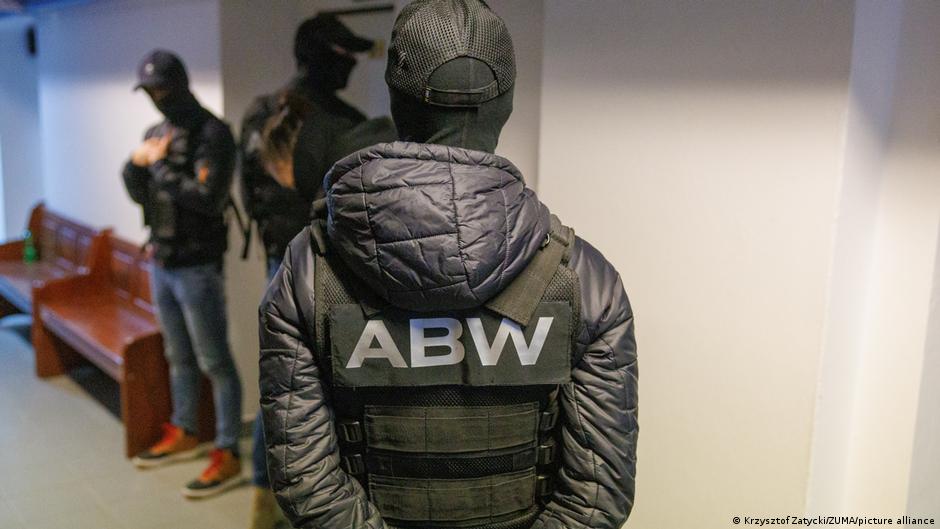
The silence of a quiet suburb in northern Poland was shattered this Thursday not by the distant rumble of artillery, but by the synchronized breach of security forces executing warrants across 21 separate locations. For the first time in a long while, the scale of operations conducted by Poland’s Internal Security Agency, known as the ABW, made it clear that the border between the state and the threats it faces is no longer just a line on a map, but a complex network of logistics, betrayal, and clandestine supply chains. Six individuals were taken into custody, and among them was a 37-year-old Russian woman, a figure who instantly became the focal point of a case that prosecutors describe as a coordinated effort to undermine the security of an entire continent.

What makes this case distinct from the numerous espionage probes that have cluttered Polish courtrooms recently is the specific nature of the contraband. The group allegedly supplied Moscow with parts for ammunition and weapons systems, commodities that are strictly prohibited from export to the Russian Federation. Tomasz Siemoniak, Poland’s minister for defense, framed the arrest not merely as a victory for law enforcement, but as a necessary check on a specific, dangerous industry. "Russia is subject to a strict embargo in this area, and this operation was designed to circumvent it," Siemoniak stated. This was not a case of a lone rogue selling a handful of spare parts for a personal fortune. According to the authorities, all six suspects face charges of participating in an organized criminal group, suggesting a structured hierarchy that moved components across borders with the intent of sustaining a war effort that has now lasted over three years.
The legal architecture surrounding these arrests is dense, reflecting the dual threats of traditional state security and modern international trade law. Four of the six individuals, including the Russian woman, were charged with espionage and placed in pretrial detention for a period of three months. The remaining two suspects were released under non-custodial restrictions, a decision that highlights the varying degrees of proof or the specific roles played by each individual in the alleged conspiracy. Beyond the core espionage charges, all six face allegations of violating rules governing international trade in goods and technologies of strategic importance to national defense and international security. This latter charge is a vital component of the prosecution's case; it proves that the defendants were not just spies in the classic sense, but active participants in a black market that flouts the economic sanctions imposed by the international community. By charging them with both espionage and trade violations, Polish prosecutors are building a dossier that addresses both the intelligence threat and the economic mechanism of the sabotage.
Since that date, the ABW has charged nearly 100 people in espionage and sabotage investigations.
This arrest is not an isolated event but the latest chapter in a broader narrative of heightened security that began in earnest on January 1, 2024. Since that date, the ABW has charged nearly 100 people in espionage and sabotage investigations. This figure is staggering. It indicates a systemic shift in the Polish security environment, where the agency has moved from a reactive posture to a proactive one, actively dismantling cells it believes are working for Russian intelligence. As a NATO and EU member, Poland is on the front line of the ongoing conflict in Ukraine, and its security services view these arrests as essential to protecting its sovereignty. The charge of nearly 100 individuals since early 2024 suggests that the agency is uncovering a far-reaching network of operations, many of which may have already been carried out, or at least attempted. The scale of the investigation reveals that the intelligence war is not a low-level cat-and-mouse game, but a large-scale industrial effort by one side to degrade the capability of the other.
Across the border, the response was swift and categorical. The Russian Embassy and the Kremlin have denied conducting such sabotage operations in NATO countries. For Moscow, admitting to a vast network of espionage and industrial smuggling would be an unforgivable strategic error, effectively handing adversaries a blueprint for counter-intelligence. However, for Polish authorities, the legal process is a matter of evidence, not diplomatic statements. The 21 locations raided and the specific components seized serve as physical proof that defies the official denials. The presence of a Russian national among the leads suggests that the network likely utilized passport holders or residents as key couriers or coordinators, a tactic that allows states to maintain plausible deniability while still maintaining operational control.

When will England have its Poland moment
Amidst the geopolitical weight of the case, the 37-year-old Russian woman remains the human face of the story. Her role, whether as a logistician, a financier, or a courier, is central to the narrative of how such an organized group operates. The three-month pretrial detention is a critical window for the ABW to complete its evidence collection and for the courts to determine if the legal basis for these severe charges is solid. For Poland, the stakes are high. If these networks are not disrupted, the embargo against Russia risks becoming a paper tiger, easily bypassed by organized crime with state-backed intelligence. This arrest is a declaration that the Polish state intends to maintain the integrity of its security perimeter, not just against physical invasion, but against the softer, invisible erosion of its defenses through the backdoor of international trade.