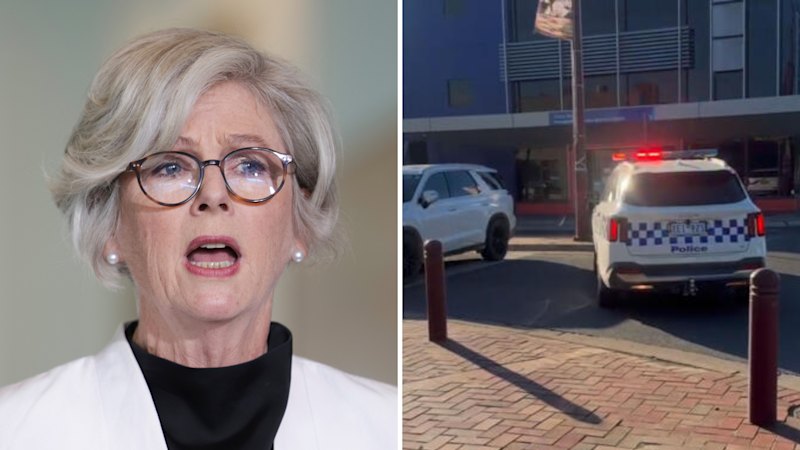
Imagine the routine of a public servant. For Helen Haines, an independent member of the Australian parliament representing the electorate of Indi, that routine involved standing outside her office in Wangaratta, a town in Victoria. It was an ordinary afternoon, the kind that can pass without incident, until the arrival of a vehicle that wasn't part of the traffic flow. A four-wheel drive struck Haines, leading to what authorities are now describing as a deliberate attack. The scene shifted from civic duty to emergency trauma as bystanders and medical personnel rushed to her side. Haines was airlifted to a hospital in Melbourne, her condition listed as critical. This wasn't a traffic accident; the framing of the event moved quickly from a vehicle crash to a security breach.

While Haines was being stabilized, the attention of the scene shifted to the driver. When he exited the Toyota, a 43-year-old man from the nearby town of Tarrawingee, he was not left to walk away. A passerby, acting on instinct and observation, detained him at the scene, allowing police to arrest him immediately. The speed of this civilian intervention was crucial; it meant the suspect was in custody before he could flee. As the immediate danger subsided, police searched the vehicle and seized a knife found inside the Toyota. That single piece of evidence transformed the incident from a reckless act into a premeditated threat, raising the stakes of the investigation significantly.

Australian MP Helen Haines struck by car outside her office https://t.co/DoftiAB69W
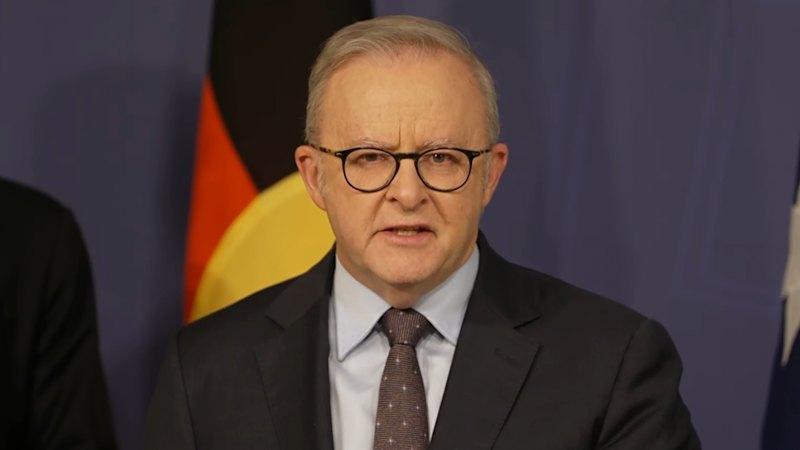
On October 19, 2026, Prime Minister Anthony Albanese addressed the nation, calling the event a “serious incident.” Albanese used the platform of the national office to frame the attack not just as a local crime, but as a direct assault on democratic representation. He noted that the alleged attack was being investigated by the Australian Federal Police, the Australian Security Intelligence Organisation, and the joint counter-terror taskforce. This triple-agency response signaled that Canberra viewed the event through the lens of national security, not just local law enforcement. Albanese expressed concern for Haines, saying his thoughts were with her, her family, and her staff during this extremely difficult period, and he joined others in praying for her full recovery.
This fear was not unfounded, but abstract; it existed in the form of online threats and distant worries.
The attack in Wangaratta did not happen in a vacuum of public sentiment. Even before the vehicle struck, many observers felt the shift in the political climate. Spender, commenting on the immediate aftermath, suggested that many people had feared there would be some sort of violent incident against Australian politicians. This fear was not unfounded, but abstract; it existed in the form of online threats and distant worries. Haines’ injury made that abstract fear concrete and physical. It was the realization that the boundaries between a political office and a target had been breached.

Australian lawmaker Helen Haines in critical condition after vehicle attack https://t.co/WihQo3SBgh
This is not the first time the security of parliamentarians has become a talking point. Michael McCormack sent his love and best wishes to Haines for a speedy recovery, a standard but necessary gesture of solidarity. However, Tony Burke offered a broader context, noting that the number of reports of harassment and threatening behavior against MPs and high office holders had increased since last year. These reports build a slow curve of pressure. They are the precursor to the physical action. Haines’ critical injury represents the apex of that curve. It forces the political class to address the data that has been accumulating in the background for months.
Amid the security protocols and political statements, there was a clear boundary set by those closest to the victim. Helen Haines’ family and staff issued a statement asking that their privacy be respected by the public and media. They declined to make further comment, asking only that the public keep Helen in their thoughts. This request highlights the human element of the attack. Haines is a mother, a daughter, and a public servant, but in this moment, she is primarily a patient in a Melbourne hospital, fighting for her life. The political machinery continues to turn, but the spotlight is now fixed on her recovery, a process that will likely unfold over weeks and months, while the investigation into the 43-year-old suspect moves into the shadows of the counter-terror taskforce.

Australian MP Helen Haines Critically Injured in Suspected Deliberate Car Attack | Sahara Reporters https://t.co/F71GyF4Zwv https://t.co/YYgKEkpqeX
As the dust settles in Wangaratta, the Australian political landscape has shifted. The question of how politicians are protected is no longer a hypothetical for the general public. It is a reality managed by the AFP and Asio. For Haines, the fight is personal and medical. For the nation, the fight is procedural and political, ensuring that the next threat is met with better data and quicker response. The attack in Victoria is a marker, a point in the timeline where fear was validated, and the system was tested. The outcome of Haines' recovery will determine the next chapter of this story, but the investigation has already begun its work to uncover the motive that remains unknown to the public.