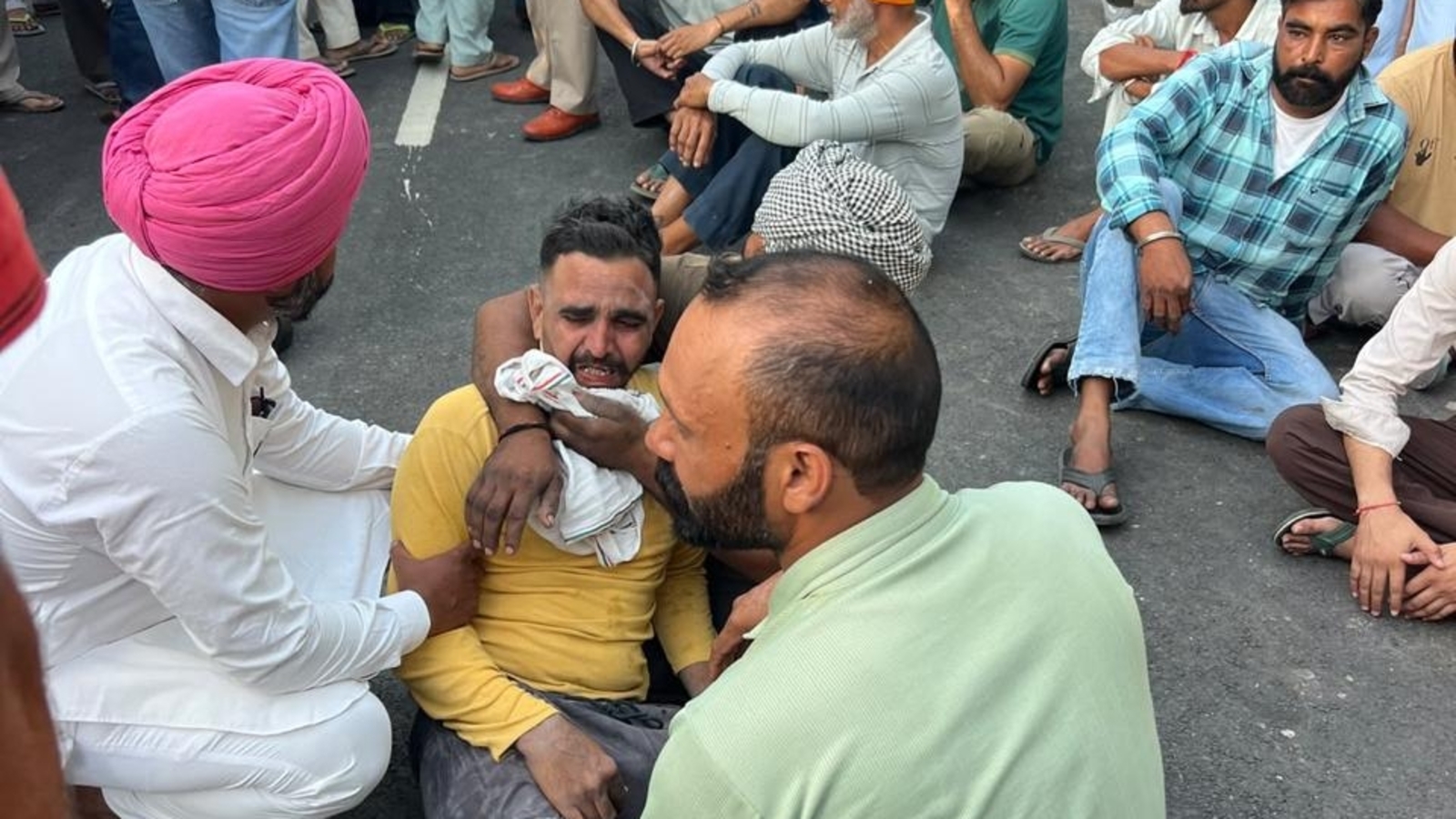
On October 18, 2026, the routine rhythm of labor in Punjab’s Sangrur district was shattered by the sound of screeching tires and the sudden, violent impact of a speeding vehicle. Near Alisher village, a group of 25 MGNREGA workers—laborers employed under the Mahatma Gandhi National Rural Employment Guarantee Act—had paused their work. They were doing something as fundamental as drinking water and resting, a brief reprieve from the demands of their day. They never saw the car coming.

The collision was catastrophic. A car, traveling at high speeds, lost control on Jakhal Road and plowed into the gathering. The impact was not merely a mechanical failure but a human tragedy that claimed the lives of eight workers. Among the deceased were six women and two men, lives cut short in a moment of vulnerability. The carnage left 12 others injured, as the vehicle tore through the group that had been resting by the roadside.
While the immediate aftermath was defined by chaos, the identity of the driver soon emerged. Pargat Singh Kala was identified as the individual behind the wheel of the car that ran over the laborers. Although reports indicate he initially escaped the scene, the driver, identified in some accounts as Aliyaas Singh Goyal, was subsequently placed under arrest. The legal machinery began to move, with the superintendent of police and the deputy commissioner working to register a First Information Report (FIR) against the accused.
The frustration among the local community was palpable, directed squarely at the administrative machinery.
As the dust settled on the highway, a secondary tragedy began to unfold—one defined not by speed, but by a perceived lack of it. While the physical injuries were severe, the response from the state was met with sharp criticism from those on the ground. Witnesses described a scene of mounting desperation, where the wounded were left to contend with their injuries without immediate professional help.
"They died awaiting an ambulance; many of them bled to death," said Harvinder Singh, providing a harrowing account of the minutes following the crash. The frustration among the local community was palpable, directed squarely at the administrative machinery. Witnesses claimed that victims lay suffering on the roadside while authorities insisted on completing "formalities" before arriving to provide aid. Local authorities delayed the medical response, causing further injuries and deaths.

8 Road Workers Run Over By Car In Punjab's Sangrur, Witnesses Say They Died Waiting For Ambulance https://t.co/Ssxwv6WWTx https://t.co/7z91JQ4S9U
The scale of the loss has reverberated through the political and social fabric of Punjab. The victims were not just numbers in a report; they were workers whose deaths have prompted immediate reactions from the highest levels of state government. Punjab Cabinet Minister Barinder Kumar Goyal expressed strong concern over the incident, offering condolences to the families of the deceased and promising medical aid to those struggling with their injuries.
However, the political response has been bifurcated. While the government has pledged support, opposition voices have used the tragedy to highlight systemic failures. Amarinder Singh Raja Warring, a Congress leader, expressed deep sorrow over the event. "Deeply saddened by the tragic incident in Lehra where 8 MGNREGA workers were mowed down by a speeding car, leaving several injured," Warring stated, echoing the grief and the demand for strict action and compensation felt by the local populace.

In the wake of the outcry, the local administration has moved to stabilize the situation. Poonamdeep Kaur, the Sangrur Deputy Commissioner, has stepped in to manage the fallout, emphasizing the state's commitment to the victims. "The administration is committed to providing medical aid and extending every possible support to the victims and their families," Kaur stated.
The focus now shifts to the intersection of justice and accountability. As the deputy commissioner and the superintendent of police take steps to ensure medical aid is distributed and the legal process against the driver proceeds, the community remains focused on the perceived gap between the promise of protection and the reality of the roadside. For the families in Sangrur, the pursuit of compensation and the demand for strict action serve as the only remaining avenues to honor those who were lost while simply trying to catch their breath.