
In the complex landscape of public assembly in Karnataka, the line between a traditional gathering and a regulated event is often drawn by the state’s Home Department. Recently, this administrative boundary became the focal point of a pointed exchange between the government and the Rashtriya Swayamsevak Sangh (RSS). As the organization gears up for its Vijayadashami route marches—large-scale displays that involve lakhs of participants—Karnataka Home Minister Priyank Kharge has issued a clear directive. The government is now demanding that the RSS adhere strictly to the prescribed legal framework, requiring the group to submit formal applications for permission rather than simply informing the authorities of their plans.
To understand the government’s insistence on formal procedure, one must look at the sheer scale of the RSS’s planned events. The organization is preparing for route marches involving lakhs of participants across the state. When a movement of this magnitude takes place, the logistical and security implications for local police departments are immense. Managing the flow of traffic, ensuring public safety, and coordinating with local law enforcement are standard requirements for any group organizing a procession of this size, regardless of its ideological leanings or historical practices.
This tension reached a practical head recently. On that day, RSS workers approached a Bengaluru police station with a letter intended to notify the authorities of their upcoming route march. However, the response from the state apparatus was immediate and firm. Rather than accepting the letter as a sufficient notice, the members were instructed that they must follow the established protocol. The government’s position is that a letter of notification does not satisfy the requirements of the law; instead, the organizers must complete the formal application process, providing all necessary details to the competent authorities before a march can be cleared to proceed.
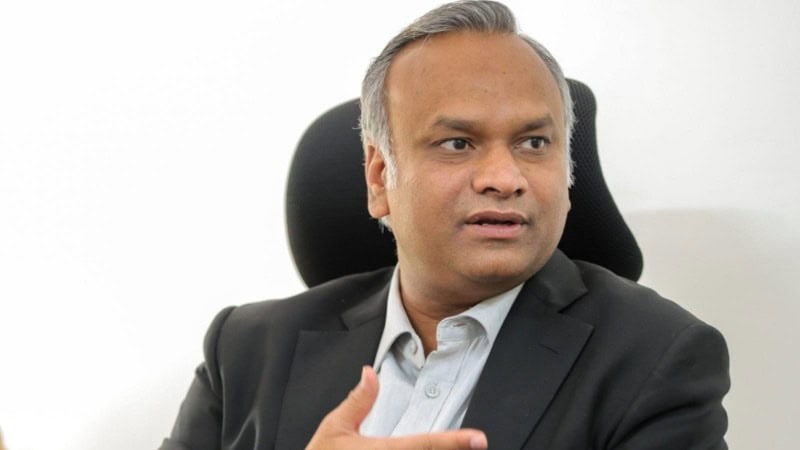
Home Minister Priyank Kharge has been vocal about the necessity of this shift.
Home Minister Priyank Kharge has been vocal about the necessity of this shift. His stance is rooted in the principle that public order is a matter of administrative planning, not a matter of negotiation or exception. Addressing the requirements for these large processions, Kharge emphasized that the state’s procedures are designed to govern all such events uniformly. His message to the organizers was direct: "Please fill out the prescribed application form, provide the necessary details and await formal permission." By framing the request this way, the government is signaling that it intends to exercise its oversight role more strictly, ensuring that the Home Department remains the final arbiter of when and where these volunteers can occupy public streets.
For an organization like the RSS, which has long operated with a degree of autonomy in its public displays, this requirement represents a significant bureaucratic hurdle. The process of applying for permission involves more than just paperwork; it requires the organization to submit to the scrutiny of the state. By forcing the RSS to await formal approval, the government is asserting its authority to deny or modify plans that do not meet safety or public order standards. This shift transforms the route march from a unilateral act of expression into a state-sanctioned event, subject to the conditions and limitations imposed by the Home Department.
As the state moves forward, the standoff highlights a fundamental tension in modern governance: the balance between the right to assemble and the state’s duty to maintain order. With lakhs of participants involved in these marches, the potential for disruption is high, and the government is clearly signaling that it will no longer accept informal notifications. Whether this leads to a more collaborative relationship between the RSS and the state, or whether it marks the beginning of a more contentious period of regulatory oversight, remains to be seen. For now, the path forward for the RSS in Karnataka is clear: the march must be permitted, and the permission must be earned through the proper channels.