
The swimming pool on the third floor of the Conrad Hotel in Bengaluru is designed for leisure. It sits above the bustling streets of Halasuru, near Ulsoor, offering a serene, elevated retreat for guests seeking respite from the city’s heat. On a recent Friday morning, that serenity was shattered by a sudden, violent event. What began as a routine swim turned into a fatal emergency when Alexander Maximilian Theis, a 57-year-old German national, and Juraj Horvat, a 45-year-old Slovakian tourist, succumbed to what police are describing as suspected electrocution.
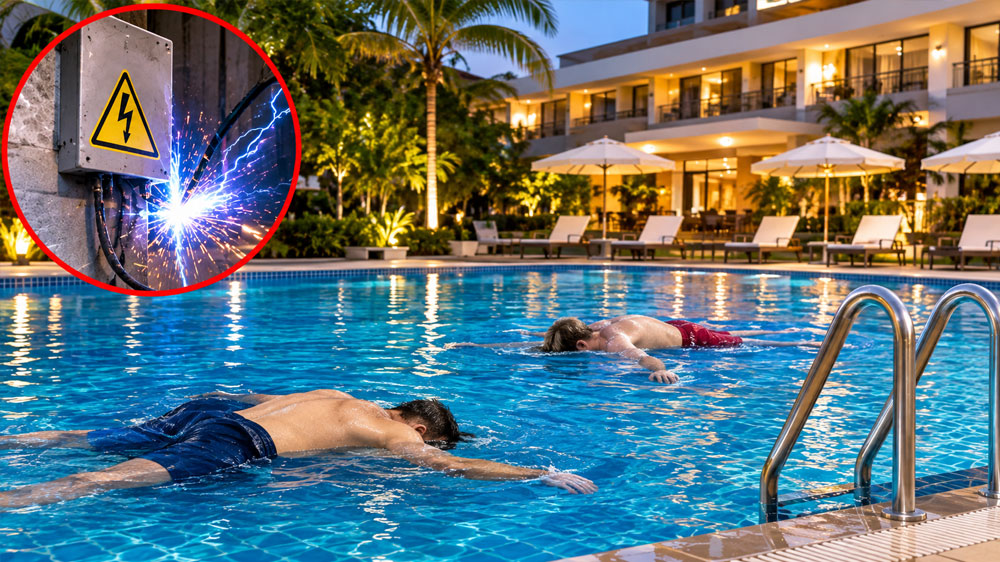
The precise mechanics of the accident remain under scrutiny, but the immediate aftermath was chaotic. As the shockwave rippled through the pool, two other individuals rushed into the water to save them. Matthew Desantis, a 41-year-old American tourist, and Rahul Tiwari, a 28-year-old hotel pool attendant and lifeguard, attempted a rescue that cost them dearly.
All four victims were transported to Manipal Hospital, a major medical facility in the area. For Alexander and Juraj, the medical intervention came too late; they were declared dead upon arrival. Their deaths have sent ripples through the international community, prompting diplomatic attention. The German government has been notified of the incident involving its citizen. Meanwhile, Matthew and Rahul survived the initial shock but sustained injuries during the rescue attempt. Reports indicate that while they required treatment, they are now out of danger, a small mercy in a day defined by loss.
An electrocution in a hotel pool is not just an accident; it is a systemic failure.
The location of the tragedy adds another layer of complexity to the unfolding narrative. The pool is not on the ground level but situated on the third floor of a five-star establishment. This architectural choice, common in urban luxury hotels to maximize space and views, introduces specific engineering challenges regarding waterproofing, electrical insulation, and drainage. When electricity meets water, the margin for error vanishes. The presence of a high-voltage current in a recreational pool suggests a catastrophic failure in the hotel’s electrical systems or a breach in safety protocols that kept live wires separate from the water.
Local authorities moved quickly to secure the scene. The Bengaluru police confirmed the details of the incident, noting that a case has been registered. The investigation is currently focused on two primary avenues: the cause of the electrical leakage and potential negligence in maintenance or operation. Police are examining whether the fault lies with the hotel’s internal wiring, the equipment used in the pool area, or a failure in regular safety checks.
For the families of Alexander and Juraj, the news has brought a sudden and tragic end to their time in India. The involvement of multiple nationalities—German, Slovakian, and American—highlights the global nature of tourism in Bengaluru, a city that attracts visitors from every corner of the world. Yet, beneath the cosmopolitan veneer lies a fundamental expectation: that public spaces, especially those managed by high-end hospitality brands, are safe. An electrocution in a hotel pool is not just an accident; it is a systemic failure.
The role of Rahul Tiwari, the lifeguard, underscores the human element of such disasters. Trained to respond to emergencies, he acted on instinct to protect guests. His injury, along with Matthew’s, serves as a testament to the bravery of those who step into danger without hesitation. However, it also raises uncomfortable questions about the training provided to staff in handling electrical emergencies in aquatic environments. Standard protocol usually dictates that rescuers must ensure the power is cut before entering the water to avoid becoming victims themselves. If the current was active when they entered, it points to a delay in shutting down the system or a lack of immediate awareness among the staff.
As the investigation continues, the Conrad Hotel remains a site of intense scrutiny. The physical evidence—the pool tiles, the lighting fixtures, the filtration pumps—will be analyzed to reconstruct the moment the current flowed. Experts may be called upon to determine if the voltage was sufficient to cause fatal cardiac arrest within seconds, which aligns with the rapid onset of the tragedy. The speed of the event, occurring in the morning hours, likely meant that fewer witnesses were present, making the testimony of Matthew and Rahul crucial.
This incident casts a shadow over the broader hospitality sector in Bengaluru. Luxury hotels market themselves on safety, comfort, and impeccable service. A failure of this magnitude threatens that trust. It forces a re-examination of how frequently electrical systems in aquatic facilities are tested and certified. It also prompts a conversation about the adequacy of current regulations governing such installations. Are the standards rigorous enough to prevent a lethal current from ever reaching the water?
For now, the focus remains on the victims and their families. Local authorities are coordinating to facilitate the necessary procedures following this tragedy.