
In a move that echoes the broader narrative of the 2026 US election, US President Donald Trump took to the stage on October 24, 2026, to announce a significant investment in American manufacturing. 'I'm thrilled to announce a massive auto manufacturing investment in the great state of Georgia by a fantastic company,' Trump declared, his voice tinged with a mix of triumph and political strategy. The announcement came as part of a broader push by the administration to bolster the US automotive industry and bolster Republican support in the upcoming midterm elections.

Audi, a subsidiary of Volkswagen Group, responded to the call. The factory is expected to produce 200,000 SUVs annually and create 4,500 jobs. The announcement was a significant moment in the automotive industry, signaling a shift in the global production landscape.

🚨 WOW! The CEO of AUDI just came on stage with President Trump to confirm a multi-BILLION dollar auto manufacturing investment in Georgia "We are planning to bring are biggest and most premium SUVs, and produce them here in MACON, GEORGIA." CROWD: "TRUMP! TRUMP! TRUMP!" This is monumental! 🇺🇸 That thing the Democrats and "experts" said was impossible, HAPPENED AGAIN Trump says construction begins next month. TARIFFS WORK
For Audi, the decision to invest in a new plant in the United States is part of a broader strategy to increase production in the US market. The company plans to assemble the Audi Q7, Q8, and Q9 models in the new factory. These SUVs are among the company's most premium offerings, and their production in the US will help Audi meet the growing demand for high-end vehicles in the American market.
The announcement comes just weeks before the elections, and it is likely to be a talking point in the campaign.
The investment by Audi comes at a time of growing trade tensions and tariff policies. The US has been facing increased competition from foreign carmakers, and there are ongoing trade barriers that have impacted the automotive industry. By investing in the US, Audi aims to ensure a stable supply chain and mitigate some of these risks.

We are proud that Audi AG has selected Georgia as the home of their first U.S. manufacturing facility, delivering a truly historic $4 billion investment to Middle Georgia. We’re looking forward to the 4,500 jobs this will bring, and we are excited for hardworking Georgians in Peach County and this entire region to benefit from this project for decades to come! https://t.co/N4yvquKngC
The announcement of the new plant is expected to have a significant economic impact. The 4,500 jobs that will be created are a crucial part of the broader economic narrative. For local communities in Georgia, the plant represents a major boost to the local economy. The investment is also seen as a vote of confidence in the American market, which could have broader implications for the automotive industry.
The timing of the announcement is not lost on political observers. President Trump has been actively courting the automotive industry, seeing it as a key constituency in the upcoming midterm elections. By highlighting the investment, Trump is emphasizing his administration's commitment to American manufacturing and job creation. The announcement comes just weeks before the elections, and it is likely to be a talking point in the campaign.
The announcement also has implications for Germany. The German government and politicians have been closely watching the developments. The complex relationship between Germany and the US is on full display in this moment.
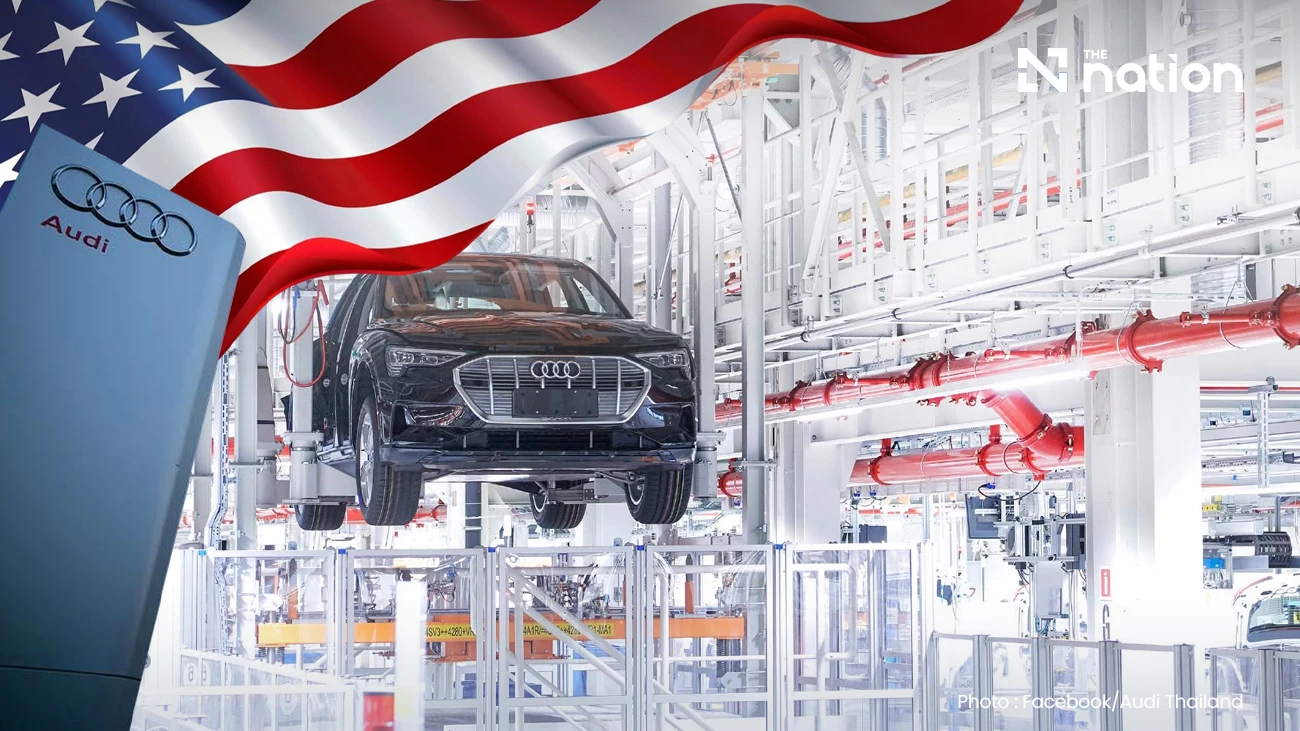
Volkswagen Group, the parent company of Audi, is under pressure from various fronts. The investment in the US is part of a broader strategy to diversify production and mitigate some of these risks. The $4.2 billion investment is a significant commitment, and it underscores the importance of the US market for the company.
The timeline for the new plant is clear. Construction is expected to begin in 2027, and production is slated to start in the early 2030s. The long-term nature of the project reflects the significant investment and the strategic importance of the US market for Audi. The company is committed to bringing its most premium SUVs to the American market, and the new plant will play a crucial role in that strategy.
The announcement by Audi marks a new chapter in US-automotive relations. It is a testament to the evolving dynamics of the global automotive industry and the political and economic factors that shape it. As the new plant moves forward, it will be a key indicator of the broader trends in the industry and the role of the US in global manufacturing. For now, the focus is on the immediate impact of the investment and the broader strategic implications for Audi and the US economy.