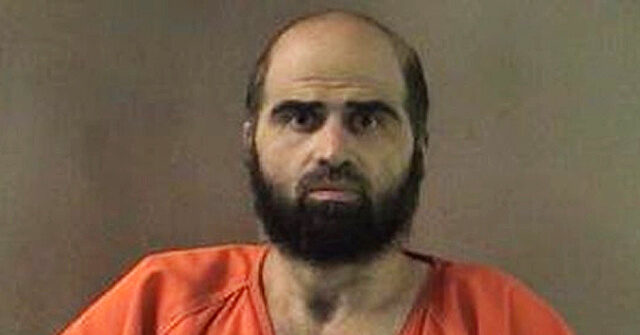
In 2009, the quiet routine of Fort Hood, Texas, was shattered by a mass shooting that would leave a permanent scar on the American military. Nidal Malik Hasan, a former U.S. Army Major and psychiatrist, turned his position within the ranks into a weapon, launching an attack that claimed the lives of 13 people. The carnage was not merely a matter of numbers; the attack claimed 13 lives and left 32 injured. Beyond the fatalities, 32 other innocent people were seriously injured in the violence.

Hasan, who claimed his actions were retaliation for U.S. wars in the Muslim world, was subsequently convicted on 45 counts of murder and attempted murder. For years, the case remained a heavy weight on the conscience of the military and the nation, a reminder of a breach of trust from within the very institution meant to protect its members.
As the date for Hasan's death approaches, the method of his execution has drawn intense focus. He is set to be executed by firing squad on December 3, a method that marks a significant historical departure for the United States military. This will be the first time the military has carried out an execution by firing squad since 1945, shortly after the conclusion of World War Two. It is the first military execution in over 60 years.
However, the idea of a televised execution quickly collided with a wall of domestic and international resistance.
This return to a more visceral form of capital punishment was initially met with a plan to bring the event into the digital age. Defense Secretary Pete Hegseth had originally intended to make the execution a public spectacle, suggesting a level of transparency intended to serve as a warning. "We’ll make sure that people are able to watch it. That it’s public," Hegseth had announced, signaling a desire to use the moment as a visible demonstration of justice.

U.S. President Trump says after bipartisan backlash, the Pentagon won't livestream the Fort Hood shooter execution
The proposal to livestream the execution was not merely about transparency; it was framed as a tool of international influence. President Donald Trump noted that such a broadcast "might have been a strong deterrent for the World to witness how America deals with Terrorists and SCUM like Hasan." The logic was clear: use the power of the livestream to project American resolve and the consequences of terror against the state.
However, the idea of a televised execution quickly collided with a wall of domestic and international resistance. The prospect of a live-streamed killing drew sharp criticism from a wide array of actors. International organizations, including the United Nations and Amnesty International, voiced opposition, while domestic groups like the U.S. Conference of Catholic Bishops joined the chorus of dissent. The debate moved beyond the mechanics of justice into the realm of ethics and the morality of state-sponsored spectacle.
In a sudden reversal, President Trump used Truth Social to announce that the Pentagon would no longer broadcast the event. The decision to scrap the livestream appeared to be a direct response to the pushback from both politicians and the voting public. The President acknowledged the complexity of the sentiment, noting that "many very good and well-meaning people would rather not watch him die, through streaming, or through any other visual device."

While the digital audience has been denied access, the President ensured that the event would not be entirely hidden from those most affected by the 2009 tragedy. "He will die, as scheduled, by firing squad, but this event will not be streamed," Trump declared. "That said, the execution may be viewed in person by the immediate families of the victims, if they so choose."

“Trump, after bipartisan backlash, says Pentagon won't livestream execution of Fort Hood shooter” — AP
As the December 3 execution date looms, the conversation has inevitably drifted back to the failures that allowed the 2009 attack to occur. President Trump has directed criticism toward the administration of former President Barack Obama, specifically regarding the handling of the intelligence surrounding Hasan.
Records show that during the Obama administration, the Federal Bureau of Investigation (FBI) had intercepted electronic communications between Hasan and Anwar al-Awlaki, a radical Yemeni-American cleric. Despite these intercepts, when the communications were reviewed by Hasan's FBI terrorism task force, investigators concluded at the time that his emails did not constitute a threat. This intelligence gap remains a central point of contention in the narrative of Hasan's path from Major to convicted killer.
Now, the focus remains fixed on Fort Hood. The plan for a global broadcast has been abandoned in favor of a more private, albeit still historic, military procedure. The firing squad stands ready to carry out the first such execution in over six decades, marking the end of a legal and political saga that has spanned nearly two decades. For the families of the 13 who died and the 32 who were injured, the event on December 3 will be a somber conclusion to a chapter of violence that began in the halls of a military installation and ended in the highest reaches of political debate.

Trump Says Pentagon Won’t Livestream Execution of Fort Hood Shooter https://t.co/LOiyqCxupX