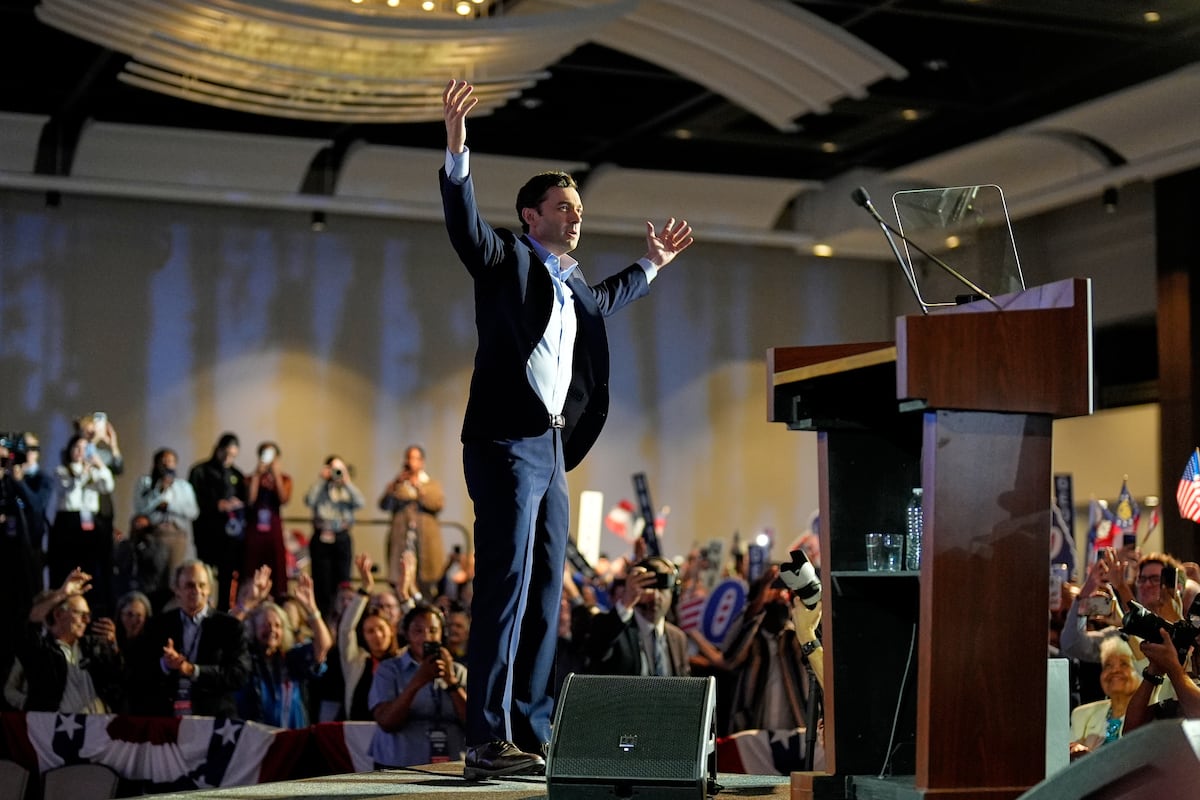
On November 3, the political map of America began to shift in a place many might not have expected to be the epicenter of a national realignment: Kansas. In a race that carried weight far beyond the borders of the Great Plains, Democrat Adam Hamilton secured a historic victory over Republican Roger Marshall. For the Senate, this was not merely a local contest; it was a high-stakes chess move in the broader struggle for legislative control.

At the time of the race, Democrats held 49 seats in the Senate, standing on the precipice of power. They needed just one more seat to tip the scales and secure a majority. Hamilton’s victory provided that crucial momentum, signaling that the political winds were blowing in a direction that would fundamentally alter the balance of power in Washington.
By November 4, the full scope of the electoral earthquake became clear. The midterms had concluded, and the results were nothing short of a seismic shift. Democrats did not just win individual races; they reclaimed control of both the House of Representatives and the Senate, effectively ousting the Republicans from their grip on legislative power.
The Republican party saw 13 seats lost in the House, a blow that contributed to the Democrats' ability to reach the 218 seats required to command a majority.
This outcome marks a rare and significant moment in American political history. It is only the sixth time that the party holding the presidency has lost control of both chambers of Congress. For President Trump, the loss represents a profound political setback, stripping his administration of the legislative machinery required to drive his agenda forward, even as he maintains control of the White House.
The drivers behind this decisive victory were not invisible. As voters headed to the polls, the atmosphere was thick with dissatisfaction. The electorate's decision to swing toward the Democrats was widely viewed as a reaction to the mounting pressures of high inflation and rising energy prices. These economic realities, coupled with a general sense of dissatisfaction with the Trump presidency, coalesced into a powerful vote of no confidence.
In the House of Representatives, the impact was felt through substantial gains for the Democratic party. The Republican party saw 13 seats lost in the House, a blow that contributed to the Democrats' ability to reach the 218 seats required to command a majority. The loss of these seats reflects a broader trend of voters seeking a different direction for the country's economic and social management.
As the dust settled on November 4, the reaction from the White House was one of frustration and deflection. President Trump, facing a significantly more challenging political landscape, did not mince words regarding the defeat. Rather than focusing on the systemic issues that drove voters away, he directed his criticism toward his own party's candidates, suggesting they were responsible for the loss of both chambers.

In a moment that captured the tension of the post-election period, Trump offered a characteristic defense of his own influence. He suggested that the results were not a reflection of his personal popularity, but rather a consequence of his absence from the ballot itself. "Si estuviera, ¡habríamos arrasado!" he remarked, arguing that his personal brand could have altered the outcome.
The math of the new Congress is stark. With the Democrats holding the reins of both the House and the Senate, the era of unchecked executive legislative power has come to an abrupt end. The administration now faces a Congress that is not only controlled by the opposition but is also energized by a mandate of voter dissatisfaction.
This shift means that every major policy initiative, every budget negotiation, and every piece of significant legislation will now have to pass through a Democratic filter. The ability of the Trump administration to implement its vision is now strictly limited by a legislative body that has been explicitly tasked by the voters to act as a check on his power.
As the country moves forward from the midterms, the political landscape remains in a state of profound flux. The decisive victory for the Democrats has not just changed the composition of Congress; it has fundamentally altered the relationship between the presidency and the legislature.
While the White House remains in Republican hands, the legislative engine has been handed to the opposition. The era of the midterm wave has left the administration navigating a much narrower path, where the economic concerns of the public—inflation, energy, and the general cost of living—will remain the primary metrics by which the new Congress is judged.